
‘Unprecedented’ decline in HealthSource RI participation comes after federal tax credits expire
This story was originally published in Rhode Island Current, a publication partner of Ocean State Stories.
PROVIDENCE — For the first time in a decade, participation in Rhode Island’s health insurance marketplace has taken a nosedive.
About 10,000 people covered through HealthSource RI dropped coverage during the 2026 open enrollment period, representing 20% of the 48,000 enrolled before open enrollment began in November, according to data from HealthSource RI published Monday. A copy of the final open enrollment report was shared with Rhode Island Current in advance.
The stark decline in insurance coverage, with implications not only for former plan participants but the entire state health care system, is concerning for state officials, but not surprising. In fact, HealthSource RI initially projected an even bigger drop of 13,000 people tied largely to expiring federal tax credits.
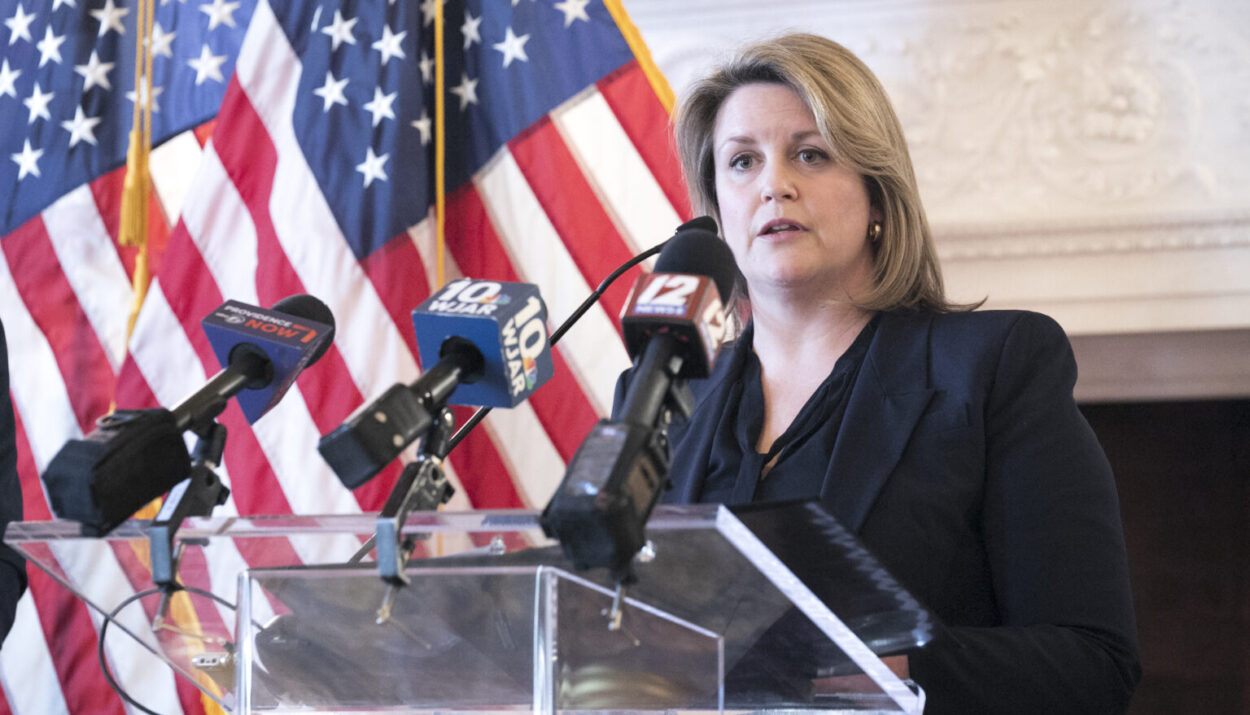
“We knew it was going to be a tough year,” Lindsay Lang, HealthSource RI director, said in an interview Friday. “We’ve been watching this for the last two-plus years, knowing the Enhanced Premium Tax Credits might not be extended.”
Enrollment in the state insurance marketplace has grown each year since 2017. Until now.
“It’s unprecedented,” Lang said.
Without action by Congress, pandemic-era discounts lapsed on Dec. 31, suddenly spiking premiums for what had been low or no-cost insurance for state exchange participants nationwide. Preliminary data released in January by the federal Centers for Medicare & Medicaid Services shows 22.8 million enrollees, down from a record total of 24.3 million last year.
Meanwhile, commercial insurers sought record rate hikes, hoping to offset their own rising costs and risks tied to demographic shifts in the pool of enrollees.
The end result: average monthly premiums for Rhode Island’s health exchange more than doubled, from $109 to $220 a month. Lower-income and large households shouldered the brunt of cost spikes. For example, a person who makes $31,000 a year, now pays $137 a month for marketplace insurance, compared with $40 a year ago.
The lowest-income enrollees, those who fall below 200% of the federal poverty level, were most likely to opt out of insurance this year: down 27% compared to November.
‘The beginning of the story’
Lang worries those who stuck around might not stay covered for good, unable to meet the skyrocketing monthly premiums for the entire year.
“A household may be able to make things work for January, February, March, but is that going to be sustainable the rest of the year as other household costs continue to rise?” Lang said. “This is just the beginning of the story.”
Increasingly, returning enrollees and first-time participants opted for health insurance plans with lower premiums, but less coverage and higher out-of-pocket expenses.
Bronze-medal plans, characterized by the lowest premiums and highest coverage limits, surged in popularity, chosen by one-third of the 42,000 enrollees. Platinum plans, the most expensive and expansive in coverage, dropped in popularity.
The short-term savings by switching from a platinum to bronze-medal plan may not offer sustainable relief, though.
“As out-of-pocket spending starts to kick in, that may worsen the picture for them,” Lang said.
The bleak prognosis extends beyond the state marketplace.
As of October 2024, Rhode Island boasted the sixth-highest insured rate of any state in the country, with nearly 98% of residents covered. The decline in health exchange participation combined with new Medicaid eligibility restrictions will “undoubtedly” reduce overall state insurance coverage when the next state survey is conducted later this year, Lang said.
More uninsured people flooding hospital emergency rooms, inpatient units or outpatient clinics leads to more pressure and costly, uncompensated care for the cash-strapped facilities. It also upends the state ledger: cutting $60 million in federal subsidies based on the initial estimate of 13,000 fewer participants. Updated figures based on final open enrollment data were not immediately available.
Commercial insurers now covering a pool of older, sicker and more medically expensive participants have sought rate hikes across the board to offset their own risks and cost increases.
State-funded solutions
Gov. Dan McKee’s fiscal 2027 budget proposal offers a partial solution: $9.5 million from state coffers, rising to $20 million for a full calendar year, to fill the gap in expired federal tax credits for those who fall below 200% of the federal poverty level: $31,920 per year for a one-person household, or $66,00 for a family of four based on 2026 federal poverty guidelines. The proposal is expected to bring back 6,500 of the former enrollees who dropped out this year due to affordability, according to calculations by the state budget office.
Lang, who worked with the governor’s office on the proposal, said it seemed like the “best bang for the buck” to replace lost federal discounts.
“I don’t think any state can fully replace a price tag like $60 million,” she said, referring to the discontinued federal discounts for HealthSource RI enrollees.
Some Democratic state lawmakers seek to do just that.
Companion bills introduced in January by Rep. June Speakman of Warren, and Sen. Pam Lauria of Barrington, would set up a state program to replace the entire $60 million in lost federal subsidies, ensuring discounts are available to all eligible state marketplace enrollees.
Where would the money come from?
“That’s a policy conversation we have to have,” Lauria said in an interview Friday.
She pointed to projected state savings from new restrictions on Medicaid — also a result of federal budget cuts — as an avenue for funding. “
“I think it’s important that the money stay in health care and not be used as savings to do something else,” Lauria said.
The bills also call for immediate implementation, rather than waiting till the 2027 open enrollment period as McKee proposes. Lauria stressed the benefits of continuous coverage rather than asking dropouts to return to the marketplace.
But Lang said she didn’t think it would be a hard sell to bring back former HeathSourceRI participants.
“It’s not that they don’t want to be covered,” Lang said. “It’s not that they don’t see the value of having stability for themselves, for their families. It’s a matter of access.”
Lang said she was aware of the legislation, and planned to “watch closely” to see whether it advances. Hearings on the legislation have not been scheduled as of Friday.
“If the General Assembly were to pass that bill with full replacement funds, we’ll be ready to implement it,” Lang said. “We have a lot of knowledge and expertise about how to design a program like that.”
House Speaker K. Joseph Shekarchi and Senate President Valarie Lawson remained noncommittal.
“As part of the House and Senate Finance Committees’ budget hearings, we will consider all proposals to help Rhode Islanders impacted by these federal cuts,” they said in a joint statement Friday.
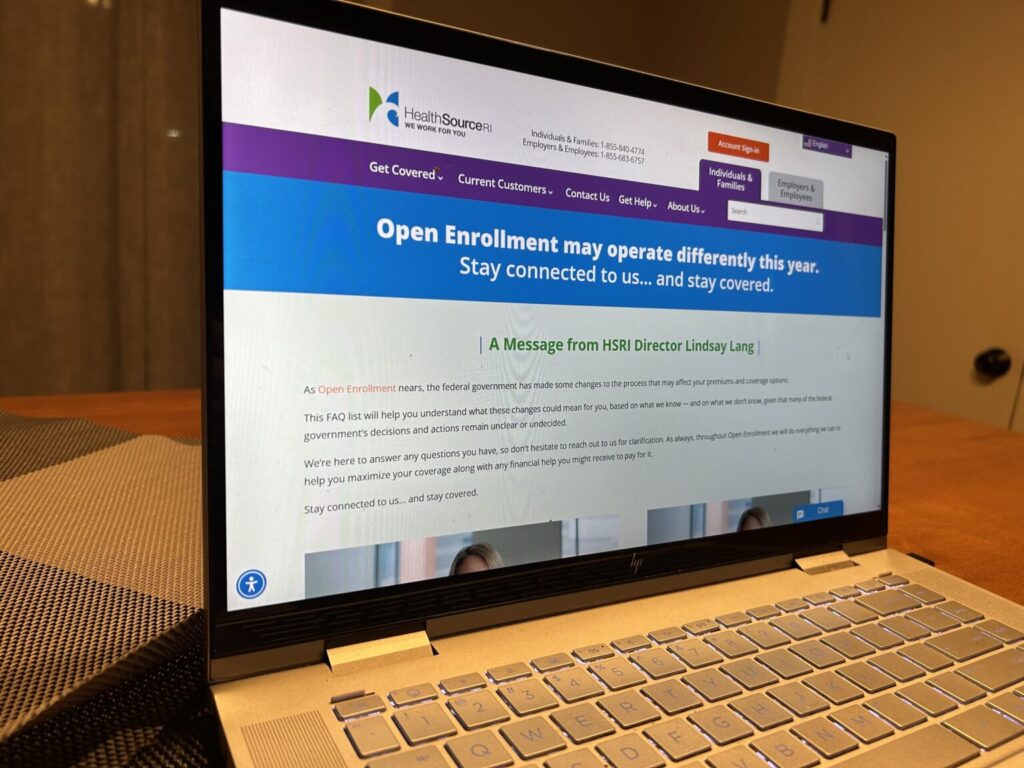
One bright spot in an otherwise bleak conclusion to open enrollment was HealthSource RI’s marketing and outreach. Anticipating the need for more education and outreach given the backdrop of expiring federal discounts, HealthSource RI last summer launched a dedicated webpage, alongside online and traditional advertising with special attention on ZIP codes with fewer insured people. The early messaging brought in more than 50,000 to the dedicated webpage from July to October, followed by high web traffic during the open enrollment period from November through January. Overall, the marketing campaign drew 58 million impressions — a measure of how many times an ad was shown or viewed online, though not necessarily from individual users — up 6.3% from the previous year.
Ads in Spanish drew more than double the amount of “meaningful customer activity” compared with last year, according to HealthSource RI.