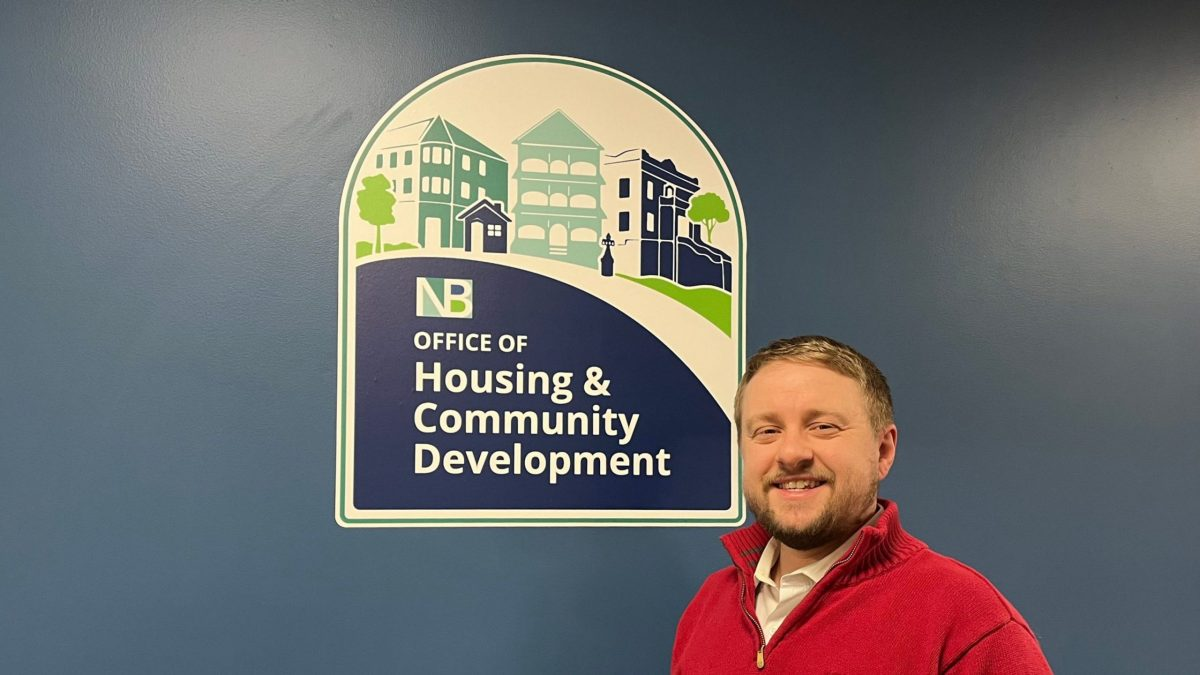

The city’s housing director said the city made progress on its housing goals in 2025. There’s still more work to do.
This story was originally published in The New Bedford Light, a publication partner of Ocean State Stories.
NEW BEDFORD — It’s been a year of steady progress on New Bedford’s housing crisis.
More developments are being proposed and moving through the long process of funding and construction. A new vacant property initiative in the city has received national recognition for its success at tackling complex properties. Zoning changes are already sparking interest from developers.
New Bedford is still trying to dig itself out of a significant housing shortage. Some tenants have adjusted to a grim new normal where they pay a huge chunk of their income for rent, and would-be homebuyers are priced out because a typical mortgage would be two or three times their rent, Amaral said.
Rents and home prices have increased drastically, experts say, because many people are competing for a small number of units. Amaral and other local housing leaders say the main way to bring down prices is to build more homes.
Amaral oversees a broad set of housing strategies laid out in the Building New Bedford plan, which was released in March 2023. In an interview with The Light, he shared the successes he’s proudest of and the challenges his office plans to address in the new year.
More housing on the way
The city has added more than 1,500 new housing units to its pipeline since Building New Bedford was launched, Amaral said. Two-thirds are in early planning phases.
The city has continued its strategy of working directly with developers big and small to recruit them for local projects.
“We want to talk to, particularly, developers who have some sort of niche that we can scratch,” Amaral said. “So, if you’re a historic mill developer, we might have a couple of historic mills kicking around that are a good fit, so we can introduce you.”
Some major projects have already come on the rental market, or are on track to do so in the next year.
Amaral pointed to the completed mixed-income project at 117 Union St. and other projects around the downtown area, like 10@8th, that will finish construction soon. He said he’s hopeful that the empty Keystone lot at 193 Union St. will be ready to break ground soon.
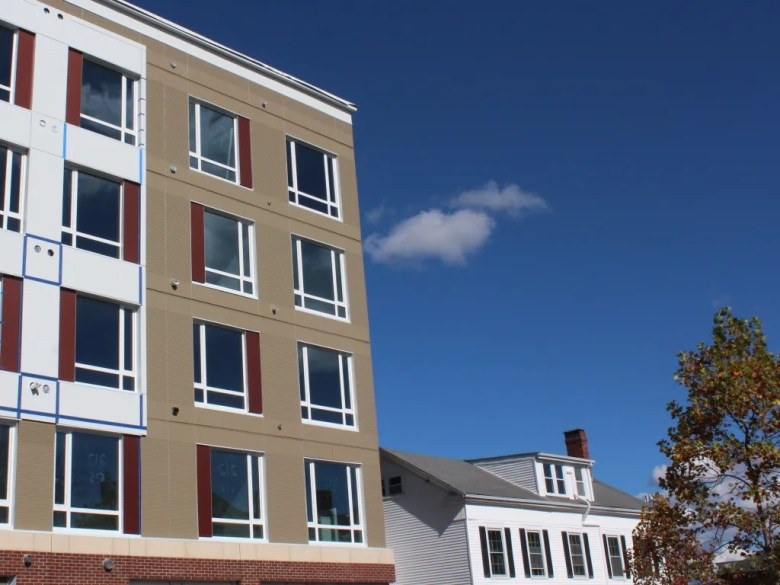
It’s not just downtown — Cruz Construction is assembling funding for multiple historic conversions around the city. In addition, the city just secured $2.5 million in tax credits which will be used by Couto Brothers Development to develop 65 housing units in a former nursing home on Acushnet Avenue.
These large-scale projects usually need heavy subsidies that take years to assemble because construction is so expensive. The city spent more than $11 million of its pandemic relief package to help cover the cost of 149 affordable units, and state and federal programs have pitched in millions more to help fund virtually every large project around the city.
Recent changes to the city’s permitting process have been “really transformative,” Amaral said. Smaller developments with six apartments or fewer can now bypass an expensive and time-consuming Planning Board review. That has led to an uptick in those developments, he said.
“It’s created a little bit of a local ecosystem of developers who are looking for those opportunities specifically, because they know they’re relatively easy to permit,” he said.
The City Council is now reviewing two more zoning proposals that could make more projects possible.
One ordinance would reduce parking minimums for new buildings, which raise costs and often force developers to go through the Planning Board for an exception. The ordinance committee advanced that proposal for full council approval on Dec. 15.
The other proposal would allow new buildings on smaller lots, rolling back rules that effectively make it illegal to rebuild most homes in the city when they’re lost to fires. The ordinance committee plans to take it up on Jan. 26.
Developers are “waiting and watching with serious interest,” Amaral said.
There are also signs that developers are interested in the city’s new transit-oriented development districts, which allow for a dense mix of housing and businesses in “underutilized” areas around the new MBTA stations.
One district includes industrial properties east of Route 18 and parts of the Purchase Street neighborhood near New Bedford Station.
“We have seen some developers kind of poking around trying to figure out what might be possible over there,” Amaral said.
A hotel has already been formally proposed near the station, but no other potential developments have reached that stage yet.
The other transit-oriented district covers a sleepy shopping plaza area near Church Street Station. Those larger properties are more complicated to redevelop and could take more time, Amaral said. He added that multiple developers are interested in a mill in the area.
Vacant property effort fills homes
The city’s vacant property initiative has been “one of the biggest successes” of the Building New Bedford plan, Amaral said. Jordan Latham was hired as the vacant property development manager in late 2023 to help get the city’s hundreds of empty homes back on the market.
There are currently 148 confirmed vacant properties on the city’s registry, down from 399 two years ago, according to numbers provided by Amaral and Latham. Of the 148 properties, 99 are actively on the path to occupancy.
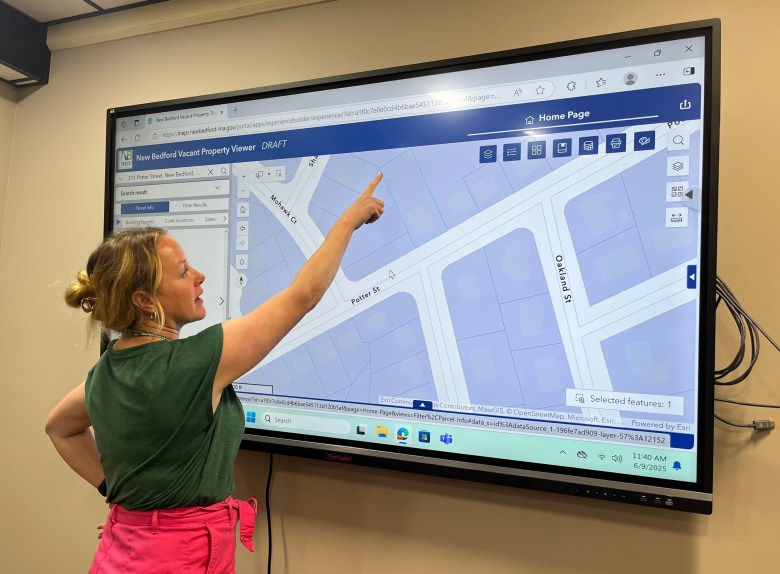
Some vacant properties were foreclosed on by banks in no rush to sell, while others end up in legal limbo after the owner dies with no will. These challenges are complex and sometimes take months of sustained attention to untangle.
The effort has paid off — literally. As dozens of tricky properties have found new owners, it has brought in $648,764 in unpaid property taxes and code enforcement fines that had built up over years of vacancy, Amaral said.
The city was nationally recognized for the program with an award from the NewDEAL Forum, and has presented the strategy at conferences for housing officials.
“We’re very proud of that work and I still think we’re only scratching the surface on what’s possible there,” Amaral said.
About 20 households have received assistance from the city’s first-time homebuyer assistance program, and 15 households were helped by the home repair cost program — some recipients got money from both programs. Both were funded by an allocation of pandemic relief money that has now been nearly depleted.
The pandemic relief programs were aimed at a slightly higher income bracket than most existing homebuyer assistance programs. Amaral said that’s because the people who have enough income to buy a house in New Bedford generally make too much money to be eligible for those other programs, but they still need help. With the pandemic relief money almost gone, the city will look for other ways to fund that assistance, he said.
Homeless services adapt to shifting Trump policies
This has been a year of massive changes for the region’s network of homelessness service providers, known as the Bristol County Continuum of Care.
The U.S. Department of Housing and Urban Development is the primary funding source for these local agencies, which means they have had to adapt to shifting priorities under President Donald Trump — while still managing the daily challenges of a worsening homelessness crisis.
Some of the administration’s changes have to do with housing programs designed to get people out of shelters. The local continuum of care operates dozens of units of “permanent supportive housing,” apartments that come with supports but don’t require a recipient to stay sober or be employed to receive assistance.
The Trump administration wants continuums to instead prioritize “transitional housing,” which comes with a time limit and requires recipients to work or participate in programs such as addiction treatment.
While President Joe Biden introduced a new timeline requiring continuums to compete for grants every two years, the Trump administration abruptly switched back to annual funding this fall, with a tight 45-day application window. Continuum staffers cancelled vacations and raced to apply by the January deadline, Amaral said.
But the administration withdrew its funding opportunity this month, right before a court hearing on a case challenging the changes to permanent supportive housing.
The shift to transitional housing would bring an end to “Housing First,” a service model that provides long-term housing with no conditions.
The change isn’t “all bad,” Amaral said. Transitional housing’s more hands-on case management might help some recipients live better, he said. Time limits could help open up units for people still in shelters, which would then open up shelter beds for people on the street, he said.
“Some of the folks in our permanent supportive housing units are fairly stable and should be moving on from the program, but have little incentive to do so,” he said. “The system has been sort of stuck.”
If the change to transitional housing happens, service providers will have to help many current recipients find alternative places to stay, Amaral said. The continuum is building a “safety net” for that scenario, he said.
Looking to 2026
Some parts of the Building New Bedford plan are goals Amaral can check off his list. Other parts of the plan are ongoing commitments.
In the new year and beyond, Amaral is optimistic that falling interest rates will be the final push that some developments in the pipeline need to be viable.
The vacant property initiative will expand in 2026 to include storefronts, Amaral said. Selling off vacant city parcels, including schools and public safety buildings, will also continue after the process was slowed by legal issues this year.
New Bedford can’t build its way out of the housing crisis alone, Amaral said. He reiterated the city’s calls for surrounding towns to approve more multifamily housing in their own borders, including affordable projects with income restrictions. The city can’t force the towns to take action, but it’s ready to help them if they reach out, he said.
It’s been a year of steady progress on New Bedford’s housing crisis.
More developments are being proposed and moving through the long process of funding and construction. A new vacant property initiative in the city has received national recognition for its success at tackling complex properties. Zoning changes are already sparking interest from developers.
2025 IN REVIEW
2025 in review: South Coast Rail in the spotlight, and other top transportation stories
December 29, 2025
2025 in review: Immense challenge and loss for offshore wind
December 29, 2025
2025 in review: Immigration dominated The Light’s top 20 stories
December 28, 2025
Josh Amaral, director of the city’s Office of Housing and Community Development, says he’s proud of those successes, but the crisis remains.
New Bedford is still trying to dig itself out of a significant housing shortage. Some tenants have adjusted to a grim new normal where they pay a huge chunk of their income for rent, and would-be homebuyers are priced out because a typical mortgage would be two or three times their rent, Amaral said.
Rents and home prices have increased drastically, experts say, because many people are competing for a small number of units. Amaral and other local housing leaders say the main way to bring down prices is to build more homes.
Amaral oversees a broad set of housing strategies laid out in the Building New Bedford plan, which was released in March 2023. In an interview with The Light, he shared the successes he’s proudest of and the challenges his office plans to address in the new year.
More housing on the way
The city has added more than 1,500 new housing units to its pipeline since Building New Bedford was launched, Amaral said. Two-thirds are in early planning phases.
The city has continued its strategy of working directly with developers big and small to recruit them for local projects.
“We want to talk to, particularly, developers who have some sort of niche that we can scratch,” Amaral said. “So, if you’re a historic mill developer, we might have a couple of historic mills kicking around that are a good fit, so we can introduce you.”
Some major projects have already come on the rental market, or are on track to do so in the next year.
Amaral pointed to the completed mixed-income project at 117 Union St. and other projects around the downtown area, like 10@8th, that will finish construction soon. He said he’s hopeful that the empty Keystone lot at 193 Union St. will be ready to break ground soon.
It’s not just downtown — Cruz Construction is assembling funding for multiple historic conversions around the city. In addition, the city just secured $2.5 million in tax credits which will be used by Couto Brothers Development to develop 65 housing units in a former nursing home on Acushnet Avenue.
These large-scale projects usually need heavy subsidies that take years to assemble because construction is so expensive. The city spent more than $11 million of its pandemic relief package to help cover the cost of 149 affordable units, and state and federal programs have pitched in millions more to help fund virtually every large project around the city.
Recent changes to the city’s permitting process have been “really transformative,” Amaral said. Smaller developments with six apartments or fewer can now bypass an expensive and time-consuming Planning Board review. That has led to an uptick in those developments, he said.
“It’s created a little bit of a local ecosystem of developers who are looking for those opportunities specifically, because they know they’re relatively easy to permit,” he said.
The City Council is now reviewing two more zoning proposals that could make more projects possible.
One ordinance would reduce parking minimums for new buildings, which raise costs and often force developers to go through the Planning Board for an exception. The ordinance committee advanced that proposal for full council approval on Dec. 15.
The other proposal would allow new buildings on smaller lots, rolling back rules that effectively make it illegal to rebuild most homes in the city when they’re lost to fires. The ordinance committee plans to take it up on Jan. 26.
Developers are “waiting and watching with serious interest,” Amaral said.
There are also signs that developers are interested in the city’s new transit-oriented development districts, which allow for a dense mix of housing and businesses in “underutilized” areas around the new MBTA stations.
One district includes industrial properties east of Route 18 and parts of the Purchase Street neighborhood near New Bedford Station.
“We have seen some developers kind of poking around trying to figure out what might be possible over there,” Amaral said.
A hotel has already been formally proposed near the station, but no other potential developments have reached that stage yet.
The other transit-oriented district covers a sleepy shopping plaza area near Church Street Station. Those larger properties are more complicated to redevelop and could take more time, Amaral said. He added that multiple developers are interested in a mill in the area.
Vacant property effort fills homes
The city’s vacant property initiative has been “one of the biggest successes” of the Building New Bedford plan, Amaral said. Jordan Latham was hired as the vacant property development manager in late 2023 to help get the city’s hundreds of empty homes back on the market.
There are currently 148 confirmed vacant properties on the city’s registry, down from 399 two years ago, according to numbers provided by Amaral and Latham. Of the 148 properties, 99 are actively on the path to occupancy.
Some vacant properties were foreclosed on by banks in no rush to sell, while others end up in legal limbo after the owner dies with no will. These challenges are complex and sometimes take months of sustained attention to untangle.
The effort has paid off — literally. As dozens of tricky properties have found new owners, it has brought in $648,764 in unpaid property taxes and code enforcement fines that had built up over years of vacancy, Amaral said.
The city was nationally recognized for the program with an award from the NewDEAL Forum, and has presented the strategy at conferences for housing officials.
“We’re very proud of that work and I still think we’re only scratching the surface on what’s possible there,” Amaral said.
About 20 households have received assistance from the city’s first-time homebuyer assistance program, and 15 households were helped by the home repair cost program — some recipients got money from both programs. Both were funded by an allocation of pandemic relief money that has now been nearly depleted.
The pandemic relief programs were aimed at a slightly higher income bracket than most existing homebuyer assistance programs. Amaral said that’s because the people who have enough income to buy a house in New Bedford generally make too much money to be eligible for those other programs, but they still need help. With the pandemic relief money almost gone, the city will look for other ways to fund that assistance, he said.
Homeless services adapt to shifting Trump policies
This has been a year of massive changes for the region’s network of homelessness service providers, known as the Bristol County Continuum of Care.
The U.S. Department of Housing and Urban Development is the primary funding source for these local agencies, which means they have had to adapt to shifting priorities under President Donald Trump — while still managing the daily challenges of a worsening homelessness crisis.
Some of the administration’s changes have to do with housing programs designed to get people out of shelters. The local continuum of care operates dozens of units of “permanent supportive housing,” apartments that come with supports but don’t require a recipient to stay sober or be employed to receive assistance.
The Trump administration wants continuums to instead prioritize “transitional housing,” which comes with a time limit and requires recipients to work or participate in programs such as addiction treatment.
While President Joe Biden introduced a new timeline requiring continuums to compete for grants every two years, the Trump administration abruptly switched back to annual funding this fall, with a tight 45-day application window. Continuum staffers cancelled vacations and raced to apply by the January deadline, Amaral said.
But the administration withdrew its funding opportunity this month, right before a court hearing on a case challenging the changes to permanent supportive housing.
The shift to transitional housing would bring an end to “Housing First,” a service model that provides long-term housing with no conditions.
The change isn’t “all bad,” Amaral said. Transitional housing’s more hands-on case management might help some recipients live better, he said. Time limits could help open up units for people still in shelters, which would then open up shelter beds for people on the street, he said.
“Some of the folks in our permanent supportive housing units are fairly stable and should be moving on from the program, but have little incentive to do so,” he said. “The system has been sort of stuck.”
If the change to transitional housing happens, service providers will have to help many current recipients find alternative places to stay, Amaral said. The continuum is building a “safety net” for that scenario, he said.
Looking to 2026
Some parts of the Building New Bedford plan are goals Amaral can check off his list. Other parts of the plan are ongoing commitments.
In the new year and beyond, Amaral is optimistic that falling interest rates will be the final push that some developments in the pipeline need to be viable.
The vacant property initiative will expand in 2026 to include storefronts, Amaral said. Selling off vacant city parcels, including schools and public safety buildings, will also continue after the process was slowed by legal issues this year.
New Bedford can’t build its way out of the housing crisis alone, Amaral said. He reiterated the city’s calls for surrounding towns to approve more multifamily housing in their own borders, including affordable projects with income restrictions. The city can’t force the towns to take action, but it’s ready to help them if they reach out, he said.
“We have more work to do, and housing remains a top issue here and everywhere,” he said.
Email Grace Ferguson at gferguson@newbedfordlight.org.