
“We believe health care is a human right.”
PROVIDENCE — Carolina had no health care provider or health insurance for her or her family, which caused her anxiety.
Then, “I saw something in Walmart about Clínica Esperanza and I called and told them I would like to be a patient here,” she told Ocean State Stories. Clínica Esperanza (in English: Hope Clinic) provides free non-urgent health care and other services for uninsured Rhode Islanders.
Carolina was welcomed when she first visited the clinic earlier this year.
“It was a relief,” she said.
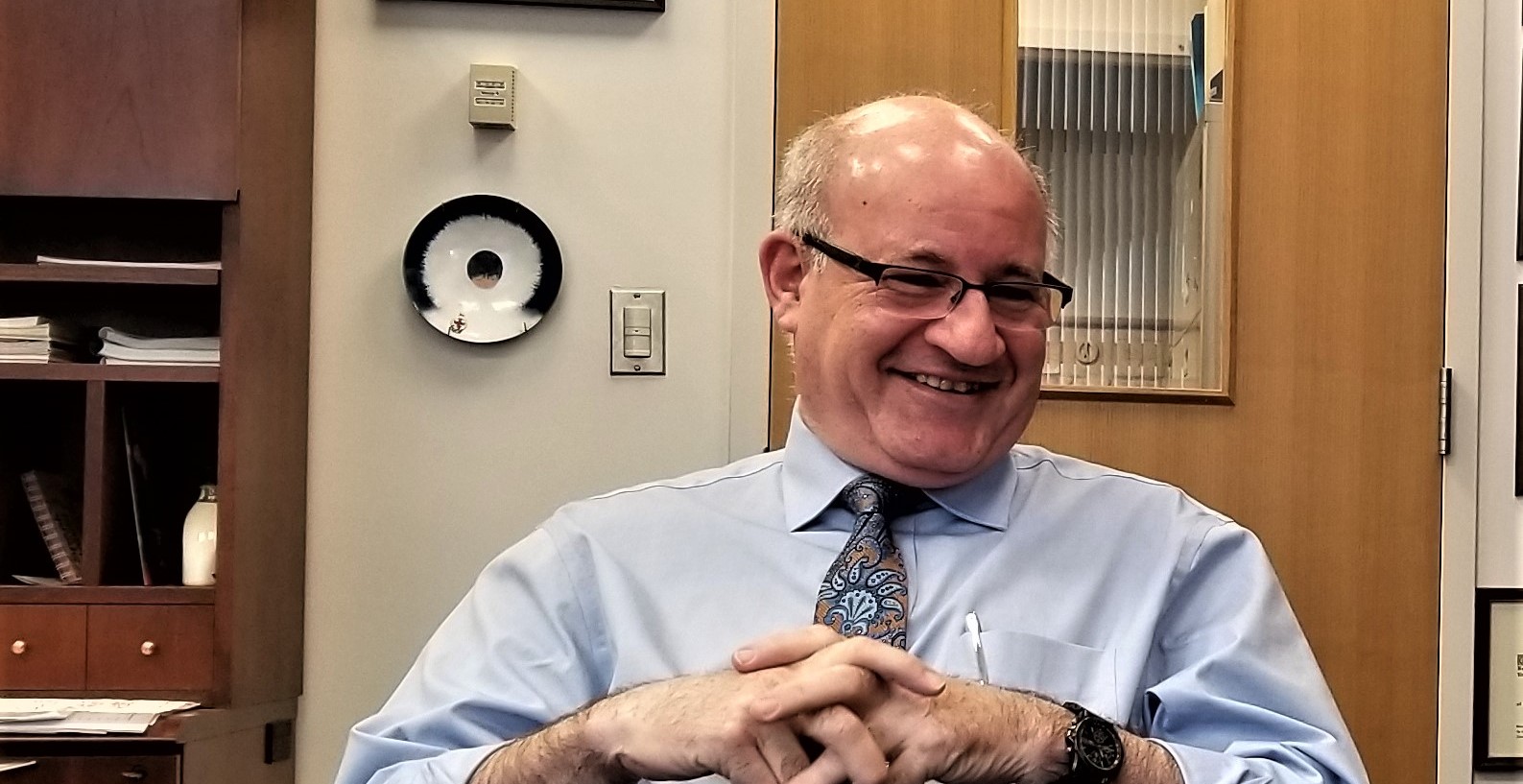
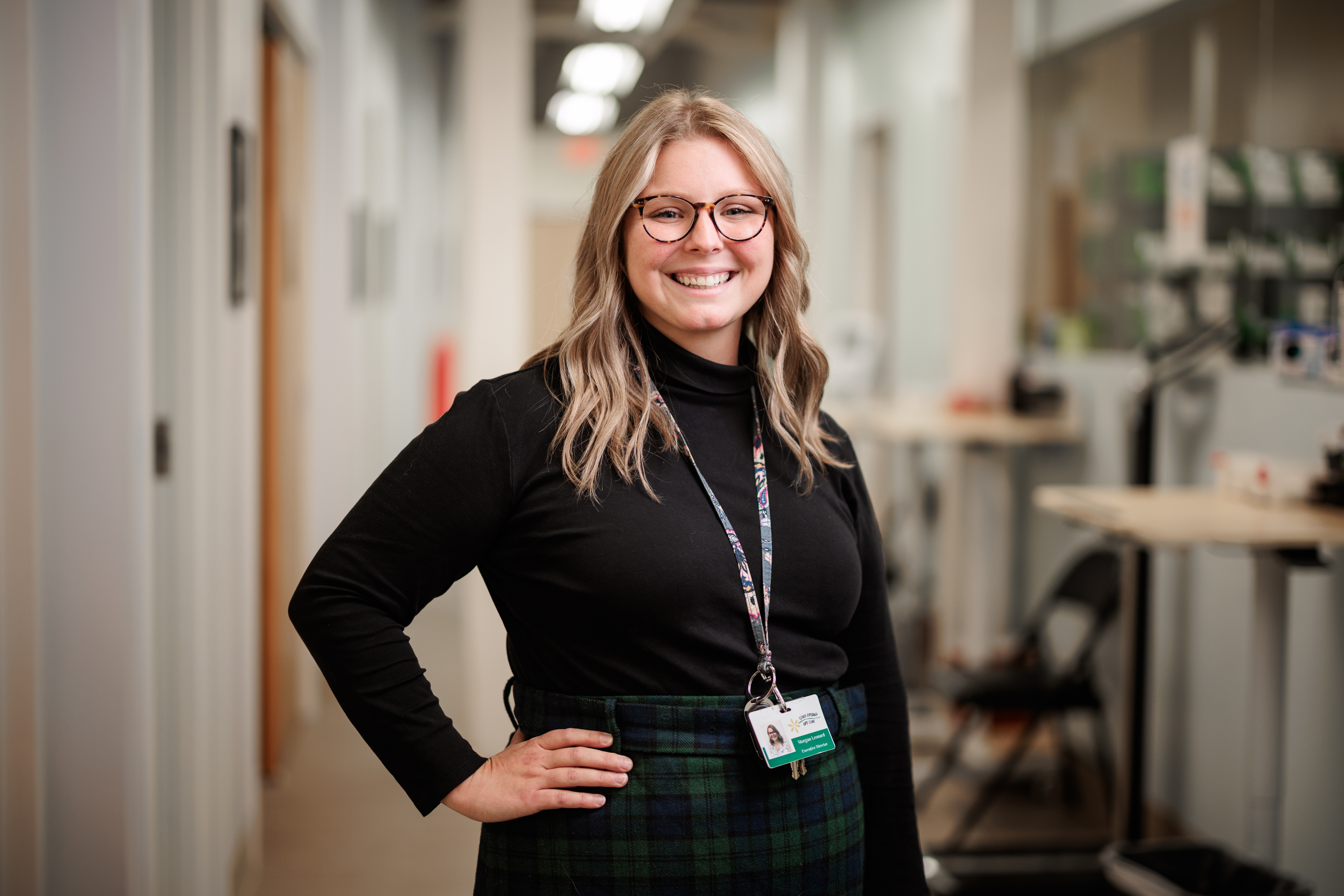
One of those welcoming Carolina was Morgan Leonard, Clínica Esperanza’s executive director. In an interview, she gave Ocean State Stories an overview of the center.
“We serve about 4,000 individuals annually across about 13,000 visits, with a core team of 20 staff members,” she said. Two of those “are administrative and the rest are direct-support professionals, meaning they’re providing direct patient care,” Leonard said. “And we have a team of over 200 volunteers, including medical providers, medical students, nurse practitioners, physician-assistant students and social-work students.”
Services include “preventative healthcare and primary care, as well as specialty clinics, including ophthalmology, cardiology, gynecology, and psychiatry,” according to Leonard. “We have behavioral health services and we offer therapy on site. We have a newly established colposcopy clinic for patients that may have cervical cancer. We do these services right here in-house.”
Leonard stated that an essential role is played by patient navigators (in Spanish: navegantes): “certified community health workers, medical interpreters, and healthy lifestyle educators that are cross-trained as medical assistants.” Twelve staff members hold that position.
“Navegantes are the first person a patient contacts when they enter the clinic and they accompany a patient throughout the visit, mostly because a lot of our providers are not Spanish speaking,” Leonard said. “ They bridge the cultural and linguistic gaps between the provider and patient, just to make sure that they’re getting all the information that they need. And then they’re the last person a patient sees before they leave the building [after making their follow-up appointment].
“They essentially act as case managers for all patients and they become a trusted person that patients can call if they have any needs. And that’s really what sets us apart and it’s how we build trust with the community.”
Leonard’s journey to executive director was no straight line. A native Rhode Islander, she earned a Bachelor of Arts degree from Rhode Island College in public administration and political science with a minor in international non-governmental organizations.
“At the same time,” she said, “I was working in an office for a staffing agency that held contracts with different government agencies and the private sector. I assisted with credentialing healthcare professionals.” Leonard discovered that some of them accepted insurance that covered only a small range of conditions.
One of Leonard’s friends who was studying to be a nurse told her about the clinical experience she was receiving at Clínica Esperanza.
“Both of my parents are in the health care field, but I couldn’t do direct service,” Leonard told Ocean State Stories. “That’s just not my forte, but I knew I wanted to be a part of the clinic. I was hired at Hope as a project manager to help with some data entry. Small things. I started in April 2019 and by February 2020, we were implementing COVID-19 protocols a little bit ahead of the curve. I was director of operations from May 2020 to April of 2023, and that’s when I was named the organization’s first paid executive director.”
She also enrolled at Northeastern University, where she earned a master’s in public administration with a focus on health care management and policy.
Clínica Esperanza’s website outlines the wide range of ancillary services the center provides. They include links to videos and podcasts, including Nuestra Salud, hosted by Dr. Pablo Rodriguez. Nuestra Salud is also broadcast on radio station Latina 100.3 FM. Workforce development is also offered at Hope.
Hope also has an on-site station known as a bodega (Spanish for small grocery store).
“It’s at no cost to our patients and it features canned goods, clothing, and more. We receive $6 million in in -kind donations from Direct Relief and AmeriCares every year. Those are medications, over-the-counter products, baby formula, household goods that we’re able to distribute at no cost.”
“We are a a place to be healthy for patients, volunteers, staff, and the community,” Clínica Esperanza states on its website. “We believe healthcare is a human right.”
Asked her opinion of Clínica Esperanza, Carolina said “I would definitely recommend Hope Clinic to other people.”
Clínica Esperanza is supported by a multitude of charities, organizations and companies, including The Rhode Island Foundation, Brown University Health, United Way of Rhode Island, Providence College, Rhode Island College, The Episcopal Charities Fund of Rhode Island,CVS Health Foundation, Americares, and Blue Cross Blue Shield of Rhode Island.
A study published in The Journal of Health Care for the Poor and Underserved showed that “for every $1 in funding for walk-in clinic operation, delivering free care provided a return on investment of $71.18 (range: $70.95– 71.40) in health care value.”