
It’s also a national crisis, and some local programs are addressing it
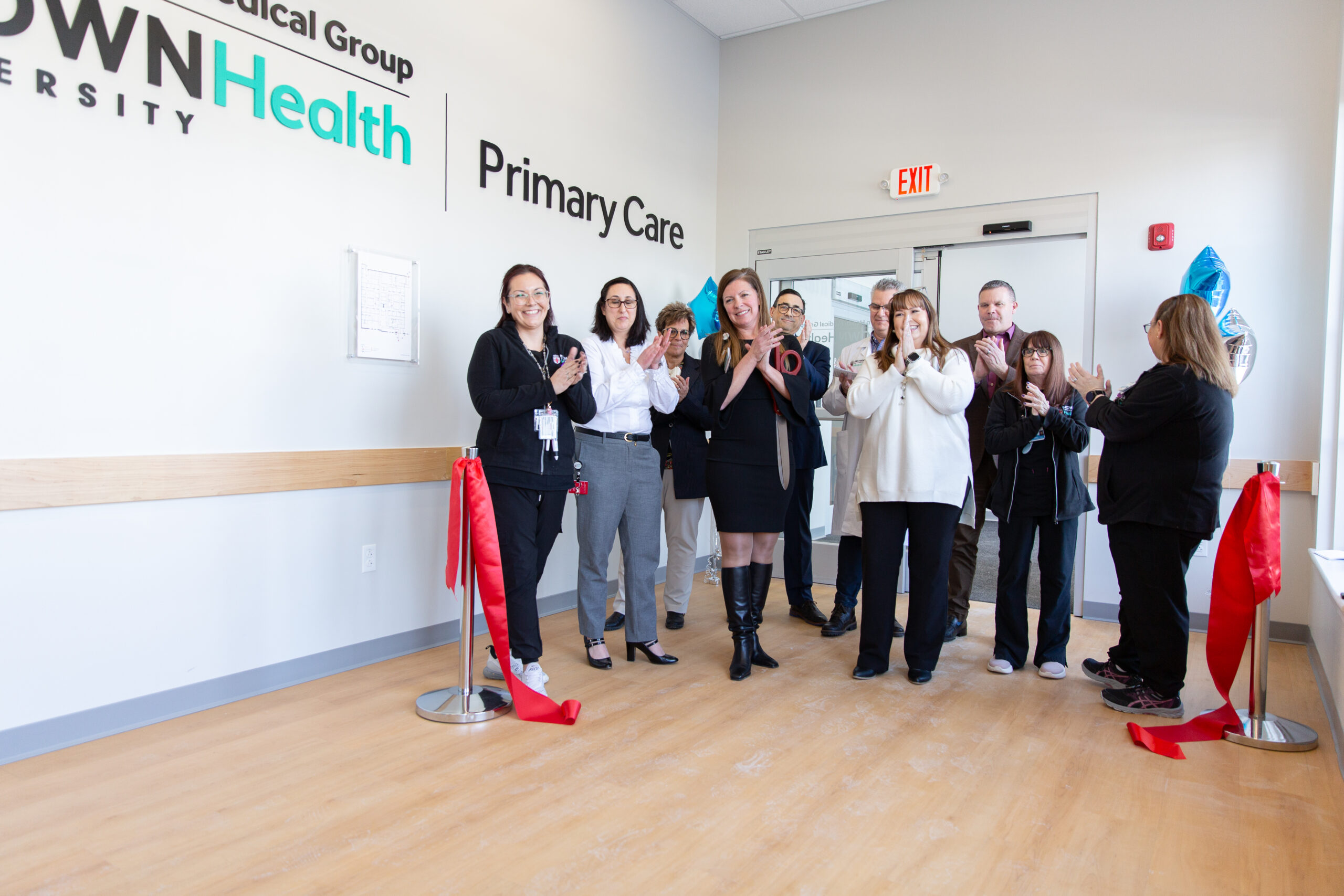
MIDDLETOWN — There was a reason the healthcare professionals were smiling last month in the photo taken at the ribbon-cutting for Brown Health Medical Group Primary Care’s new site at 99 East Main Road.
A pressing need on Aquidneck Island was being addressed.
“The opening of our Middletown location represents more than a new address—it marks a major investment and commitment to the future of primary care for this community,” said Dr. Edward McGookin, the group’s Chief of Primary Care. “In a region where access to primary care has long been limited, this new site meets community need by expanding access to high-quality coordinated care in the region.”
But the site — with its 15,000 square feet of patient rooms, lab services and room to expand — is only one initiative in the fight to bring primary care to more Rhode Islanders. Throughout the state, the need is great.
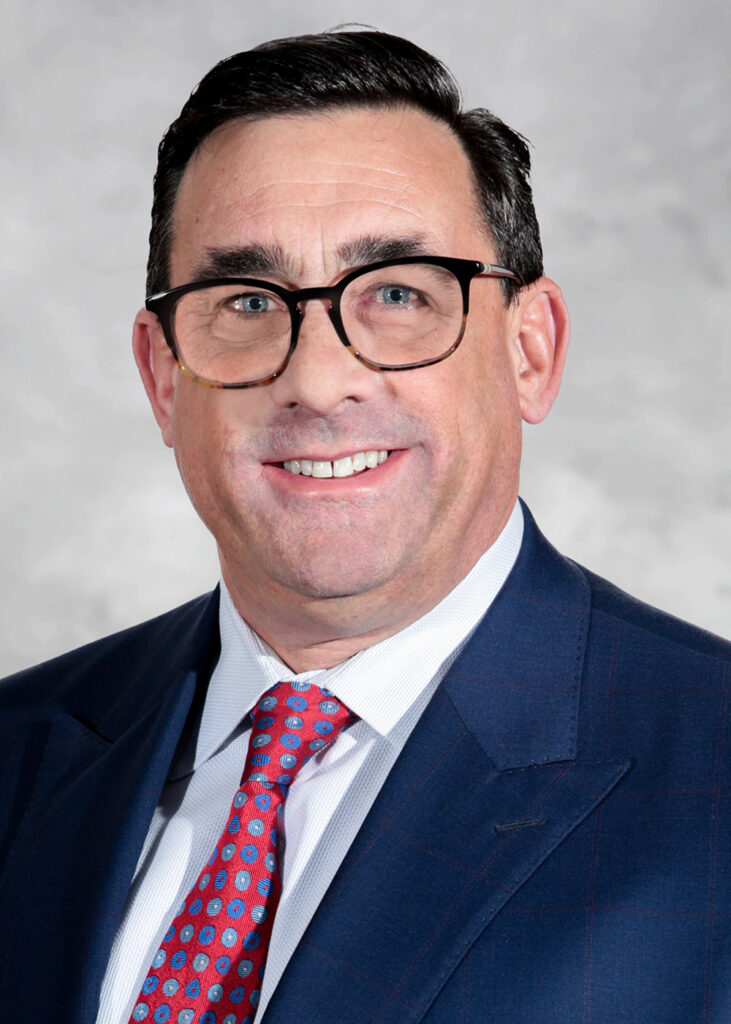
In an interview with Ocean State Stories, McGookin said “there are not enough primary care clinicians. That’s physicians as well as nurse practitioners and physician assistants.”
President – Submitted photo
COASTAL MEDICAL
2022
McGookin, Edward MD 2022
According to McGookin, those who are practicing — PCPs, in medical vernacular –are overburdened.
“Primary care is really difficult work,” he said. “It’s not an exaggeration that for every hour a physician or a clinician spends in face-to-face care with patients, they spend at least one, if not two hours in non-face-to-face documentation, preparation, aggregation of data from all sorts of different sources, interpretation of lab and imaging data, reviewing consult notes, and discharge summaries from hospitals.”
McGookin said “we consider a full-time primary care clinician [works] 32 hours of face-to-face care with patients. That’s eight hours a day, four days a week,” but with all of her or his additional responsibilities, “it is not an exaggeration to say that our clinicians expect to work 60 hours a week, and some do more than that.
“And at some point, it becomes hard to see that they’re adequately compensated for all 60 of those hours. They’re certainly adequately compensated for the 32, but the amount of behind-the-scenes work that’s required of us is very draining. That is not the experience with many of our of our other medical specialties,” such as surgery and orthopedics, which pay substantially more.
How much more?
According to a December 2025 analysis by the federal Health Resources and Services Administration (HRSA), a doctor practicing orthopedics in 2024, the latest year for which data are available, earned $564,000 annually. A plastic surgeon earned $544,000. A family medicine physician earned $281,000, less than half an orthopedist’s salary.
Alison Croke, president and CEO of Wood River Health, which serves residents of South County and beyond, also emphasizes the difficulty of providing primary care.
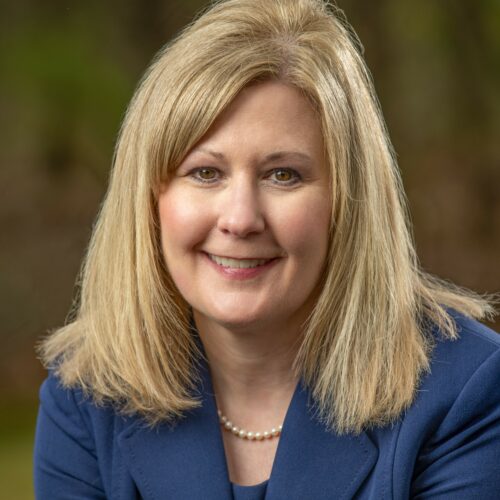
“Primary care is hard,” she told Ocean State Stories. “You’re always told that with anything you need, start with your PCP. So we become the first place for everybody, for everything. Whether it’s a chronic condition, whether it’s preventive care, whether it’s behavioral health or substance-use treatment, it’s everything. It’s not just one organ or one type of condition.
“Family practice and internal medicine primary care providers are seeing everything and everyone, of all ages. And that demand can be very challenging because you’re asked to do so much and take care of so much compared to what a specialist would.”
Comparatively low reimbursement rates in Rhode Island are another factor, according to Croke.
“That’s another challenge,” she said. “By going five miles down the road into Connecticut, a family-medicine provider can make significantly more than what we are able to pay. Same with the border of Massachusetts. The reimbursement rates are higher in Massachusetts. Salaries are higher. So you can live in Rhode Island, go work in Seekonk or Attleboro and make significantly more.”
A 2024 analysis by the Rhode Island Foundation revealed that the average reimbursement paid by private employer-sponsored health plans was $266 in Connecticut, $202 in Massachusetts, and $188 in Rhode Island.
In an email, Croke explained how reimbursement rates are set in Rhode Island. Neighboring states use different formulas.
“Since 2010,” she wrote, “Rhode Island has operated under Health Care Affordability Standards, enforced by the Office of the Health Insurance Commissioner (OHIC). These rules: Cap annual growth in commercial hospital reimbursement rates (historically tied to CPI or Medicare updates); apply most strongly to the fully insured commercial market; and are stricter than any comparable system in Massachusetts or Connecticut. Multiple independent analyses show this policy directly lowered provider reimbursement relative to neighboring states.”
Other factors involved, according to Croke: “Hospital prices in RI are [about] 9–10% lower than comparison states as a result of the caps. Commercial hospital reimbursement growth was constrained for over a decade, while Massachusetts and Connecticut allowed market-driven increases…. By 2022, affordability standards reduced hospital revenue by $150–160M annually Bottom line: Rhode Island intentionally traded provider revenue for lower premiums.
“For Medicaid reimbursement, the rates are included in the state fiscal year budget package proposed by the Governor and approved by the General Assembly. As you know, the state has a structural deficit in the budget and since health care costs are approximately 25% of the total state budget, there is usually a need to contain costs and keep reimbursement rates flat. There have been some provider rate increases enacted by the General Assembly over the last several years, which has helped. But those increases do not close the gap entirely.”
Add in the debt many physicians take on to complete medical school, Croke said, and higher-paying specialties become more attractive to new doctors.
“The dollars and cents can often sometimes drive these decisions,” she stated.
Like Croke and McGookin, the December 2025 HRSA analysis affirmed the role of primary care.
“The importance of primary care cannot be overstated,” it declared. “Primary care is often the first contact a patient will have with the health care workforce and sets the trajectory for a positive or negative patient experience and outcome. A high-functioning primary care system treats illnesses and injuries before they become severe, provides ongoing care to mitigate chronic conditions, identifies when more
specialized care is required, and connects the patient with a clinician.
“When primary care does not function as intended, patient issues can compound and become increasingly more difficult to treat and resolve.”
It continued: “The U.S. primary care system faces several challenges in the coming years. Barriers to health care access and shortages of providers result in uneven use of services. Because the primary care workforce is not distributed equally among geographic areas, many rural areas face low rates of physicians. Lower compensation compared to nonprimary care specialties and heightened stress and burnout are challenges in attracting and retaining new clinicians.”
A report by the 121-year-old New York City-based Milbank Memorial Fund, whose mission is “improving population health and health equity by connecting leaders with experience and sound evidence,” agreed with the HRSA analysis. Furthermore, it cited primary care’s role in cost reduction and long-term prevention of many diseases and conditions. Among the findings:
— “Nearly all adults (95.5%) with a usual source of primary care received preventive services for chronic disease, compared to 67.6% of those without a usual source of primary care.”
— “Children with a usual source of primary care were also more likely to receive preventive services for vision testing (73.7% vs. 20.9%), accident or injury prevention (43.7% vs. 21.7%), secondhand smoke exposure (37.1% vs. 20.9%), and obesity prevention (95.6% vs. 80.6%).”
— “For those adults who do develop chronic disease, having a usual source of primary care lowered their odds of going to the emergency department (ED) by 11%, and of hospitalization by 20%.”
— “For children with chronic disease, having a usual source of primary care lowered their odds of going to the ED or being hospitalized for a condition that can be treated in an outpatient setting by 50%.”
— “Having a usual source of primary care was associated with having nearly 54% lower total health care expenditures for adults with chronic disease, and nearly 40% lower health care expenditures for children with chronic disease, compared to those who did not have a usual source of primary care.”
Dr. Roget Mitty, President and COO of Care New England Medical Group, also shared similar convictions.
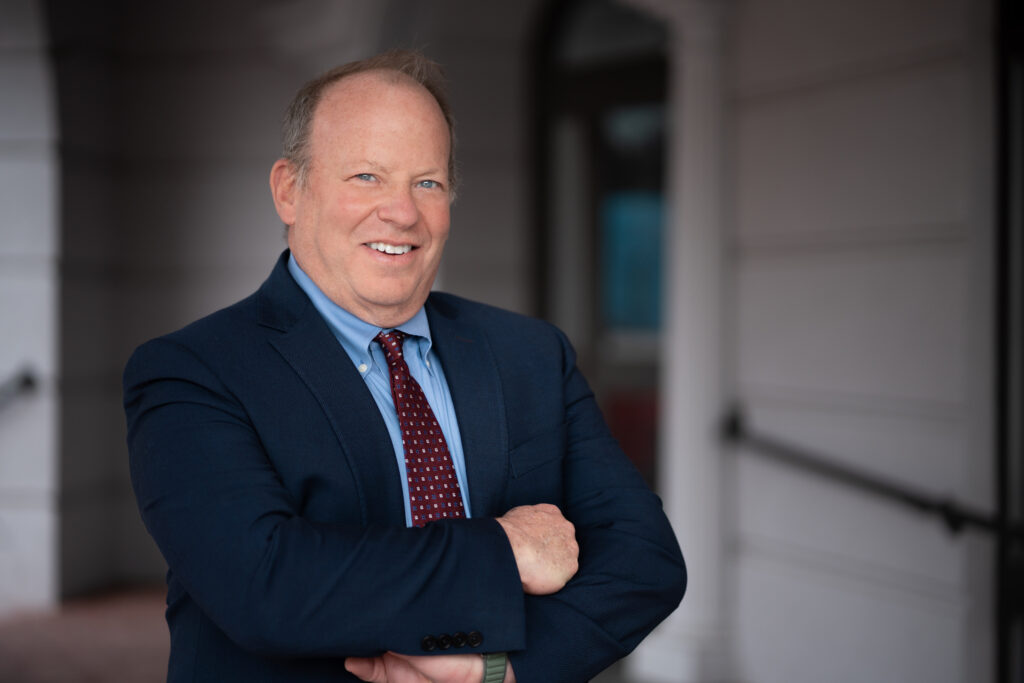
“Excellent primary care actually prevents over-utilization of the remainder of the health system,” he said in an interview with Ocean State Stories. “So in other words, if you have a primary care doctor taking good care of you and she or he is managing things like blood pressure, that can keep you from needing a cardiologist down the road. And if he or she is making sure that you get your appropriate screening tests, like mammography for breast cancer or colonoscopy for colon cancer, that can ultimately reduce the rates of those cancers.”
Mitty said he and others are working for reform.
“The other piece people often ask about is why Rhode Island seems to be worse than other states,” he stated. “And have been working both with the payers — the insurance companies like Blue Cross — as well as the Office of the Health Insurance Commissioner to look at reimbursement rates for physicians in the state.”
“In my role,” Mitty continued, “I’m involved with recruiting physicians and they often say ‘well, gee, I get paid less in Rhode Island.’ And 30 years ago, that was OK because, for instance, the cost of housing was way less in Rhode Island than surrounding states. That’s not so true anymore. I come from the Boston area. Housing down here is just as expensive as the suburbs of Boston. So we need to continue to work to end the disparity in pay between our surrounding states.”
One proposed solution to the crisis is opening the state’s second medical school at the University of Rhode Island, an idea that has received the unanimous endorsement of URI president Marc B. Parlange and a state Senate Special Legislative Commission that submitted its report in January. If built, the school’s annual tuition is estimated to be about $50,000 annually ($200,000 over four years), compared to $75,000 annually ($300,000 over four years) currently at the Warren Alpert Medical School of Brown University. It also seems likely that some URI students would not live on campus, which would lower housing costs. The rationale is that with tuition lower than Brown, students’ debts will be correspondingly lower and thus many will stay.

“Through the expertise of our faculty, our academic programs, research, and partnerships, URI is advancing the physical and mental health of individuals and communities in Rhode Island and around the world,” co-chair Parlange said after the commission’s vote. “Establishing a medical school at URI is a natural and strategic extension of this work—one that is both realistic and a sound investment. It would help address Rhode Island’s primary care shortage while strengthening our state’s economy.”
Said co-chair Sen. Lauria, a primary care nurse practitioner: “Rhode Island is one of the last states without a public medical school option. This impedes Rhode Island students’ access to medical school, and ultimately it is detrimental to Rhode Islanders’ access to care, particularly primary care.
“As one of the leading public universities in New England, URI is well-positioned to take this on, and establishing a medical school there will provide transformative benefits to primary care, health care as a whole, and our state’s economy. A medical school at URI is an extremely worthy investment that will benefit all Rhode Islanders.”
However, opposition has surfaced to a medical school at URI. Among those casting doubt on the possibility the school would be a solution to the primary care crisis are Dr. Kelly McGarry, director of the General Internal Medicine Residency at Rhode Island Hospital, and Dr. Maria Iannotti, a first-year resident. In a Providence Journal opinion piece published on March 29, they wrote:
“A medical school at URI would not be a short- or long-term solution. In addition to the time needed to engineer an accredited medical school, it takes seven years to produce an inexperienced primary care physician. Once trained, there still must be an incentive to stay in Rhode Island….”
In a statement provided to Ocean State Stories, a Brown Health spokesperson wrote:
“We have engaged with the consulting firm and University of Rhode Island leadership throughout this process, including several months ago and as recently as last week. This remains a University of Rhode Island matter, and we do not plan to take a position.
“Brown Health remains focused on addressing the underlying challenges facing the healthcare system, particularly the issue of underpayment for healthcare services particularly from Medicaid.”
Could Artificial Intelligence help? Yes, say Croke and McGookin.
“Everyone is now talking about artificial intelligence and the promise of AI and how AI can help,” Croke said. “We have invested in an AI scribe, an artificial intelligence scribe. It’s sort of ‘ambient listening’ in the background during the patient visit. And then we take the conversation from the patient visit and create a clinical note so the provider, instead of having to type, can just review it and then enter it into the chart. When we started doing that, I was told it did save hours of time for the providers, for sure. So having that scribe is definitely one solution.”
But not a total one, according to Croke and McGookin. Legislative reimbursement reform at the state and federal levels is needed, they assert. One leader of such efforts is U.S. Sen. Sheldon Whitehouse, according to McGookin.
“We as Rhode Islanders are really blessed that Sen. Whitehouse has always been a tireless advocate for health care, even going back to when he was in Rhode Island state government, and he’s taken that fight to the federal government,” McGookin told Ocean State Stories. “Even in the harsh environment of Washington now, he’s advocating and pushing through bipartisan measures to improve health care.”
McGookin added: “The problem is the pace of legislative change is much slower than the pace of necessity. And so we’re finding people facing barriers to care, medical debt that’s causing bankruptcy, and poor access to care that is evolving way faster than legislative solutions can. From my perspective, of course, I would like to see health care prioritized, but I know that it’s a very delicate balance of where taxpayer and federal dollars are allocated.”

Editor’s Note: Ocean State Stories last reported on primary care shortages in 2024.