
By MATTHEW LAWRENCE, Beacon Media Contributing Writer
July 8, 2026
This story was originally published in the Warwick Beacon, a publication partner of Ocean State Stories.
Read this story in its original form and all other Beacon stories by clicking here.
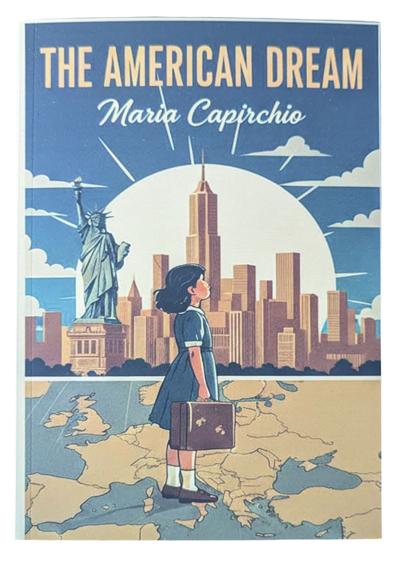
Seventy years ago, Maria Capirchio’s family brought her from the small Italian city of Itri to a new home in the United States. Now 78, Capirchio has written her first book. Entitled The American Dream, it is a mix of memoir, photographs, recipes, and even songs.
“There were no jobs in Itri,” Capirchio says about her family’s decision to make the journey. “My father tried to go to France. He tried to go to San Remo [in northwestern Italy].” After failing to find work there, he had to borrow money to take the train back to his family in Itri.
It was a rough time in the small city, which had been bombed heavily by American forces during World War II. In the book, Capirchio describes being injured by shrapnel from a live grenade that her younger sister found while playing. She threw it in the fireplace and it injured Maria in several places.
In 1956, when Capirchio was eight, they made the decision to move as a family to the United States.
“They gathered all the immigration papers. They were sponsored by my aunt in Cambridge, Massachusetts,” said Capirchio. “None of us spoke any English—it was my mother, my father, myself, and my two sisters with two suitcases between us and no money.”
Submitted photo
The family’s time in Cambridge was short-lived, as they found a community of Itrani living in Knightsville, including an uncle known to the family as Zio Blackie. They quickly moved again.
“My father did construction, my mother worked in a jewelry store, but when we were young she was home. We didn’t have much money but we had a lot of food all the time.” A fourth child, Capirchio’s youngest sister, was born in the United States.
Submitted photo
Like most immigrants, the family had a sharp learning curve when it came to cultural customs, even with other family members. In the book, she describes her father’s dismay when he is left home to babysit so the women of the family can attend a baby shower.
The language barrier made school challenging. “Back then, they just put you behind in school. There were no special classes. They put me back two years. When my birthday came up, I would be so embarrassed that I was so much older than everybody. I was almost twenty when I finished high school.”
Capirchio’s mother encouraged her daughters to read. “She never had to push us. We always went to the library. We read all the classics.”
Nowadays Capirchio belongs to the same book club that she joined about twenty-five years ago. “We were seven at first,” she says. “There’s four of us left.”
She is also active at Saint Mary’s in Cranston, where she prays the Holy Rosary and attends Mass every morning. She is also a member of the choir.
Next week, St. Mary’s will hold its annual Feast in honor of Santa Maria della Civita, carrying on a sacred Catholic tradition that Italian immigrants from Itri brought to Rhode Island more than a century ago, establishing ties that endure today.
For the feast, Capircho has a big party where her granddaughter helps with all the cooking. After the procession down Cranston Street with the church’s statue of Santa Maria, Capirchio and her grandchildren join others in the choir loft to sing a few songs. This year’s procession is on July 19 after 10 a.m. Mass.
“My grandchildren were coming with me every year, so the choir director [Denise Petrucci] said we might as well go with it and now they sing, too.”
“The Feast of St. Mary’s is in the book because it is very important to us,” Capirchio says. “It’s a very emotional book for me.”
Capirchio was named for the Virgin Mary, and her middle name is Civita, after the mountain near Itri that has for centuries been a pilgrimage site for Catholics in Italy.
In addition to the family’s story, culminating in her marriage to her husband Tommy, the book includes photographs, songs, and some of her favorite recipes.
“There are pictures of me growing up. Some of my sisters. My mother and father. I was very pleased.”
The book will soon be available for purchase from local independent bookstores and possibly online. “So far I’ve only given it to friends and family,” she says.
The recipes include Itrani favorites like almond biscotti, Easter bread, egg biscuits, and strufoli, which she describes as “chickpea-sized balls of sweet fried dough also coated with honey.” Those would be made for Fat Tuesday, the day before Ash Wednesday and the start of the Lenten season.
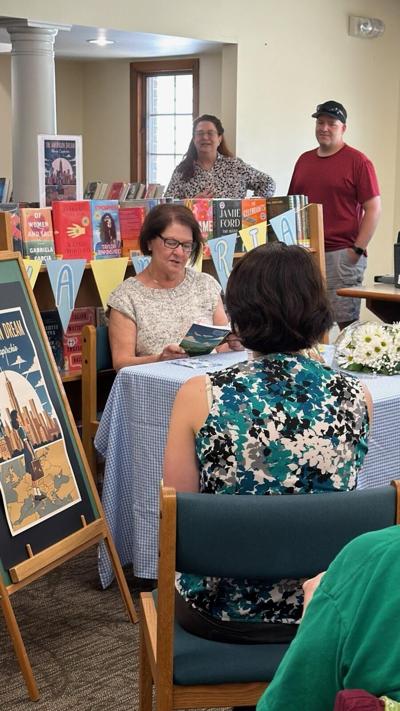
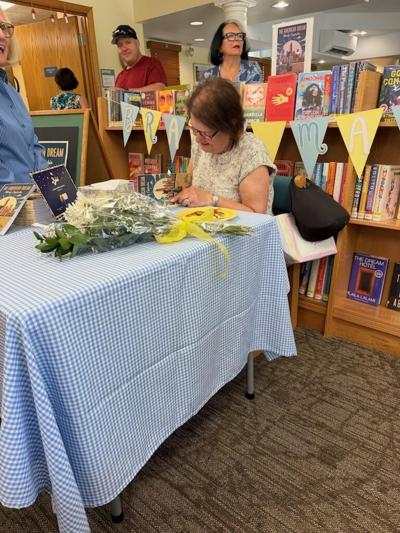
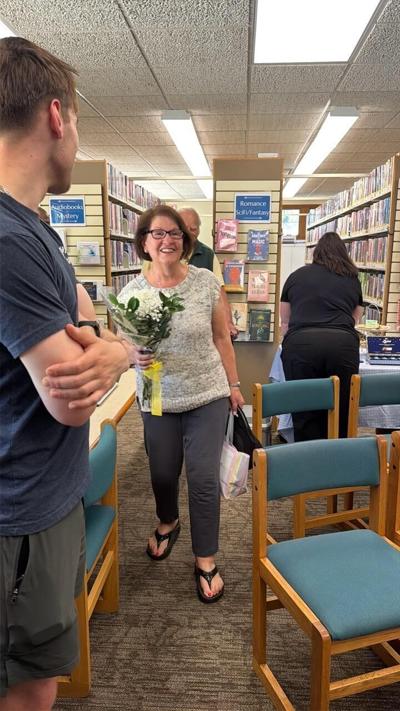
Capirchio is a reserved person and attention does not come naturally to her. Her first book signing, which took place at the Hope Library in Scituate, was a surprise organized by friends.
“I had no idea,” she says. “My family came, and the people from the library that I play mah jongg with and that I knit with.”
“I started the book 43 years ago,” she says. “But my son Tommy and my granddaughter Emma encouraged me to pick it up again.” They also helped produce the book. “She tirelessly journeyed with me through countless drafts,” Capirchio says of her granddaughter. “Ensuring my voice and my vision shone through.”
She credits her son with “lending his expertise in editing and formatting,” including the inclusion of QR codes where readers can listen to her favorite traditional Italian songs, lyrics from which are included in the book.
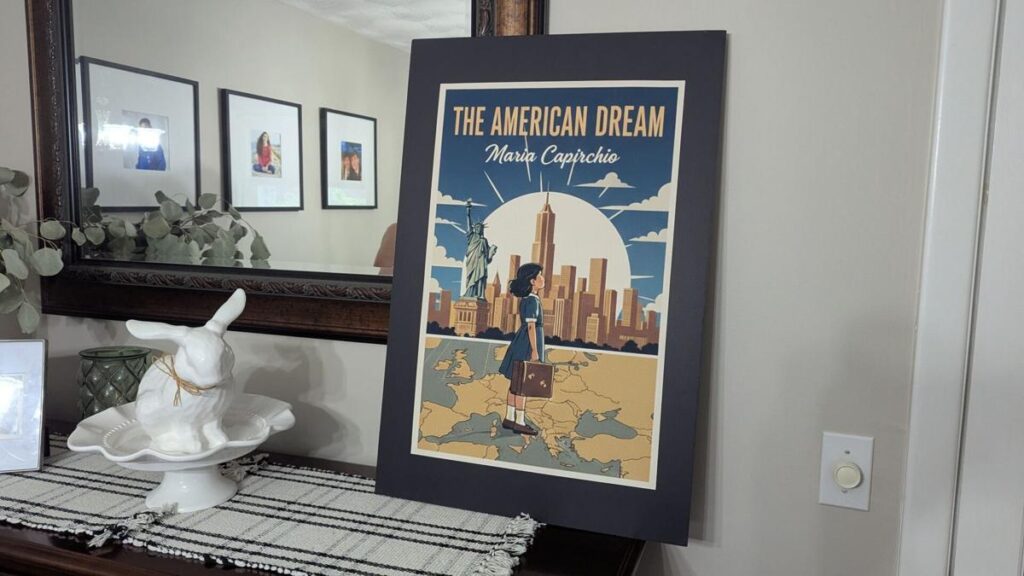
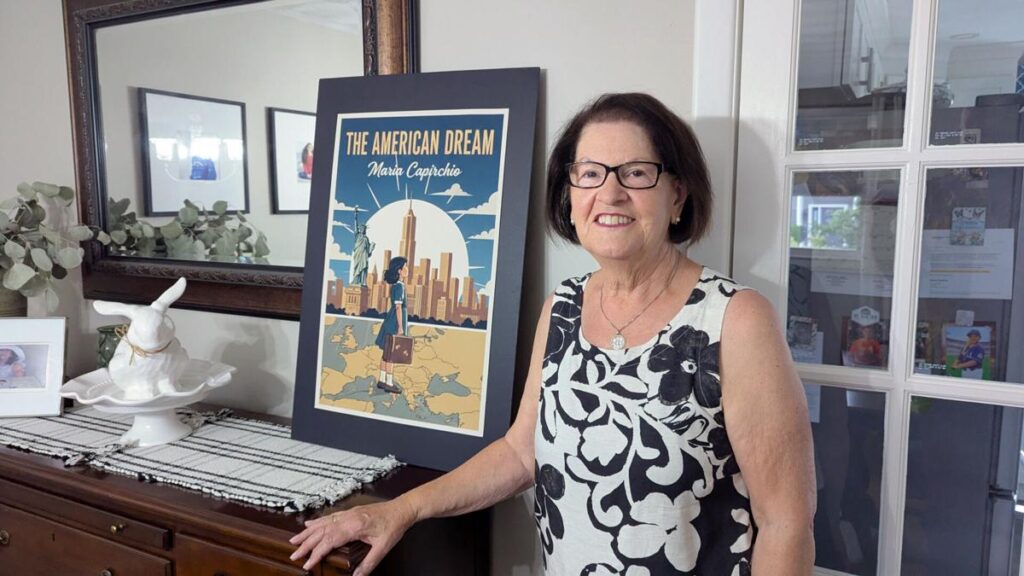
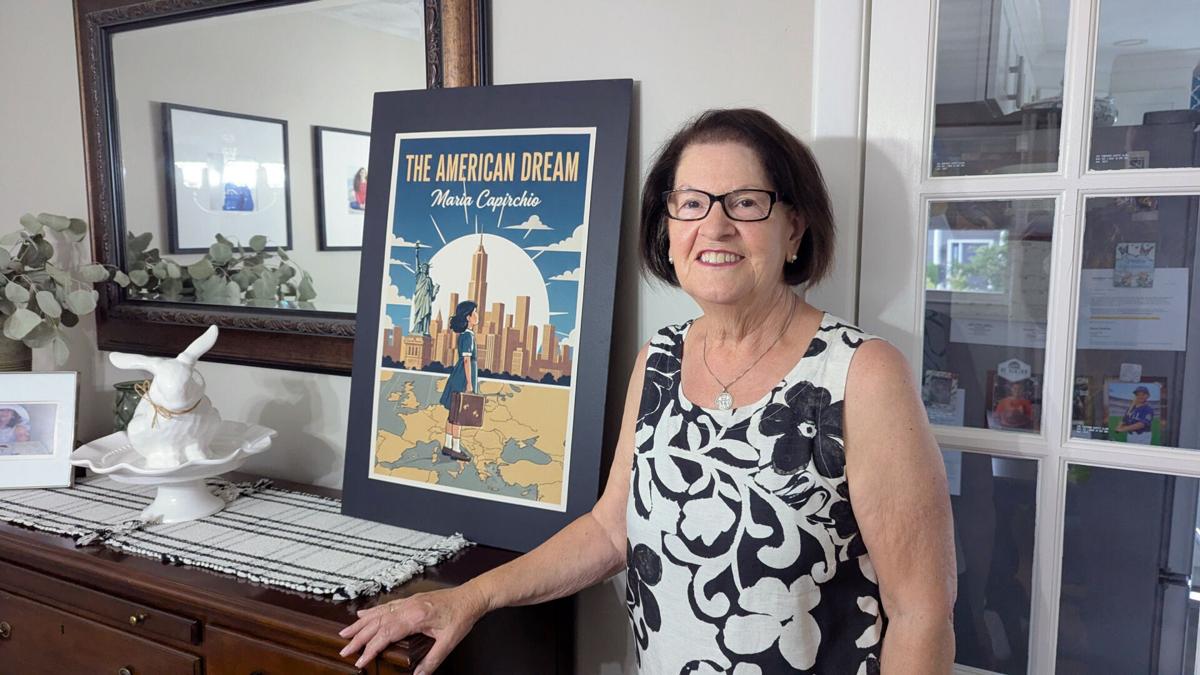
Maria Capirchio stands next to a poster promoting her new memoir The American Dream –
Beacon Media photo by Matthew Lawrence