
This story was originally published in EcoRI News, a publication partner of Ocean State Stories
JAMESTOWN — If Narragansett Bay can be thought to have recesses, Gould Island has to be counted among them.
The 53-acre island hides in plain sight, visible from the Newport Pell Bridge and in the middle of the East Passage between Newport and Jamestown. While officially part of the town of Jamestown, it’s owned by federal and state governments, and has otherwise been abandoned for decades.
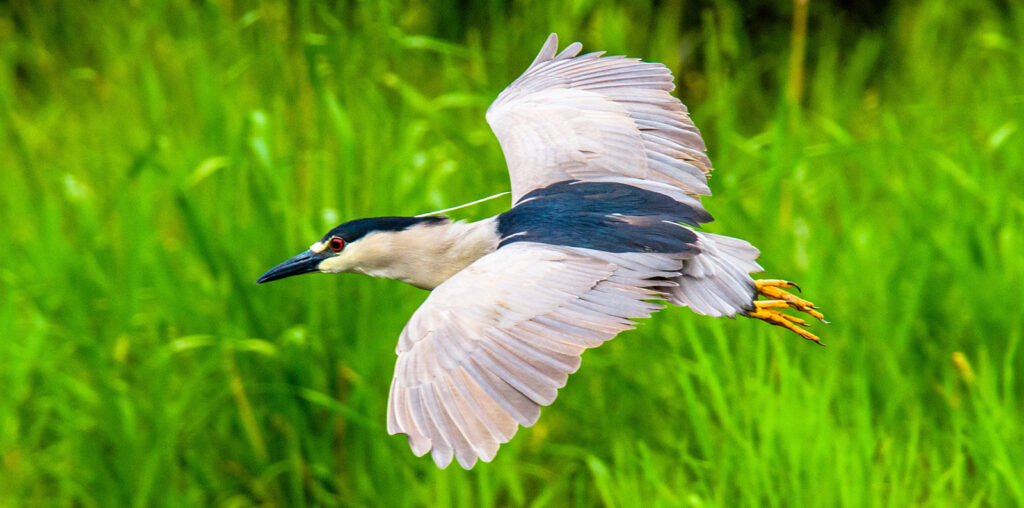
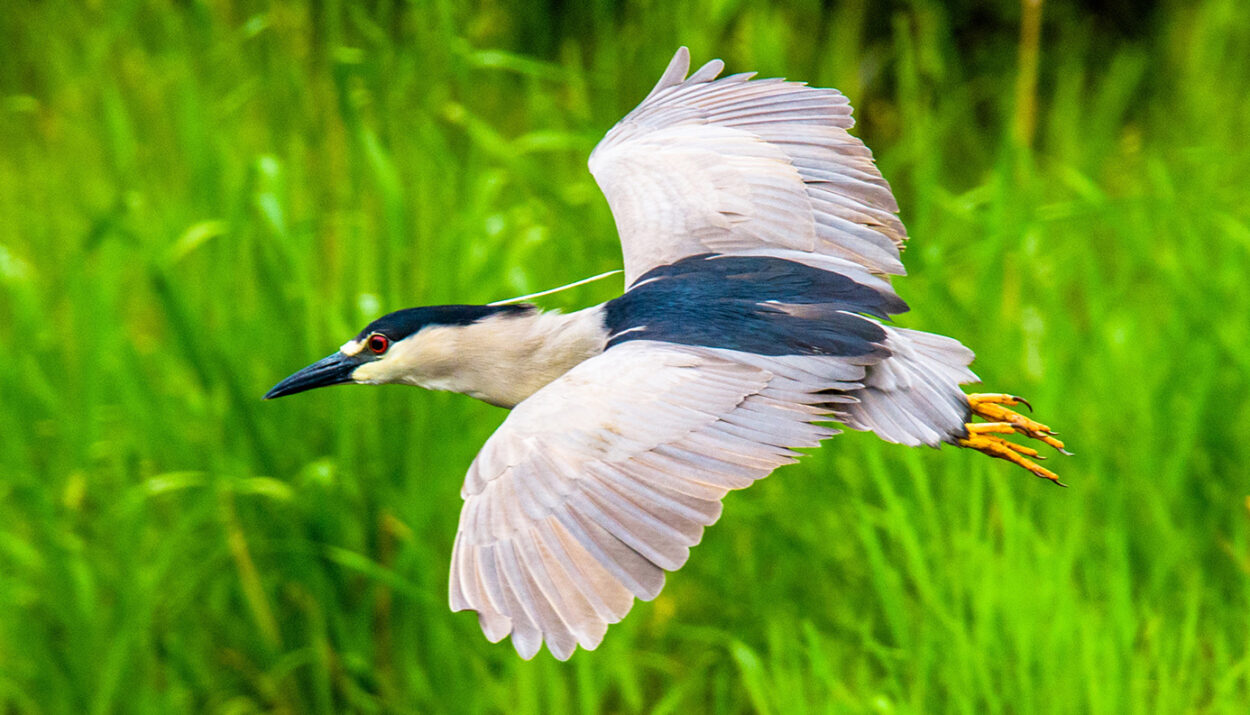
After humans moved out, new tenants quietly moved in. Over the past 50 years, Gould Island has become home to one of the state’s few remaining breeding colonies for several bird species, including herring gulls, oyster catchers, and great black-backed gulls.
The island is an isolated, ecological habitat unto itself, with little human activity beyond the occasional visit from the Army Corps of Engineers, which monitors the parts of the island still owned by the Navy, and few natural predators.
“There are so few of these areas left on the East Coast that are so important for these particular nesting birds,” Jeff Hall, executive director of the Audubon Society of Rhode Island, said. “They need to have a higher level of protection.”
Most islands in Narragansett Bay don’t share the same history as Gould Island. The Navy purchased properties on the island between 1918 and 1920 as part of a series of military installations that included Goat Island and others.
During World War II, Gould Island was the military’s premier torpedo testing ground, with 63,000 unloaded torpedoes tested for navigation techniques by 1943. Operations wound down in the decades after the war before becoming effectively abandoned by the mid-’70s.
Between 1975 and 1989 the military begin transferring the southernmost 39 acres of the island to state officials, where it would be managed by the Department of Environmental Management. The Navy still owns the remaining 13 acres on the island’s northern tip.
The DEM-owned parcels are currently used as a wildlife refuge, but they can’t be used for much else. The island’s military service left it with a serious legacy of pollution and toxins that pose serious hazards to human health. It proved successful to the gull colonies on the island, which, ironically enough, prefer areas like the former runways on the island’s southern tip.
But Gould Island’s peculiar status could change. In recent years there’s been a movement to open the island for passive recreation once the areas owned by DEM are remediated.
The island was entered into the Formerly Used Defense Sites (FUDS) program in 2018. The program, run by the Army Corps of Engineers, remediates former military sites no longer needed by the military with an eye toward returning them to local communities to do with what they will.
A Recreation Advisory Board (RAB) was formed that same year to engage stakeholders in Jamestown and other nearby municipalities on how to use the island, but it’s been slow going. The FUDS process has been repeatedly delayed by events such as the COVID-19 pandemic and a government shutdown.
The FUDS process kicked off a quiet debate among residents and municipalities: How much should Gould Island be remediated, and what should be done with it after?
The Jamestown Press reported in February 2024 that six municipalities — Jamestown, Newport, North Kingstown, Middletown, Narragansett, and Portsmouth — passed resolutions supporting changing the southernmost 17 acres of the island from wildlife sanctuary to public recreation. The middle 22 acres of the island would remain a wildlife sanctuary.
The move toward open recreation has been strongly opposed by the Audubon Society of Rhode Island, which argues that it will lead to the destruction of the breeding colonies of gull species who primarily use the southern portions of the island for habitation.
“If people camp out there, they will have fires, they will bring dogs, they’re going to light up fireworks,” Hall said. “All that disturbs the birds. It won’t be one or two, the whole colony will leave, and where are they going to go?”
Hall points to a similar situation on Rose Island. In 1992 the Rose Island Lighthouse Foundation, which Hall said he was a board member of at the time, voted to open the island to the public for the first time in decades. The island was used as a nesting ground for populations of egrets and herons, but when the public began accessing the island, there was little keeping humans from trampling over the habitats.
The colonies of egrets and herons “disappeared, collapsed, and went away,” according to Hall, although in recent years Audubon has observed similar colonies on Block Island.
Advocates for public recreation on Gould Island got a boost in July 2024, when DEM director Terry Gray sent a letter to the Army Corps of Engineers asking it to conduct a remediation study that included expanded recreational purposes.
“Although the Department is unable to make a determination on the specific use of Gould Island at this time,” Gray wrote in his letter, “all reasonably anticipated future uses of Gould Island should be considered.”
Gray’s letter meant the Army Corps of Engineers had to redo the remediation study to include scenarios where an overnight camper or park worker would spend a greater number of days on the island. More active human use requires greater amounts of remediation to avert health risks.
DEM chief of public affairs Kim Keough told ecoRI News that DEM was coordinating with the Army Corps of Engineers on the FUDS process for Gould Island, noting it was still in the remedial investigation process.