
By MIMI REITZ Beacon Media Contributing Writer
This story was originally published in the Warwick Beacon, a publication partner of Ocean State Stories.
Read this story in its original form and all other Beacon stories by clicking here.
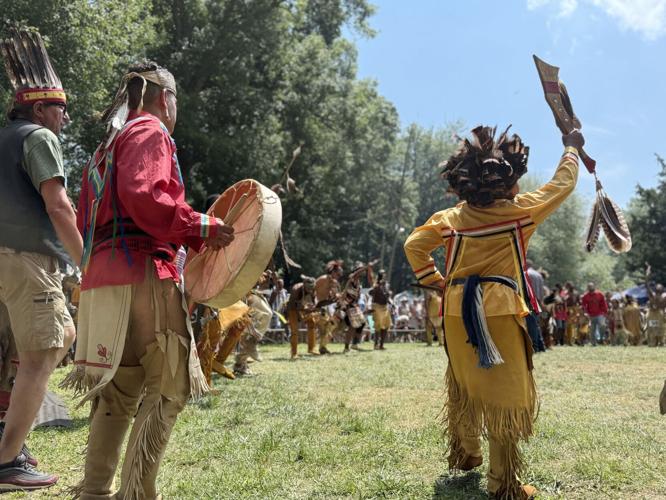
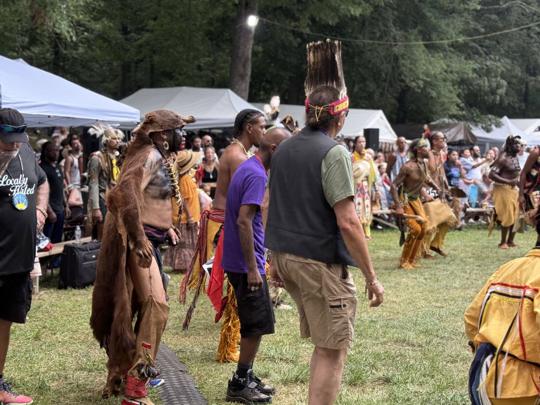
Indigenous men, women, and children danced with full hearts and thunderous energy under a beating sun last weekend, swirling traditional beaded, feathered, embroidered clothing across a field on Narragansett land as their voices sung out to the thump of sacred drums. For these Narragansetts, their annual powwow is both a celebration of the past and a declaration of their continued presence.
While the United States celebrates its 250th anniversary, this land has hosted these same dances and sacred traditions since “time immemorial”, said Narragansett Chief Anthony Stanton. The Narragansett powwow — the oldest recorded powwow in North America — brings thousands of Indigenous tribe members together to celebrate the green corn harvest each August on the sixth moon of the tribe’s calendar.
Today, the weekend means the heartfelt reunion of family and friends from near and far, the chance to honor centuries of ancestral tradition in community, and an invitation to the public to learn more about their Indigenous neighbors, whose sovereign nation still thrives in Charlestown.
“This is important to us because before there was the United States of America, before there was the state of Rhode Island, this is the territory of the Narragansett Indian tribe. We were here first,” said Chief Stanton. The tribe cites archaeological evidence and oral history which establishes their presence in what is today Rhode Island over 30,000 years ago. Over centuries of bloody persecution since the first European colonists arrived, the tribe survived massacres, war, disease, slavery, detribalization and erasure to be here today.
Mary Starlight Stanton Brown, 91, board member of the Narragansett Indian Church, has lived on Narragansett land her whole life and has attended the powwow since she was young.
“It gives us hope and encouragement that one more year, we’re still here. We still live,” she said. “In all these years, nothing much has changed when it comes to August meeting.”
351 years and counting
According to recorded history, the Narragansett tribe has held their powwow consecutively for the past 351 years. “It’s an important part of our own history and legacy and continuation as a people,” explained Lorén Spears, Executive Director of the Tomaquag Museum in Exeter and a member of the Narragansett tribe. “It was something that we were able to maintain through all of these years of conquest and colonization.”
The powwow brings together Indigenous people from across the country. Chief Stanton said there were about 24 different tribes represented at the event, creating a space for intertribal dialogue, support, and celebration.
Larry Wilson, chair of the Eastern Pequot Tribal Council, said that while some aspects of ceremonies between tribes differ, powwow events always “celebrate in earnest the love that we have for each other, the love that we have for our traditions, and what it is that makes Native Americans strong, prosperous, loving, and healthy.” The annual meeting “reminds us of how special the bond is between the tribes and among the tribes.”
By inviting members of the public to attend their sacred, spirited meeting, many in the Narragansett tribe hope Rhode Islanders and other visitors will better understand their community, history and traditions — and recognize their contributions to this nation.
Tomaquag welcomes
The Tomaquag Museum invites visitors year-round to learn about the Indigenous cultures of Southern New England, providing a first-person voice on their culture and history through engaging exhibits and community projects. The Tomaquag team shares dialogue with the public in their mission to “reconcile the past and empower present and future generations.”
“There is no U.S. history without Indigenous peoples history. There was no creation of this country without Indigenous people,” said Spears. The museum’s new exhibit, “Revolution to Reclamation, Freedom Through Indigenous Sovereignty” commemorates America’s 250th anniversary by exploring Indigenous cultures’ contributions to its creation. The exhibit will run through April 22, 2027.
Indigenous people were not merely witnesses to the creation of the United States — they participated in it. Large numbers of members of the Oneida, Tuscarora, Mohican, and the Stockbridge-Munsee tribes served alongside American patriots during the Revolutionary War, including under George Washington at Valley Forge. And Indigenous people have continued to serve — maintaining the highest number of service per capita in the U.S. Armed Forces.
Throughout this nation’s history, Indigenous individuals have participated in every tenet of American life — from high-level politicians and Congressmen, to astronauts, Olympians, and ballerinas. “Indigenous people are here every day being part of this country,” said Spears. While tribal governments maintain sovereignty, continuing their cultural knowledge generationally, she emphasized that their members participate in American society every day, saying “there’s this complexity that’s happening.”
Spears said the museum’s exhibits can spark “Aha!” moments for visitors, who “leave having an understanding of what it means to be Indigenous and what is still here.” The museum is open to the public on Wednesdays and Saturdays from 10 a.m. to 5 p.m. and the team at Tomaquag is also available for schools and other groups interested in learning more through presentations and dialogue.
Sharing a culture
At this year’s powwow, the thriving Indigenous culture and community of today drew thousands to Narragansett land. Indigenous artists sold handmade crafts, food vendors served traditional cuisine, including bison burgers, fry bread, and smoked salmon. And under the auspices of Kawtontawitt, Chief Sachem and Tribal Medicine Man John Brown, traditional ceremonies unfolded throughout the day.
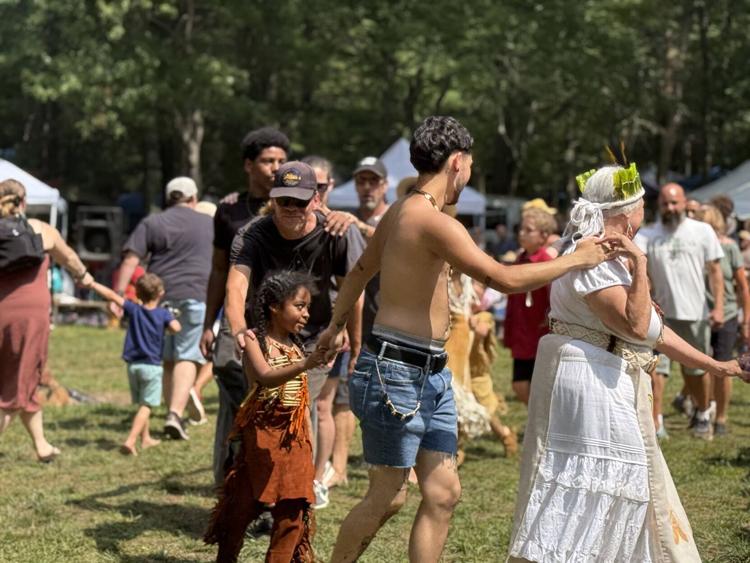
Dr. Darlene Flores, a traditional Medicine Keeper for her Taino community (the Indigenous people of the Caribbean), spoke between dances and ceremonies, introducing the public to the sacred instruments in use and narrating the meaning of each ancient tradition. Tribal members thanked the Great Spirit, their Earth Mother, their ancestors, and their elders for the tribe’s continuation — a gratitude made visible as gaggles of children danced eagerly alongside some of the oldest members in the community.
After years in which practicing their traditional culture and honoring their ancient beliefs were shunned and made illegal, sharing generations of Indigenous knowledge with young tribe members today is often the most meaningful part of the weekend.
“I like to see the next generation of children out there sharing culture, being part of the community,” said Spears, whose children and grandchildren participated in the events. “Seeing them out there in their traditional clothes, just feeling that pride of who they are as an Indigenous person.”
As the drum of each new song began, the children couldn’t wait — they buzzed with excitement, tapping their feet and stretching their arms at the edge of the dance circle before bounding in, carefully matching the steps of their elders. The voices that carried across the field and the gentle patter of these feet had been heard and felt before them for generations. And as they learned the steps, it was clear they would continue long after the weekend was over.
Editor’s note: Lorén Spears is a member of the Ocean State Stories Advisory Board.