
“It’s so great to see children realize there is a place they can blossom on their own time.”
PROVIDENCE — For some families with children who have disabilities, homeschooling offers flexibility and individualized support that they say can be difficult to find in traditional schools.
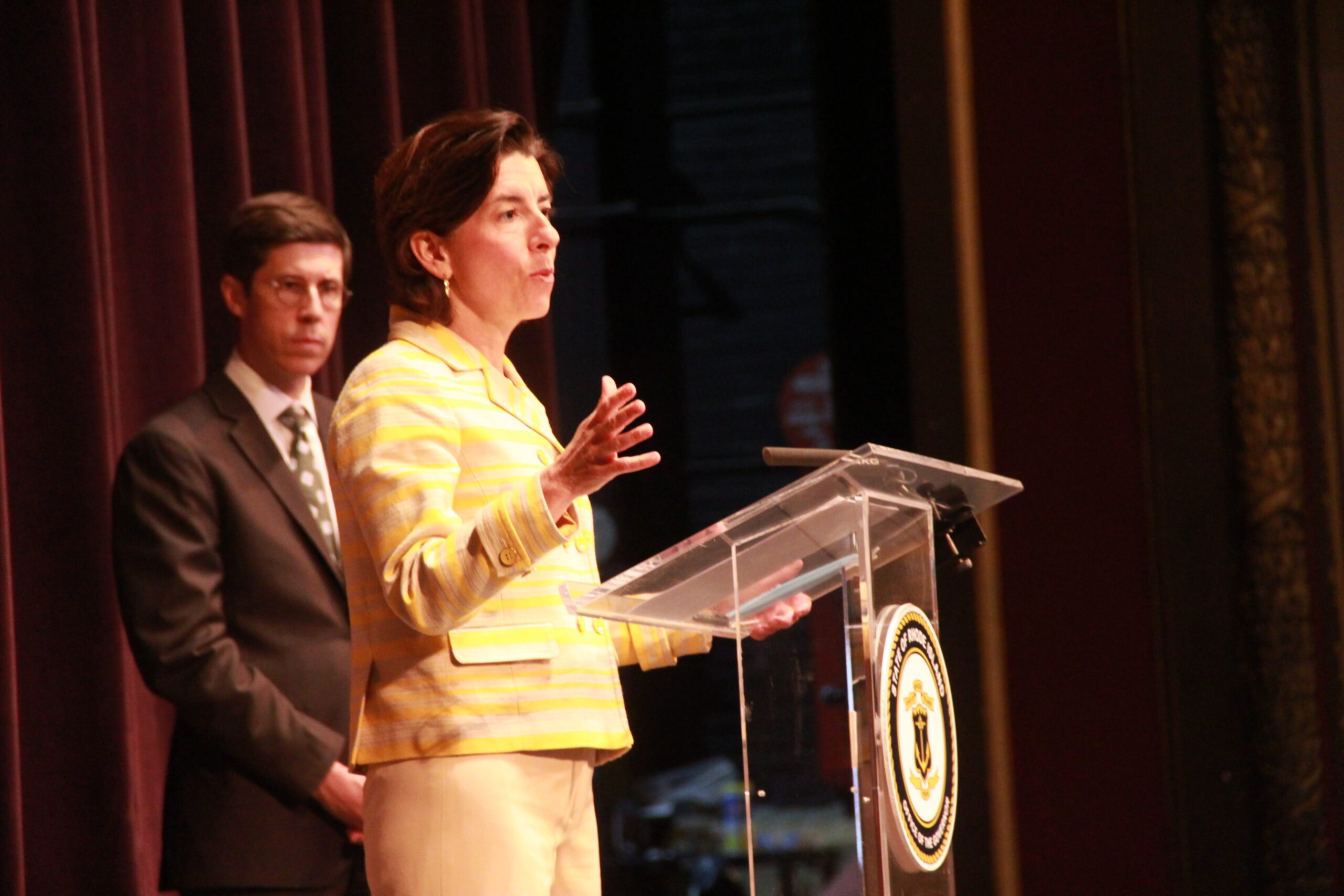
On May 19, 2026, homeschoolers filled the State House, spilling into the halls to oppose H.B. 8531, a bill they feared could limit their freedom to homeschool.
In their one-minute testimonies, parents and children gave lawmakers a glimpse of what homeschooling looks like beyond the Little House on the Prairie image Rep. Joseph M. McNamara, chair of the House Education Committee, jokingly referenced during the hearing.
But families homeschooling children with disabilities have another lesson to share. Their experiences reveal what homeschooling can make possible when children have the support, flexibility, and freedom to learn in ways that work for them.
Sometimes, that means taking the classroom to a haunted tunnel.
For two Halloween seasons, the Slater Park Haunted Tunnel has given one homeschooler with special education needs a place to put their skills to work. Behind the scenes, 17-year-old Zach on one recent day kept the attraction running, operating fog machines, managing lighting, troubleshooting technical problems, and participating in building the scenery.
“He’s basically become our tech guy,” said Brian Rafuse, one of the coordinators of the Slater Park Haunted Tunnel.
“It only took me a couple of weeks to figure out what his niche was,” Rafuse said.
According to Rafuse, finding a child’s niche isn’t unique to Zach. “Every kid is different. It takes like a week to figure out their niche,” said Rafuse.
The tunnel offers opportunities for both public-school students and homeschoolers, with roles tailored to their interests and personalities. Some become scare actors; others, like Zach, gravitate toward behind-the-scenes work. “I’m very open-minded and patient,” said Rafuse on how he approaches each child.
Nicole Lavoie is Zach’s mother. She has three children, two of whom have diagnoses, including Zach, whose autism and anxiety made public school a challenge.
Lavoie said Zach’s Individualized Education Program (IEP) included accommodations intended to help him manage school, including extra time, modified assignments, teacher-provided notes, and breaks when needed; many of the accommodations centered on his anxiety.
“In theory, if followed and used, it probably would have been successful,” Lavoie said.
Speaking up in class was one of his biggest challenges.
“Part of his IEP was to make sure that teachers did not call on him, but encouraged him to raise his hand,” said Lavoie. However, the encouragement wasn’t always available, and sometimes the IEP goal was forgotten about entirely.
Gym presented another challenge. Three classes, totaling about 75 students, shared the space, making it difficult for Zach to manage his anxiety. Lavoie said his doctor provided a note suggesting he do karate outside of school, something she was willing to pay for, but the school denied the request.
As for the IEP goal to encourage him to raise his hand, “the high school wouldn’t continue that accommodation,” Lavoie said.
“The funny thing about that is,” according to Lavoie, in his second year of homeschool co-op, Zach had no interest in the classes available, “so he decided to teach a class instead.”
Zach’s experience is one that’s all too familiar to Melissa Robb, who has spent more than a decade advocating for Rhode Island homeschoolers.
“The whole nation is doing it wrong. We can’t fix it if the nation can’t,” Robb said on the topic of public education.
As Rhode Island’s director of state homeschool advocacy, a naval base liaison, a member of the Military Homeschool Association, and a member of a homeschool advisory panel at Johns Hopkins University, Robb has a perspective that reaches beyond the state, although Rhode Island remains her priority.
According to state Department of Education figures cited by Robb, 3,197 children were homeschooled last year, about three percent more than the previous year.
“The number one [reason] I hear from people is special needs,” Robb said, though she noted that bullying and safety concerns are also common — and often connected.
Parents describe schools struggling to provide the support their children need. Often, Robb said, the issue isn’t getting an IEP in place, but getting the accommodations followed.
One question Robb raises is whether children should need an IEP simply because they struggle to sit through five days of traditional classroom instruction.
Robb also cites the growing number of curriculum options, private providers, and community programs that have made it easier for families to find ways to educate their children outside the rules of traditional classrooms.
“Everybody is welcome. We don’t care if your kids sit still,” Robb said.
At Franklin Farm, Lynn-Marie Dubeau doesn’t expect children to sit still, either.
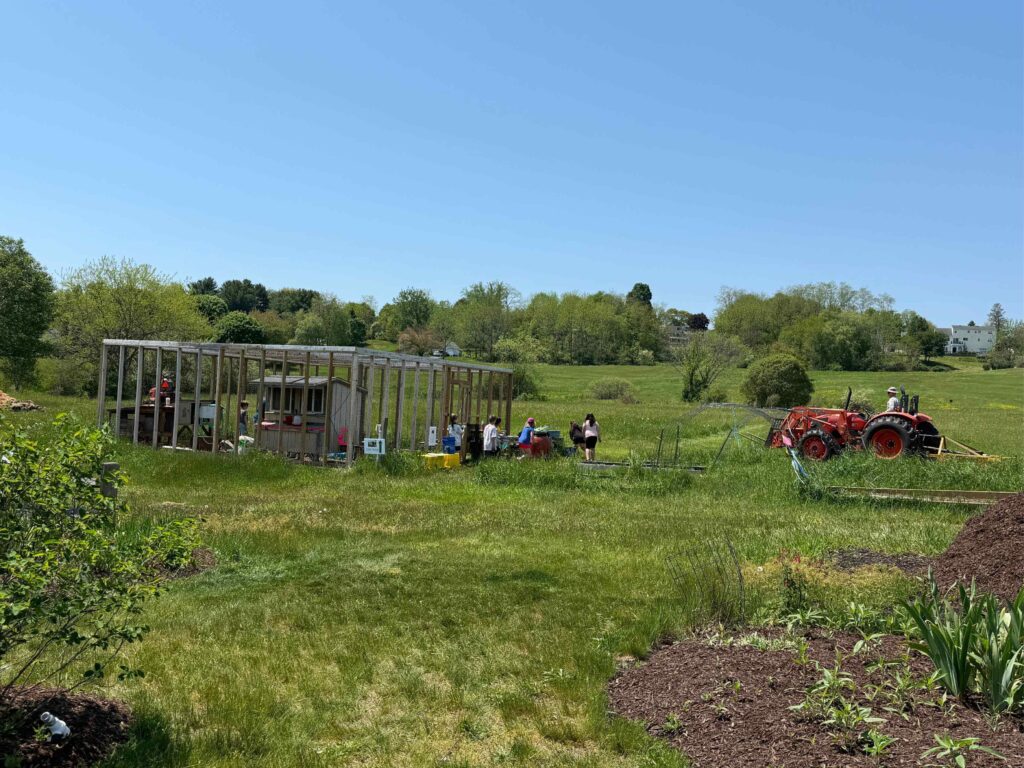
After 25 years of homeschooling her own five children, Lynn-Marie Dubeau, a certified early childhood educator, now teaches nature-based homeschool programs at Franklin Farm, where she has worked with children with a wide range of needs and abilities, including autism, ADHD, and physical disabilities.
“All my classes are designed so anyone can come,” she said.
Dubeau recalled one boy who arrived with his hood up, his sleeves pulled over his hands, sitting on the ground rocking through the entire lesson. “Three weeks into the program, his sleeves were no longer hiding his hands. He was rocking less and making eye contact,” said Dubeau.
According to Dubeau, he needed time to feel comfortable. Dubeau, who runs a small class at the farm, is able to give children time, space, and choices.
“I might be in the middle of a lesson, see a child who is out of sorts and abandon the entire lesson for a hike in the woods that day,” she said.
Dubeau said homeschooling allows children to make strides “at whatever level you’re at.” She encourages students to choose topics that interest them, research them, and return to share what they’ve learned. Sometimes, “someone who normally doesn’t talk speaks,” she said. Other times, a child might simply hand her a note.
“If that’s the stage they’re at,” Dubeau said. “That’s OK.”
“It’s so great to see children realize there is a place they can blossom on their own time,” she said.
Lavoie saw this type of progress firsthand with her younger son, now 11, who is also autistic. By third grade, after years in a self-contained classroom, his anxiety had become so severe that he was picking at his fingers until they bled, sometimes needing bandages on every finger. Despite the school’s efforts, Lavoie said he wasn’t getting the support he needed.
“They were trying, but there just weren’t enough people, enough support or enough aides,” Lavoie said.
When she signed him up for Dubeau’s farm program, Lavoie worried he might need constant redirection. But Dubeau discovered what he needed fairly early in the program — and it was something much simpler than that.
“I gave him a book.”
According to Dubeau, while the other children listened to the lesson, he flipped through its pages, barely looking up; though every now and then, when he was interested by something that was said, he would raise his hand to ask or answer a question.
“She figured out how to accommodate him just by letting him be himself,” Lavoie said.
Since leaving public school, Lavoie said her younger son has become less anxious and more independent. He’s making progress with a reading tutor, wants to help with chores around the house, and has even learned to ride a bike, encouraged by other children at a homeschool meetup cheering, “You got this!”
Since homeschooling all three of her children, including her daughter, who chose to leave public school in February 2026, she said her own stress has dropped considerably.
For years, she attended IEP meetings, requested accommodations, and struggled to understand what her sons’ school days actually looked like — who they were working with, what help they were receiving, and whether the supports they needed were being provided.
“Now, there is no more fighting with the school. We have friends now. I finally feel like I built a village,” Lavoie said.
For another Rhode Island mother, finding that village came after years of fighting for her son’s education. Now, she hopes to help others find theirs.
Jessica Hebert’s youngest son Michael, who has autism, ADHD, obsessive-compulsive disorder, and complex post-traumatic stress disorder, began struggling in second grade. Years of evaluations and fights over accommodations followed; yet, “his needs were never met,” Hebert said.
Hebert recalled Michael being sent out by ambulance nine times during episodes of emotional dysregulation. Even with a one-on-one aide, she said staff sometimes failed to recognize when he was becoming overwhelmed. When Michael began ripping up papers, she said he needed to leave the overstimulating environment before things escalated.
And while Michael had been ahead academically before attending an out-of-district school, Hebert said he was behind when he left.
“You can’t teach if [he’s] not emotionally ready,” she said.
In May 2025, a PASS worker suggested something Hebert hadn’t considered for Michael — homeschooling.
She began homeschooling him during the 2025–26 school year.
Now, Michael uses online lessons and attends woodworking and enrichment classes in the community with help from his PASS worker, whose support also gives Hebert more time to dedicate to her full-time job and her initiative to help other parents homeschool children with disabilities.
The PASS worker helps him communicate with others, recognize when he’s becoming overwhelmed, and use coping strategies, like movement breaks when needed.
Homeschooling also gives Michael the flexibility to learn when he’s emotionally ready.
“He could not do math in the moment last night, so we did it at 11 p.m. when [he was] ready,” Hebert said.
For Hebert, the change has meant relief from constantly worrying about another call from school, the police or an ambulance, while giving Michael the flexibility to meet his educational needs on his own time — in his own way.
“I feel like I got him back,” she said. “He’s happy. He’s goofy.”
Hebert wonders whether public schools are equipped to meet the needs of children like Michael and whether more meaningful support could be offered to families who turn to homeschooling.
Lisa Colwell, director of pupil personnel services in the Bristol Warren Regional School District, acknowledged the challenges schools face in meeting students’ needs, pointing to shortages of qualified special educators, paraprofessionals, and related service providers, along with increasingly complex behavioral and mental health needs.
Colwell also pointed to federal funding under the Individuals with Disabilities Education Act (IDEA), noting that the funding benchmark established when the law was enacted in 1975 has never been reached, leaving state and local districts to shoulder much of the cost.
While Colwell has seen an increase in homeschooling among students with and without disabilities, she cautioned against attributing it to any one reason. According to her, some families value the flexibility of homeschooling, while others find that their children benefit from the structure, specialized instruction, and services available in public schools.
“Ultimately, the needs of the individual student and family tend to drive those decisions,” Colwell said.
Either way, as homeschooling continues to rise, students with special education needs can find a place to put their unique skills to work in the homeschooling community.
At a woodworking class in Norwood, a child who once had ambulances called to his school during behavioral crises is now using power tools to create. At Slater Park’s haunted tunnel, Zach — the same kid who struggled to speak up in class without accommodations — is speaking on a walkie-talkie, troubleshooting problems to keep the attraction running smoothly.
Both have found places in the homeschool community where they can “blossom on their own time.”
Additional Resources
Testimony from Rhode Island homeschooling families opposing H.B. 8531 can be viewed in the May 19, 2026, House Education Committee hearing.
Rhode Island families considering homeschooling children with special education needs can connect with parents who have firsthand experience through the Rhode Island (RI) Special Needs Homeschooling Facebook group.