
“If you would like to make the 200 odd pediatricians in the state very sad, tell them that PediPRN is going away.”
This story was originally published in Rhode Island Current, a publication partner of Ocean State Stories.
PROVIDENCE — A telephone hotline used by pediatricians and family doctors to connect kids to mental health treatment is in danger of falling off a fiscal cliff without dedicated state funding.
That’s why Sen. Alana DiMario, a Narragansett Democrat, is sponsoring legislation to make concrete the state’s monetary support for MomsPRN and PediPRN. The two programs allow doctors who don’t specialize in mental health — such as general internists, pediatricians and OB-GYNs — to consult with psychiatrists for referrals, basic medication prescribing advice, or other behavioral health support for moms and kids alike.
“If we do not figure out a way to make sure that this program continues, by allocating budget dollars to that program this year, and we wait until next year, that program will be without funding for about nine months,” DiMario said of the PediPRN program.
MomsPRN would avoid a fiscal cliff — for now — thanks to state funding in Gov. Dan McKee’s proposed fiscal 2027 budget, DiMario said. According to a recent House Finance testimony from Michaela Carroll, a policy associate with Rhode Island KIDS COUNT, the $750,278 in the proposed Rhode Island Department of Health Budget for Health Equity Institute funds would subsidize MomsPRN.
“[B]ut it does not include any funding for the pediatric psychiatry resource network,” Carroll wrote. “The PediPRN program has federal grant funding remaining to cover operations through the end of the federal fiscal year, but without state investment, the program will have to close this fall.”
Carroll wrote that the state would need an additional $630,000 investment in fiscal year 2027 to keep the phones ringing at PediPRN.
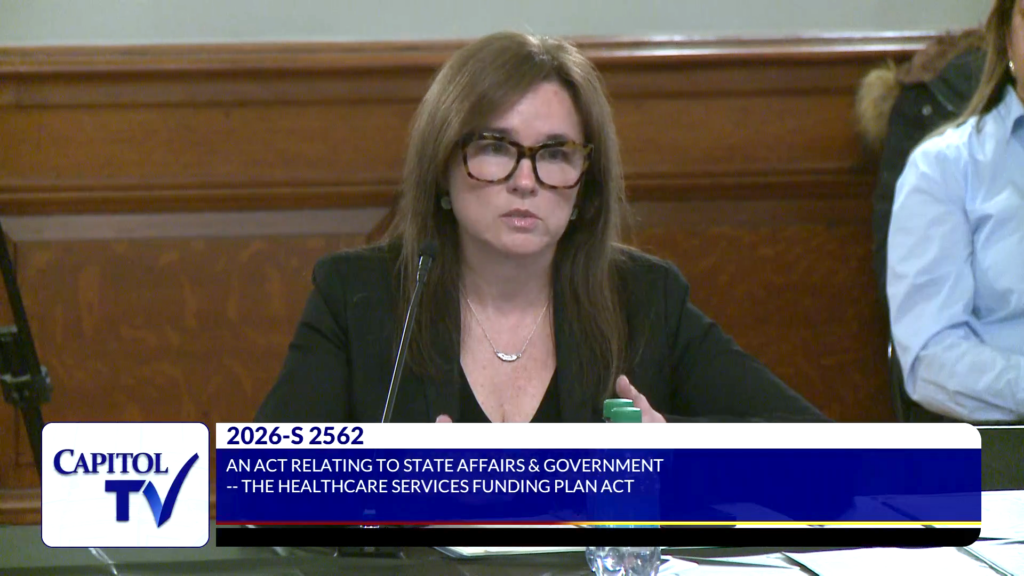
DiMario’s bill, S2562, went before the Senate Committee on Health and Human Services last Thursday. It would fold both hotlines into Rhode Island’s Healthcare Services Funding Plan Act, which is financed via insurer contributions. The Rhode Island Department of Health could then allocate regular money from this fund toward the two hotlines.
“I can’t stress enough how important the idea that stability and certainty will really help these programs continue to grow and flourish even beyond what they’ve been able to do,” DiMario said.
The programs have been kept afloat for years via a patchwork of funding sources. Federal funds allocated with Biden era grants will keep PediPRN operational until September 2026. But even as early as 2024, DiMario pushed for more permanent funding.
“For those of you who have been around the Senate a minute, you have heard me talk about the MomsPRN and PediPRN psychiatric referral network services over the course of a number of sessions,” DiMario said as she introduced her bill on April 2.
Use climbs 173% in three years
Supporters say the program provides a robust and practical workaround within the context of an already overtaxed health care system. Specialist doctors — especially psychiatrists — can be hard for patients to access, with referral times stretching into weeks or months. Primary care doctors can access these specialists with a phone call via MomsPRN or PediPRN, and receive more immediate recommendations on how to treat their patients, prescribe certain psychiatric medications, or evaluate them for follow-ups or next steps.
PediPRN, for instance, puts doctors in touch with Bradley Hospital specialists who can give advice when a patient shows symptoms of or a parent shares concerns about conditions like anxiety, ADHD, depression or autism spectrum disorders.
Pediatric psychologist Sarah Hagin, the project manager of PediPRN and director of the Feeding Program in the child and adolescent psychiatry division at Rhode Island Hospital and Hasbro Children’s hospital, told the committee hotline use has climbed 173% over the last three years. 
“We’re still getting more and more people calling us,” Hagin said.
The bills had a healthy showing of support, both written and in person, for last week’s hearing. Carroll of Rhode Island KIDS COUNT told the Senate committee during public testimony that more than half of children in the age range of 3 to 17 had trouble receiving the mental health treatment they needed. More than one in four children in this age group have a diagnosable mental health condition, she added.
Dr. Peter Pogacar, the immediate past president of the Rhode Island chapter of the American Academy of Pediatrics, told senators that he uses the hotline “all the time” and that he finds it “extremely helpful.”
“If you would like to make the 200 odd pediatricians in the state very sad, tell them that PediPRN is going away,” Pogacar said. “One of the lessons we learned in the pandemic is that the emergency room is not a place for mental health care, and this is a tool that keeps kids out of the ER.”
Erica Oliveira, the resource and referral specialist for MomsPRN, came to the Senate lounge with an anecdote about “what this program means in real life.” A Newport midwife had called the hotline about a patient with postpartum anxiety so painful that the woman felt unable to leave her home. If she did leave, “she felt like something bad was going to happen to her,” Oliveira said. The woman had tried to connect with mental health providers on her own, but she never received callbacks to schedule appointments.
Mental health providers are already “spread thin,” Oliveira acknowledged. But through MomsPRN, she was able to connect with the woman and talked to her on the phone, eventually connecting her to mental health services.
“I tried to reassure her that postpartum anxiety is common, and she stopped me immediately to let me know that what she was experiencing was not just a nervous feeling,” Oliveira said. “What she was experiencing was debilitating, and caused her severe distress that was disrupting the whole family on a daily basis.”
Without MomsPRN, Oliveira said, “The patient would be at home, afraid to leave her house, and continue to suffer in silence. As we all know, that suffering has a ripple effect.”
Elizabeth Burke Bryant, a professor of the practice of health services, policy, and practice at Brown University School of Public Health, testified in a personal capacity with numbers to back up the emotional case for continued funding. As a chirping sound began, signaling the professor’s allotted time for comment was up, she quickly added that PediPRN has fielded 3,173 calls from 465 providers at 186 practices, while MomsPRN has received 3,593 calls from 966 practices at 312 locations.
DiMario’s bill has a House duplicate, H8268, which is sponsored by Rep. Mary Ann Shallcross Smith, a Lincoln Democrat. That bill was introduced on March 11 and referred to the House Committee on Finance, and it hasn’t had a hearing yet. DiMario’s bill was held for further study Thursday as most bills are upon their first hearing.
Anyone in immediate danger should call 911.
Call 988 if you are having thoughts of suicide or in crisis. 988 is free, available 24/7, and confidential.
Editor’s note: Elizabeth Burke Bryant is a member of the Ocean State Stories Advisory Board.