
July 31, 2026
by Eric Halvarson
Originally published by The Providence Eye, a publication partner of Ocean State Stories.
Providence, Rhode Island is now set to become the first city in the United States where voters will decide whether or not to divest municipal funds from foreign countries and complicit entities conducting genocide, war crimes, occupation or apartheid.
This week, Providence officials confirmed that activists secured enough signatures to put divestment on the ballot during the general election on November 3. It is the first time a citizen-led ballot initiative will be put up for vote, according to city officials.
The measure does not name any specific entities that would be impacted, but organizers leading the effort from Jewish Voice for Peace (JVP) Rhode Island said the ballot question will give voters an opportunity to “voice our support for a free Palestine and for an end to profiteering war industries.”
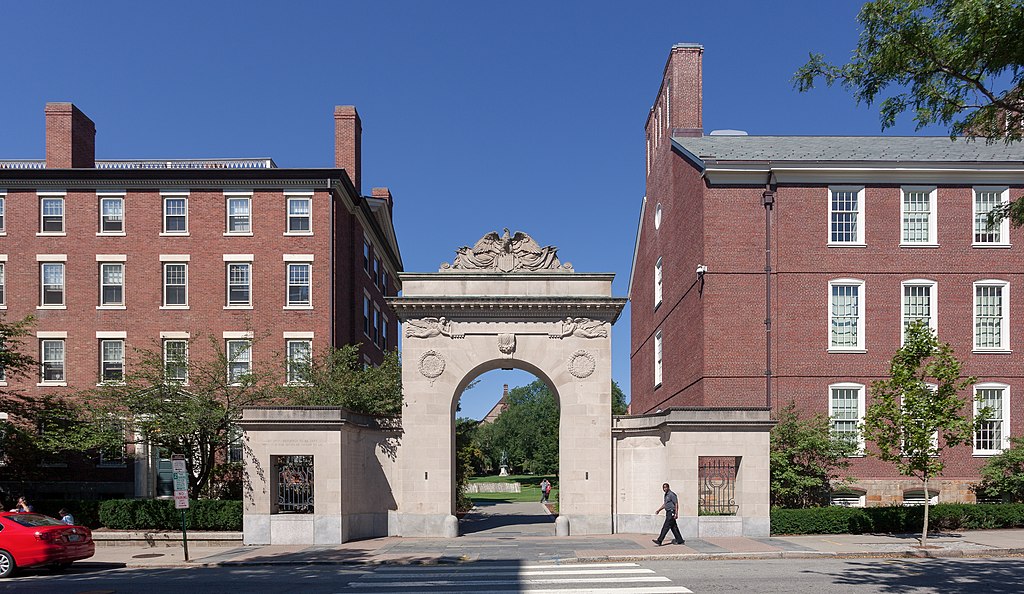
Taking the ballot measure to a popular vote comes after failed attempts to divest from Israel at both the City Council level and at Brown University, where activists have called to end Israel’s apartheid, occupation, blockade and war against Palestinians.
Groups opposing the measure have already hired legal counsel in an attempt to block a divestment vote. The Jewish Alliance of Greater Rhode Island said a vote to divest is divisive and “does nothing to advance meaningful peace, security, or coexistence for Israelis and Palestinians.”
Setting a Precedent
Providence previously divested from fossil fuels in 2013 and became the first U.S. city to divest from companies supporting the genocide in Darfur, Sudan, in 2006. Over 120 city councils have passed some kind of divestment resolution, but activists in Providence said they would make history by putting it up for vote.
“This would be the first time in U.S. history that a legally-binding divestment ordinance of this kind has been enacted by popular vote,” said Zack Kligler, an organizer with JVP. “It’s about giving voters a voice in an issue that matters deeply to us and in how our city’s funds are invested.”
The ballot question will ask Providence voters whether the City should refrain from investing in “‘complicit entities’ or ‘sovereign debt’ of foreign countries conducting ethnic cleansing, apartheid, illegal military occupation, or genocide,” as determined by various sources including United Nations experts, relevant U.S. court rulings or definitions in federal policy, or International Court of Justice rulings.
“This is both a moral and fiscal necessity,” said Kligler. “We believe that it’s a common sense reform that Providence should not be putting our financial future into extremely volatile conflicts abroad and pegging our city’s financial future to the success of genocides and apartheid states.”
“The cultural shift we’ve seen in supporting Palestinian divestment from two years ago—it’s been so immense and it’s been really validating,” said Adit Sabnis, a graduate worker at Brown University and leader of AFT Local 6516, also known as the Graduate Labor Organization. “People genuinely want this, and they’re happy that we’re doing it.”
Brown University’s Failed Divestment Proposal
Sabnis said his union was deeply involved in efforts to divest Brown University’s endowment holdings from Israel. A student protest encampment was taken down in 2024 in exchange for the Brown Corporation promising to vote on divestment. Multiple recommendations were made by the body historically responsible for such decisions for Brown, which Brown Alumni Magazine said was a “relatively narrow divestment compared to students on other campuses, identifying companies they say directly support the war in Gaza.”
Brown rejected the proposal. Sabnis called the failure “devastating,” but felt hopeful that this new city-level divestment initiative puts the decision up for popular vote.
“Obviously we’re going to face challenges, but I love the idea that we are helping voters make the decision rather than trying to sway corrupt leaders of an institution,” said Sabnis. “At this point, I’m like 10,000 people will have our back. We’re ready, bring it on.”
Getting the Signatures to Put Divestment on the Ballot
According to Section 209 of the Providence City Charter, citizens can put a question on the ballot in a general election after gathering signatures from more than 5% of the voters in Providence. Today, that benchmark is around 5,549 signatures.
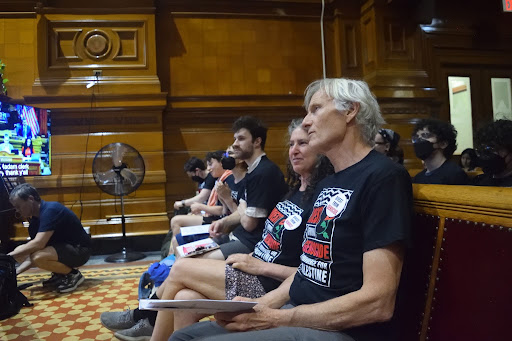
Over the past six months, more than 130 volunteers collected nearly 9,000 signatures from local voters to put the measure on the ballot. Members of a coalition including JVP, local unions, the Democratic Socialists of America (DSA) and Reclaim Rhode Island took turns carrying clipboards to local parks and public events to ask people whether they wereProvidence voters and if they would help put divestment up for election.
“The petition qualified with 6,036 signatures accepted by the Board of Canvassers,” said City Clerk Tina L. Mastroianni. There were over one hundred duplicates and thousands of signatures invalidated due to misspelled information, invalid addresses and illegible writing.
This week, the City Clerk certified that activists had gathered the necessary signatures, meaning the Board of Canvassers is obligated to submit this ballot question to Rhode Island’s Secretary of State. On Thursday, July 30, City Council advanced the measure in a procedural meeting. The deadline for the local board of canvassers to submit questions is August 5, which is 90 days before the general election.
The divestment initiative now faces legal challenges, questions of enforcement and political opponents.
Opposition Emerges, Legality Concerns Are Raised
Although the divestment measure does not name any particular countries or companies that would be impacted, activists are clear that Israel is one of the main targets.
The International Court of Justice (ICJ) found that Israel operates an illegal system of apartheid and occupation in the West Bank, and human rights groups blame Israel’s decades-long blockade on Gaza for causing wide-spread famine and negative health outcomes for Palestinians. The ICJ ruled it was “plausible” that in Gaza, Israel is violating the Genocide Convention, but the court case will take years to complete.
In 2025, the United Nations Special Rapporteur on the situation of human rights in the Palestinian territories, which is one of the authorities named in this petition, argued that Israel is committing a “full-fledged genocide” in Gaza.
The Jewish Alliance of Greater Rhode Island opposes the ballot initiative, saying “While the Jewish Alliance does not represent every Jewish person in Rhode Island, we are the largest collective voice in our state on issues affecting the Jewish community, and we oppose this ballot measure.”
In a statement, the Jewish Alliance said that divestment “would restrict the City of Providence’s investment decisions based on criteria drawn from international bodies.”
“Providence’s investment decisions should be driven by what’s best for Providence residents—not by divisive political tests that make our community more polarized and less united,” said Steven Baker, president and CEO of the Jewish Alliance of Greater Rhode Island.