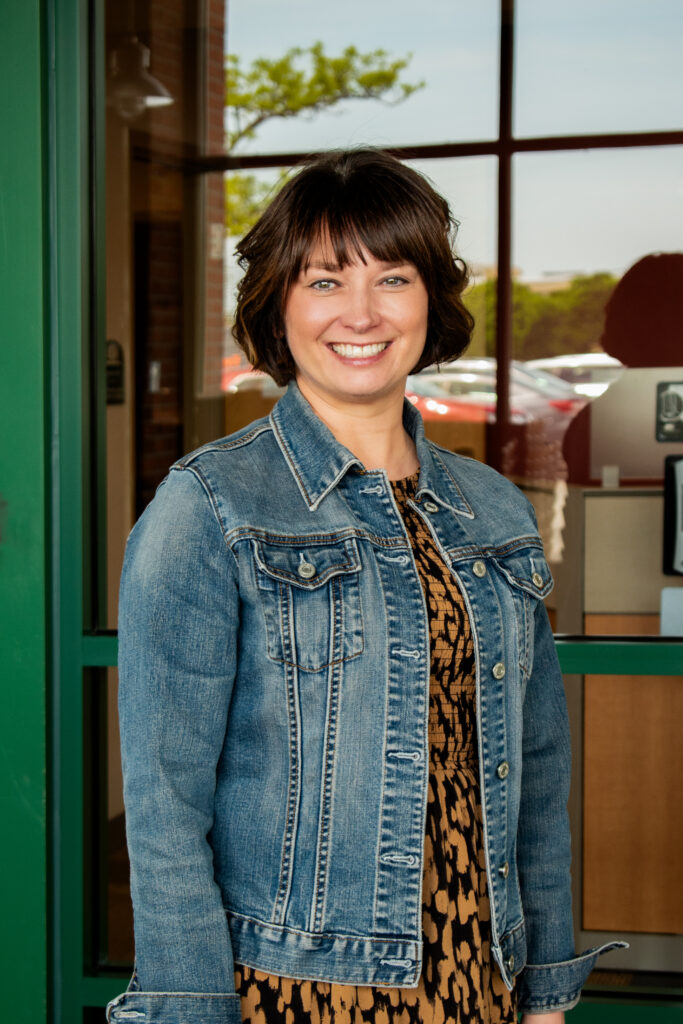
“There are so many ways to donate your time, talent, and treasure to this important cause.”
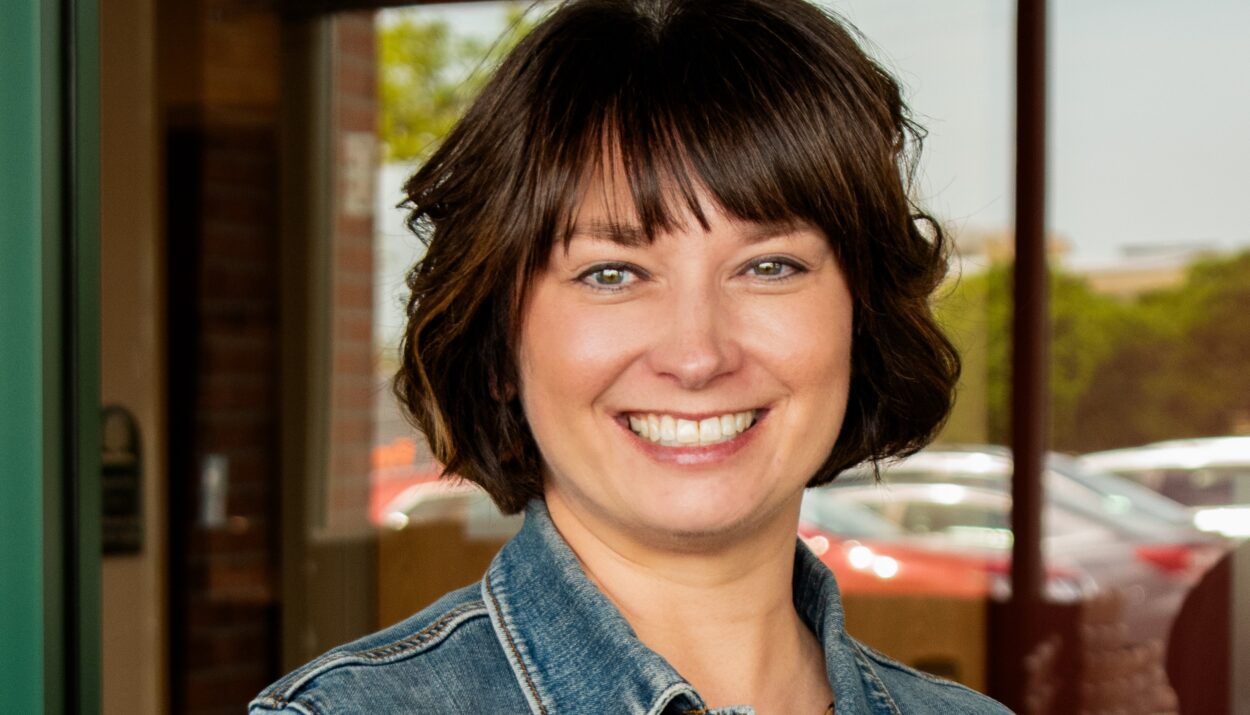
Q & A with new R.I. Food Bank CEO Melissa (Sobolik) Cherney
Welcome to Rhode Island, Melissa! And thanks for participating in one of our interviews. As our readers know, you succeeded Andrew Schiff, who retired after 17 years at the helm. Since you are new to the state, let’s start with your background. Where did you grow up?
Thank you! I grew up on a farm, outside of Courtenay, North Dakota. It was a very small town. In fact, I graduated in a class of 8. It was a place where neighbors looked out for each other, and where community mattered. That upbringing shaped who I am and how I see the work of hunger relief today, both the abundance and the vulnerability that coexist in our food system.
Your family farmed, correct? Please tell us about that.
Yes, my dad farmed with my uncle and grandpa. We grew wheat, barley, and sunflowers and raised sheep. Like many farm families, we prided ourselves on producing food that would feed the world. But farming also meant that our livelihood was dependent on things like the weather and commodity prices. In the lean years, we relied on our community: I was frequently sent to grandma’s house for dinner, and my brother and I were free school lunch kids. These early experiences taught me that food insecurity is not a characteristic of a person, just a circumstance. And it can happen to anyone.
After high school, you attended (and graduated from) Concordia College, in Moorhead, Minn. What was your major?
At Concordia, I majored in political science and minored in philosophy and sociology. I loved my time there, but like many college students, I found myself facing very real financial challenges, struggling to pay for tuition, rent, textbooks, and living expenses.
We see on the Food Bank site that at Concordia, you “struggled with food insecurity. For three months, SNAP benefits helped [you] make ends meet, and [you] saw firsthand the difference that these critical supports could make.” Can you please elaborate?
I worked two jobs most of my college career and there was a point where I still couldn’t afford the meal plan. I took a job in the college catering department mainly because I knew I’d get a meal at the end of each shift. When things became especially tight, my mom encouraged me to apply for SNAP. It wasn’t something I was proud of, and I certainly didn’t tell anyone, but that assistance got me through a really tough time. I was able to focus on work and getting to class instead of worrying about whether I had food in the fridge.
For a long time, I didn’t talk about that experience. But later, when I was working at the Great Plains Food Bank, I overheard someone refer to people who rely on food pantries as “those people.” It hit me in the heart… I was one of those people. That moment changed the way I talk about hunger and compelled me to share my story. It’s not “us” vs “them.” It’s just us. I wasn’t defined by my food insecurity. I never saw myself as someone who was hungry – I simply saw myself as a struggling college student.
This experience had a profound impact on your career choices, correct?
Absolutely. But admittedly, I didn’t set out to work in food banking. Honestly, I wanted to be a lawyer and a politician. But life happened and I ended up on a different path. I started working at the Great Plains Food Bank in Fargo, ND in 2007 and never thought I would stay in the nonprofit or food banking world, but I’m still here! I realized it was an issue close to me. Living through food insecurity myself gave me an understanding of the system that you can’t get from a textbook. It showed me the importance of dignity, choice, and community in hunger relief work. Food banking feels like home, and I now realize that my dream and purpose has always been to change the world for the better and I’ve found my calling to do just that.
An early job was at the Great Plains Food Bank in Fargo, N.D. Details please.
My first role at the Great Plains Food Bank was as the Director of Member Services. In that role I was to work with all of the food pantries and soup kitchens across the state, seeing the sheer scale of hunger and the logistics involved in getting millions of pounds of food to every corner of a very large state. North Dakota is vast and rural, so getting food to small, remote communities posed a challenge. We were as much a trucking and logistics company as we were a food bank. We had to get creative, finding ways to get food directly to people in need, which sometimes even meant mailing food boxes to remote areas. I was always amazed at what we could do with the right ideas and willingness to do whatever needed to be done to feed people.
I held 4 different roles while at the Great Plains Food Bank. First in member services, where I also initiated our first entry into direct service programs. We launched a mobile food pantry, SNAP outreach program and a Backpack Program. After that, I created the Ending Hunger 2.0 department, which was focused on root cause, prevention work. Then served a year as President and then in 2021, I became just the 2nd CEO in that organization’s history.
It was an amazing opportunity to lead the state’s only food bank and largest hunger relief organization. One of the proudest moments of my career was securing a transformational $5 million state appropriation toward our capital campaign, when the state typically hadn’t funded us. That was pretty incredible.
And that was your position before coming here. What enticed you to Rhode Island?
I was scouted for the CEO position at the RI Community Food Bank – and I was welcomed with open arms from my very first visit. I felt an immediate connection with the Food Bank’s staff and board: they’re passionate, smart, deeply committed, and ready to take on big challenges. I could sense that this organization was poised for its next chapter. And honestly, the state itself sold me. There’s something special about Rhode Island’s sense of community – people show up for one another. My hometown was small, really small. I’m talking, 20 people. So, I’m no stranger to “small,” but I’ve fallen in love with this small state. I can travel the entire state in a day, I can get to the ocean in 30 minutes, and yes, RI is more populated, but there’s still this small-town feel. You guys say it all the time, but it really is true: everyone really does know each other. I don’t know how, but it’s true.
In a Sept. 29 Providence Journal story, reporter Antonia Noori Farzan wrote that you were “ ‘blown away’ by the passion of the food bank’s board members and volunteers…Visiting Rhode Island and being greeted by an ebullient, waving piano player when she landed at Rhode Island T.F. Green International Airport helped seal the deal. ‘He sold me,’ she said. ‘I had gotten off a long flight, and I just said, Oh, my gosh, I’ve never been so welcomed, ever. This is incredible.’ ” We’re guessing that great welcome has continued, yes?
It really has. That moment at the airport was unforgettable – after a long flight, to be welcomed with such joy and warmth was something I’d never experienced, and I think it really exemplifies the spirit of Rhode Island. And that spirit has continued everywhere I go. Rhode Islanders have made me feel at home, whether I’m visiting a pantry, meeting with community leaders, or getting recommendations on where to eat. It’s been an incredible welcome.
And having lived so many years in the northern Plains, we’re also guessing a Rhode Island winter will not be as rough as you’ll hear many of us Rhode Islanders complain, right?
Let’s just say that after surviving many North Dakota winters with wind chills of 40-50 below zero, and having to hire a company with heavy equipment to clear your driveway, I think I’ll manage just fine here. My staff is concerned that they’ll never get another snow day!
According to your website, the Food Bank serves a record 89,000 Rhode Islanders each month. What are some of the economic factors driving this need?
We’re facing a perfect storm of challenges. Families are dealing with the high cost of food, housing, and basic expenses. Most people are working, but wages haven’t kept pace with inflation. On top of that, we’re bracing for changes to critical programs like SNAP and Medicaid, which could impact tens of thousands of households.
Our member agencies have been seeing this tension in their lines every day for a number of months now, but during the recent government shutdown, it was truly something they’d never seen before. In October, we actually served over 100,000 people! It’s not a record-breaking number we are proud of or want to see. It’s heartbreaking.
Your site also states that the Food Bank works with more than 137 food pantries and meal sites. They are all over the state, correct? Here is a link to their locations: https://rifoodbank.org/find-food/
Yes, our network is truly statewide, or as we like to say, “from Westerly to Woonsocket.” Our 137 member agencies span 31 of Rhode Island’s 39 cities and towns. Our member agencies are food pantries large and small – from church basement pantries to large countywide operations – and a number are meal sites where folks can get hot, nutritious meals when they need it. No single organization can end hunger alone; it really takes all of us doing our part. And that’s what each of them does every single day.
How can people who are fortunate not to need Food Bank services help? Donations and volunteering are two ways, yes?
There are so many ways to donate your time, talent, and treasure to this important cause.
Donate food to your local food pantry to help them stock their shelves. I encourage you to donate what you and your family like to eat.
Financial contributions make a tremendous impact on us at the Food Bank because we can stretch every dollar further by purchasing food from wholesalers, by the truckload, and get that food to all of our 137 member agencies.
You can volunteer. Either at the Food Bank or at our member agencies. You can visit our website to find out how to volunteer with us or find your closest member agency. (Locate the member agency nearest you; open volunteer opportunities at member agencies)
And I always encourage people to stay informed, speak up about hunger, and advocate for policies that strengthen our social safety net. Hunger may hide in plain sight, but it’s also solvable.
The Food Bank will be visible starting in January during the next session of the General Assembly. Do you have a sense of the issues the Food Bank will be pursuing?
I am looking forward to my first legislative session in the Ocean State. We will continue to advocate for strong nutrition programs, making food more accessible, increased food supplies and anything else that will help families put and keep food on their tables. We know that hunger doesn’t exist in a vacuum, it’s interconnected to many other issues like housing, transportation, healthcare and poverty. We will ensure our advocacy efforts focus on helping Rhode Islanders thrive.
January 27th is Rhode Island Food Insecurity Awareness Day, and each year, we have a presence at the State house to release our legislative agenda and share an update on what hunger looks like. It’s a day of action and we encourage everyone to come out and show their support. The Advocacy page on our website will have more information, and you can follow us on social media for all the details.
Anything we missed?
I’m incredibly grateful to be here, both in Rhode Island and at the Food Bank. I’m honored to be part of this community and excited for what we can accomplish, together.