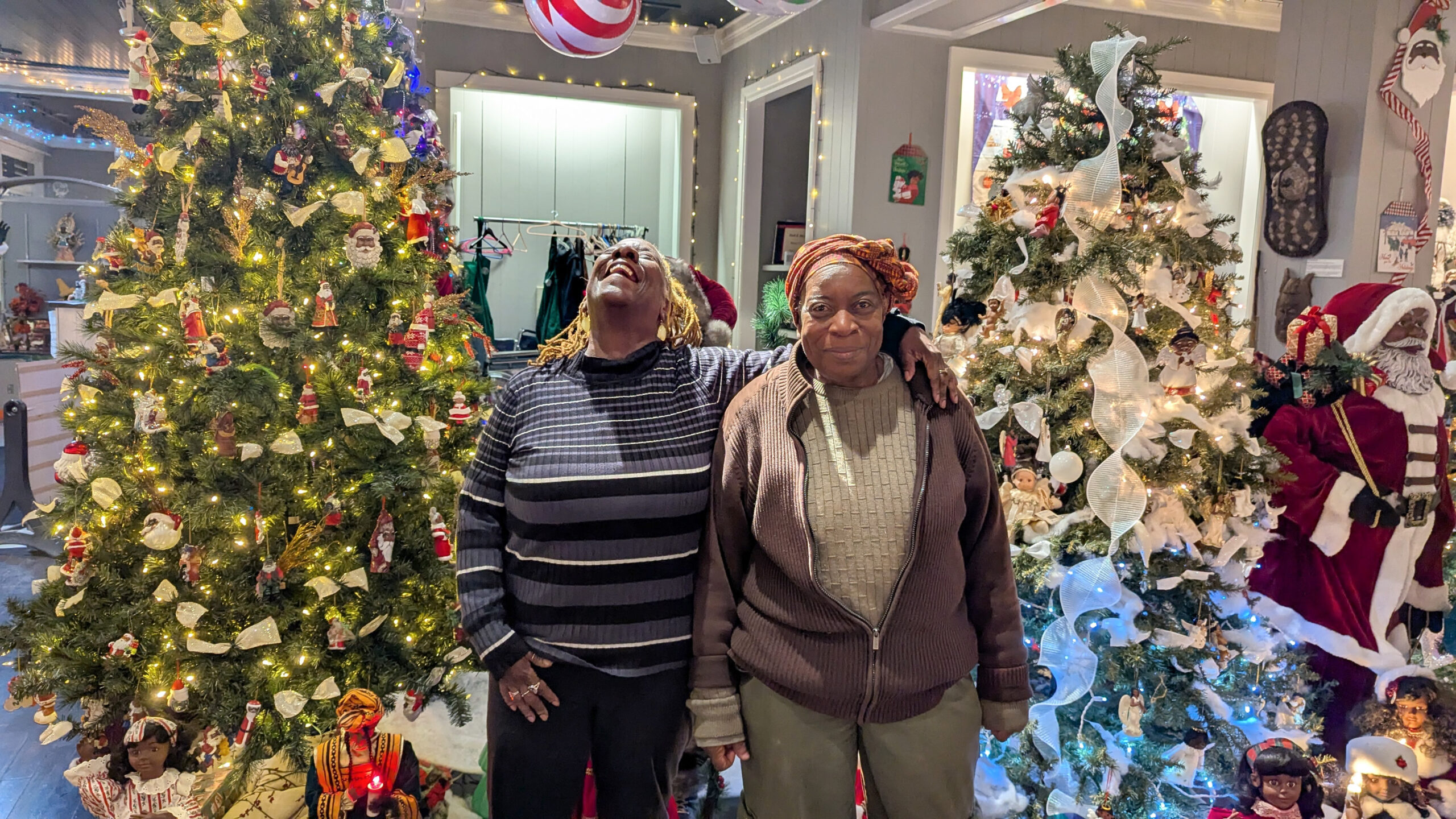

“Joy is resistance!”
By MATTHEW LAWRENCE
Beacon Media Staff Writer
This story was originally published in the Warwick Beacon, a publication partner of Ocean State Stories.
Read this story in its original form and all other Beacon stories by clicking here.
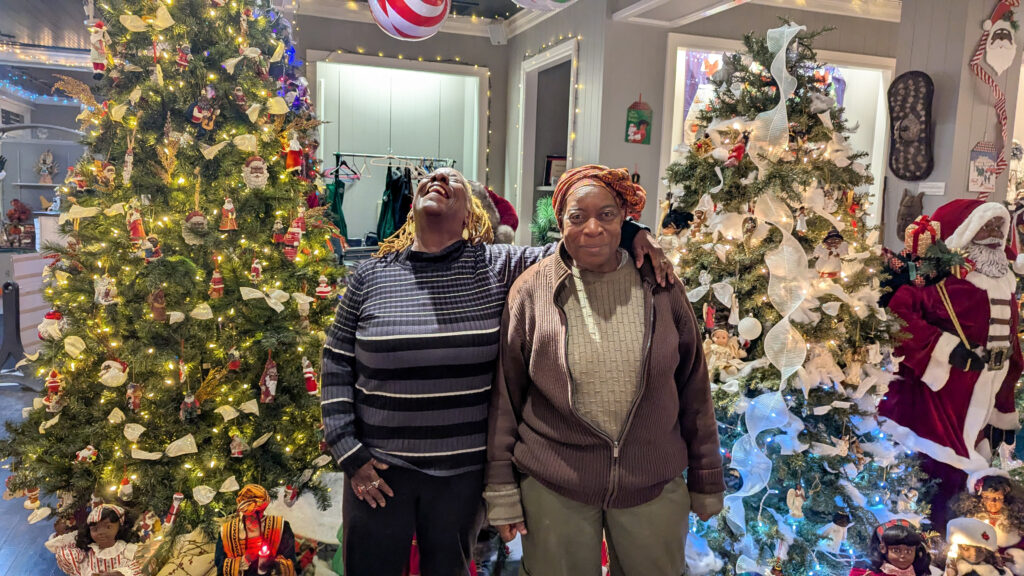
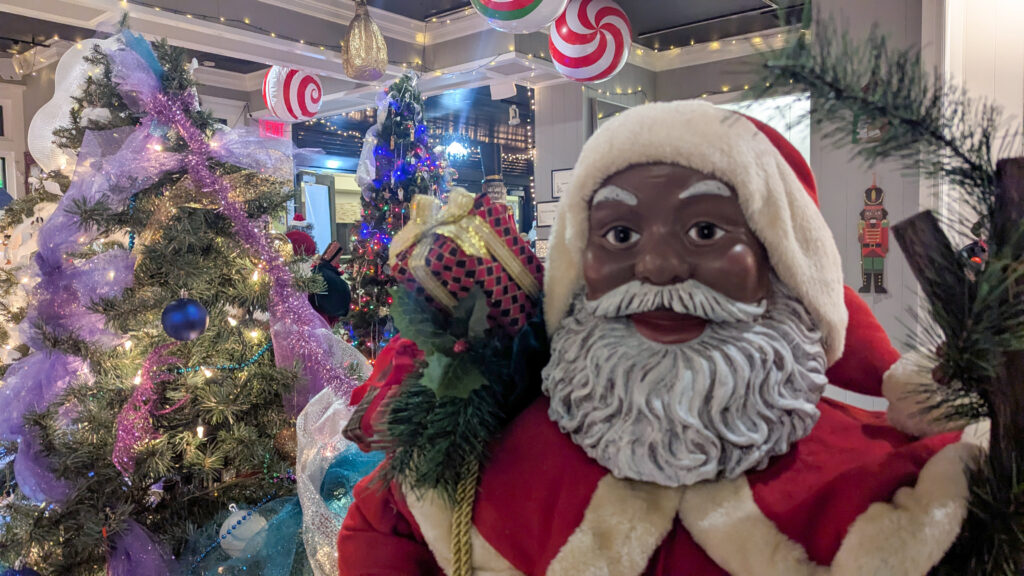
NORTH ATTLEBORO — It was the end of January, but it still looked like Christmas inside the National Black Doll Museum of History & Culture. That’s because the museum is hoping to get a Guinness World Record for their Ebony Village, a collection featuring thousands of Christmas decorations including Black Santa Clauses, angels, and nutcrackers.
“This allows us to count the collection,” explains Felicia Walker, one of three sisters who co-founded of the museum.
“We’ve had six people counting since October,” says Deb Britt, Walker’s sister and the museum’s executive director. Every piece must be documented and sent to Guinness officials. If the organization deems the project worthy enough, they send out an adjudicator to validate the authenticity of each item. The process is slow.
Britt herself isn’t the biggest fan of the holiday. “I don’t do Christmas,” she laughs. “I do doll conventions.” Over the years, her collecting has brought her to France and Italy, as well as to conventions around the country.
Britt doesn’t mind the Ebony Village, though, because it makes visitors happy. “We just want to have some place where you can be calm and happy,” Britt says. “Joy is resistance!”
The museum is in the Emerald Square Mall, a once thriving retail hub in North Attleborough that now stands more than half empty. The five-room museum takes up about 9,000 square feet of the mall’s third floor. It moved there about a year and a half ago from an office building in Mansfield, MA. Before that, the collection was scattered between the sisters’ homes.
According to its website, museum is a 501(c) 3 non-profit organization and the mission is “three-fold to nurture self-esteem, promote culture diversity and to preserve the history of black dolls by educating the public on their significance”.
“The building’s a little bit challenging,” Britt says about the mall. There’s a small leak in the ceiling of one room, and the heat wasn’t working after the big January snowstorm. One store decided not to bother opening at all on the day of my visit, and Britt considered closing early.
The National Black Doll Museum of History and Culture
www.nbdmhc.org
999 S. Washington Street
3rd Floor Ste.361A
North Attleboro, MA 02760
Wednesday and Thursday 1 p.m. to 5 p.m.
Friday and Saturday 1 p.m. to 7 p.m.
The lack of pedestrian traffic doesn’t seem to bother the museum. “We don’t get a lot of people here, but we go out into the community.”
They also activate the space with other events, including poetry nights, hip-hop fitness classes, and even karaoke.
The museum also does tours and workshops with local students. After snow-related school closings at the end of January, Britt says the museum was expecting about five hundred students to pass through in the first week of February.
Kids who visit the museum are allowed to touch certain dolls with gloves, she adds, learning the importance of caring for these cultural artifacts, a hands-on experience that doesn’t often happen at other museums.
In addition to Christmas dolls and figures, the museum features a wide range of dolls and toys, from cloth dolls to plastic action figures. The museum counts 819 Black Barbies and 250 Black GI Joe figures.
“The black Barbies started in the 80s,” Britt says. “Before that there was Julia and Christie, but there were no Black Barbies.” (Introduced in the late 1960s, Christie was Barbie’s first Black friend; Julia was a tie-in to a hit TV show about a nurse.)
Each sister has her own specialized interest. “I’m a de-boxer,” Britt says. I have one sister who is not. That’s why all of the Barbies here are still in their boxes. I do keep the box. I break it down, but I keep it.”
“Collecting is just a fancy way to say hoarding,” Walker adds.
A family affair
Britt is the oldest of five girls, raised by parents who were both collectors. The sisters went on to become collectors themselves. Three co-founded the museum together: Britt, Walker, and Tamara Mattison. Their father owned a record store and her mother collected porcelain. Her father was an educator and an activist who was particular about his books, newspapers and magazines. Toys were stored in their original packaging, and decades later the women discovered that their childhood toys were still pristine.
“He’d say, I worked too hard for this, you’re not going to let it get ruined,” Britt says.
Barbie was a contentious character in the household. “I was a chunky little girl,” she says, “but for a while I wanted to be Barbie.”
“My father said, ‘Don’t think you’re ever going to get that thin. You’ll get sick if you try to get that thin!’”
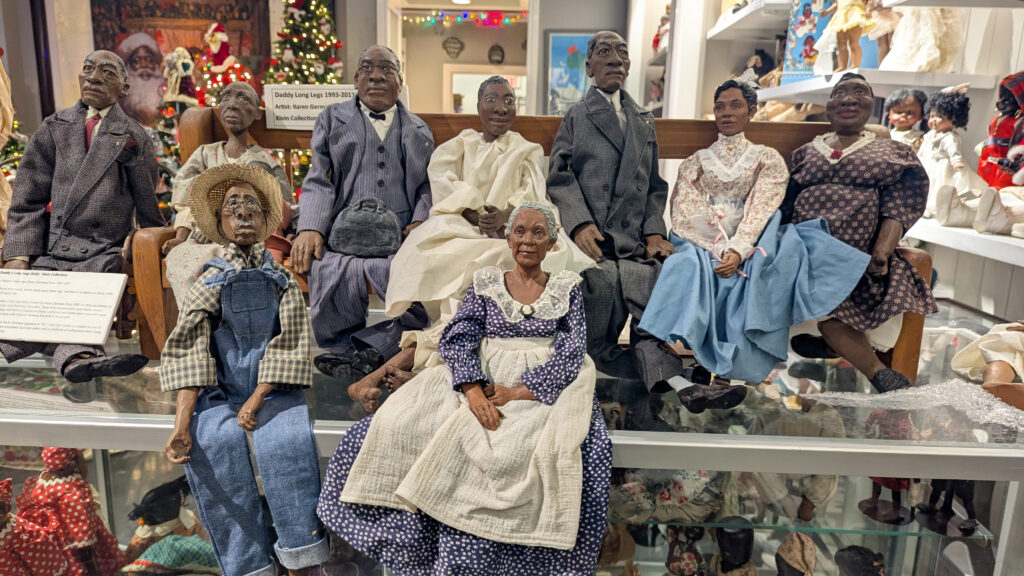
But the Barbies are only one small part of the story. The museum features dolls representing hundreds of years of history, including those made by Black doll makers. Britt and Walker estimate maybe a quarter of the museum’s collection was made by Black dollmakers.
Britt’s first Black doll was made by her grandmother, because she says there weren’t many Black dolls on the market at the time and the few that did exist were prohibitively expensive for the family.
The museum includes a display of cloth dolls, some of which Britt says were made by enslaved women and by mothers. She and her sisters also make their own dolls and planned to stay home doing that the following day because weather forecasters threatened snow again.
“I’m 72 years old, I take my time now,” she says.
Other highlights of the collection include one doll Britt describes as priceless: in the corner of the museum dedicated to music, there is a Bob Marley doll that contains actual locs of the late Jamaican musician’s hair.
Another notable piece was made by Paula Whaley, the youngest sister of writer James Baldwin. The artist’s father died the very day that she was born, so Baldwin became both a brother and a father figure. The large doll is called The Dreamer, and it was made in 2020, when the artist was thinking about the deaths of George Floyd and victims of COVID-19.
“All of her pieces are very intense,” Britt says.
Controversial Dolls
The museum also houses Controversial Dolls, a category that includes Golliwogs. Britt says the Golliwog character was created by a teenager named Florence Kate Upton in the late 19th century. She lived in upstate New York but went to England, where she saw her first minstrel show. This inspired her to write a book called The Adventure of Two Dutch Girls and the Golliwogg, about two white dolls who fear but are ultimately saved by the Black doll, who rescues them from drowning.
The books were popular, but because Upton did not trademark the character another author began using the golliwog, too. In author Enid Blyton’s stories, the golliwog was a more stereotypically racist caricature. “Florence was just a girl and this was a grown woman,” Britt explains.
“Even today it still causes a rift,” she says about the legacy of the character. “So if it’s offensive, let’s have a conversation about why it’s offensive. Take your time, take a breath, go slow, and listen to other people.”
The sisters say that many of the dolls at the museum have been donated by people whose loved ones have passed away. “Those dolls gave people all these people joy, so we’re just giving the joy back by preserving the dolls,” Britt says.