
Meeting the need for behavioral health resources
PROVIDENCE — Every new year, physical fitness experts recommend ways for health seekers to push their bodies into shape. Trainers propose the latest workouts, diets and medications to encourage people to move more and feel better.
But physical health is only part of the equation. Our emotional well-being also plays a critical role in our overall wellness, experts agree, especially with so many individuals experiencing anxiety, depression and stress on a regular basis.
According to the most recent data from the Rhode Island chapter of the National Association of Mental Illness (NAMI RI), 41.5% of adults in Rhode Island have reported symptoms of anxiety or depression. Nearly 30% of those individuals were unable to get the counseling or therapy they needed.
The gap between access to services and the demand for care is huge and it especially affects vulnerable populations like young people and those at risk of suicide. NAMI RI reports that 16,000 Rhode Islanders between the ages twelve and seventeen have experienced a major depressive episode.
Even more concerning, their statistics highlight that 10,000 adolescents in the Ocean State consider suicide each year and the number of adults estimated to have similar thoughts is 41,000. In 2022, the state lost 126 lives to suicide.
Related data from NAMI RI is available here.
A lifeline to mental healthcare
To address these alarming statistics, a number of local agencies have developed innovative approaches to mental health that minimize stigma and make treatment more accessible for everyone, including populations that may not have traditionally sought care.
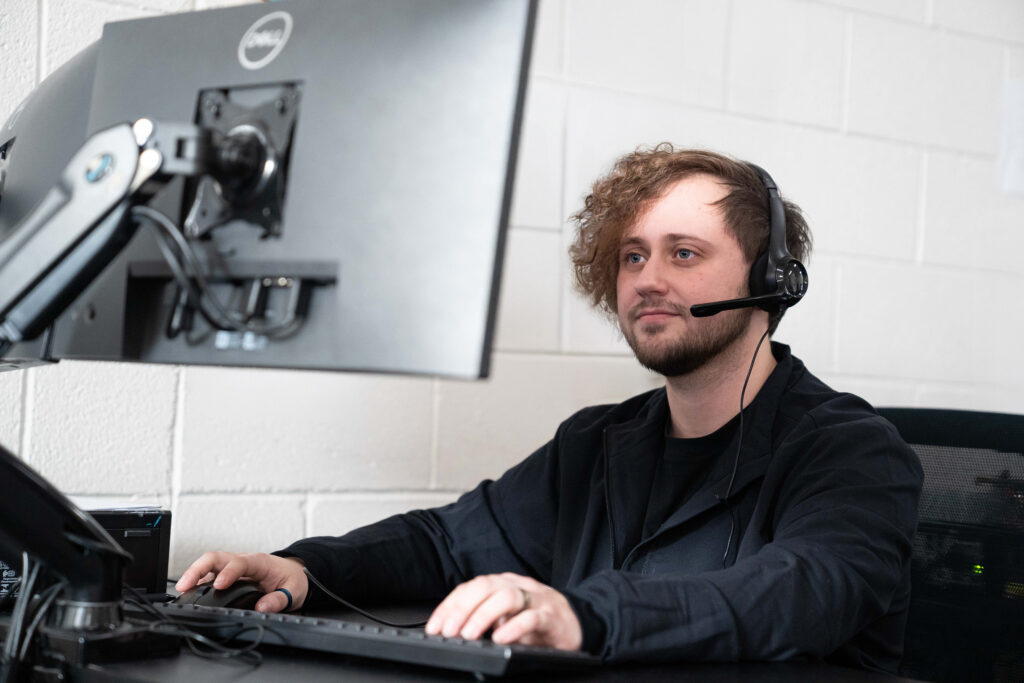
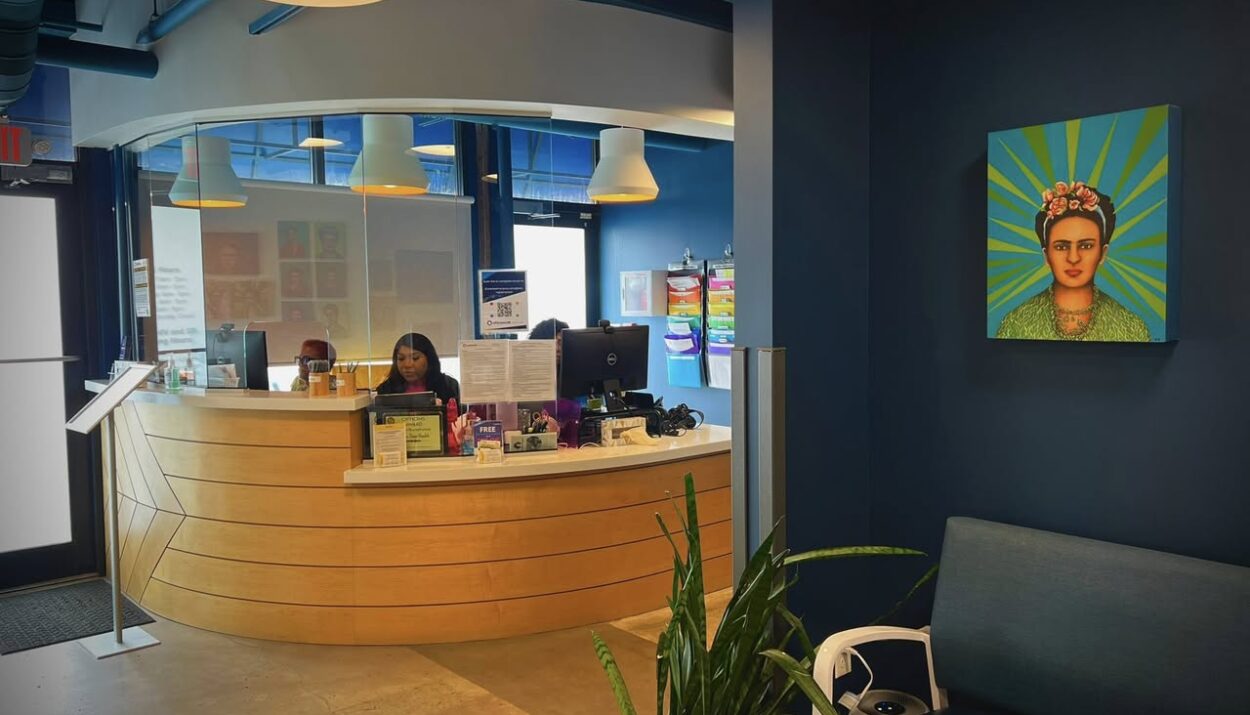
Rhode Islanders are fortunate to have access to BH Link, a crisis lifeline and behavioral health facility designed to provide immediate crisis intervention services and connect patients to ongoing treatment and care. Since 2018, the East Providence-based center has offered a comprehensive selection of resources delivered by a team of registered nurses, counselors, psychiatrists, phone screeners, and peer specialists.
BH Link exists through a partnership between Community Care Alliance, Horizon Healthcare Partners and the State of Rhode Island’s Department of Behavioral Healthcare, Developmental Disabilities & Hospitals (BHDDH).
Katie Anderson, LICSW, QMHP, Vice President of Acute Services with Community Care Alliance, explained their approach, “We follow the best practice model in crisis care that every community should have a place to call, a place to go, someone to respond and someone to follow up.”
Through both an in-person triage facility and a 24/7 suicide and crisis lifeline, anyone can access behavioral healthcare wherever and whenever they need it.
According to Anderson, “We have a highly integrated statewide approach to meeting people’s crisis needs in their community in a way that is person-centered. There are many ways that people can access care but this standardized statewide approach hopefully makes it easier for folks.”
She notes that a crisis is however a person defines it. A caller may be feeling lonely, overwhelmed or suicidal or be struggling with substance abuse. Whatever the situation, anyone can call, text or chat with someone at 988 where they will be confidentially relayed to a trained crisis counselor most likely in less than 2 seconds. Even if they’re simply having a bad day and just need someone who will listen.
Walking through the intake process, Anderson shared, “When someone calls, they’re immediately connected to an in-state crisis counselor. Clients are provided support, resources and information. Phone calls average ten to twenty minutes with people getting the help they need by the time they’re finished.”
Should someone demonstrate a higher level of distress, the counselor can connect them to one of several mobile crisis teams located throughout the state who will get to them wherever they are to provide immediate in-person care.
Opening doors to holistic care
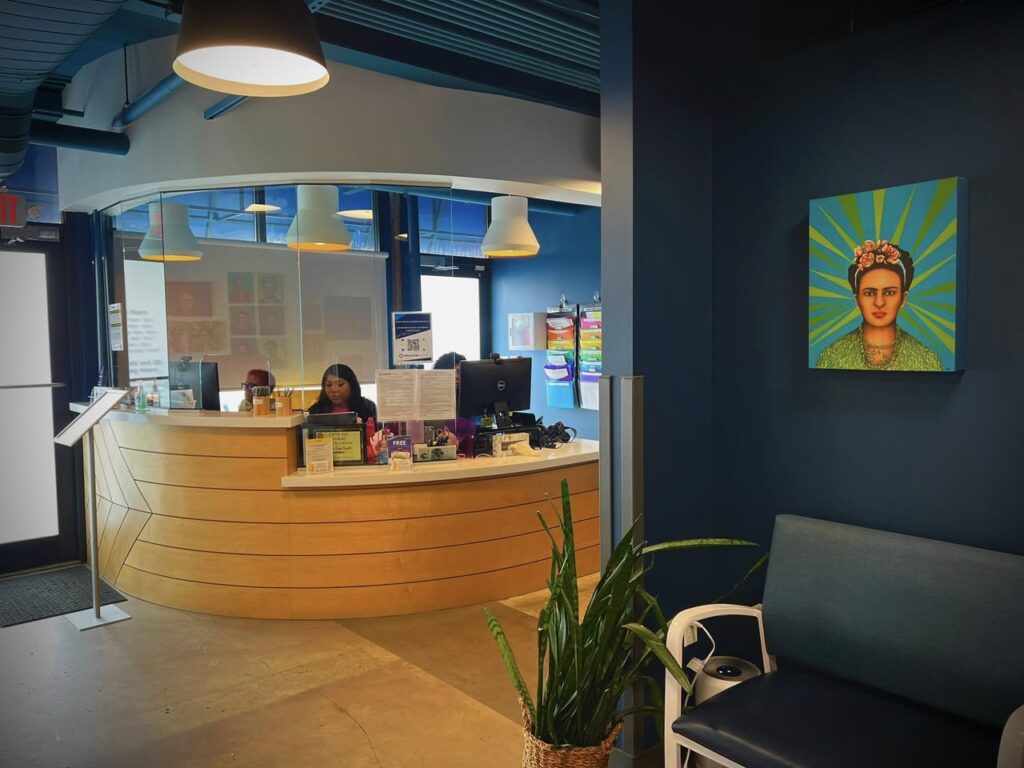
The goal of Open Door Health, a primary care and sexual health clinic located in Providence, is to deliver high-quality, comprehensive services all under one roof. An initiative of the Rhode Island Public Health Institute, the nonprofit organization launched the Open Mind Behavioral Health Clinic in 2024 to address the mental health needs of their clients.

Dr. Amy Nunn, ScD, Chief Executive Officer at Open Door Health, described why they added mental health care to their services, “We have between five to six thousand active patients and their biggest concerns are sexual health and behavioral health issues like anxiety, depression and addiction. We were referring patients out for care but a lot of times people couldn’t get what they needed. When they came back to us, we simply felt like we weren’t helping them.”
To launch Open Mind, Dr. Nunn recruited Jennifer Etue, LICSW, as the organization’s Director of Integrated Behavioral Health.
(Read an interview with Nunn. Also available: an interview with Dr. Philip A. Chan, Open Door’s Chief Medical Officer; and an Ocean State Stories piece on Open Door’s mission.)

Etue looks at behavioral health as one component of a patient’s overall health. As she explained, “We’re talking about the impact that chronic health conditions could have on somebody’s behavioral health or their behavioral health on their primary health. It’s about whole health in its entirety.”
Everyone at Open Door Health plays a role in increasing access to these services and decreasing the stigma for those patients who might not otherwise seek care because it feels scary or they think they don’t need it. An interdisciplinary team focuses on the entire person whether they come to the clinic seeking primary care, sexual health support or behavioral health resources.
She provides one example, “A patient may come in with chest pains, but it really sounds like anxiety. How can we help them right now? That increased anxiety impacts their ability to perform at work or maintain their relationships. So it really is responding in person, right then and there.”
Dr. Nunn adds, “This model works from a whole health perspective – behavioral health experts working side by side with primary care providers to bring that collaborative body of support. Patients are making a wellness appointment, not a mental health appointment. We really are trying to meet people where they’re at.”
Streamlining the path to quality care
Since 1884, Butler Hospital on Providence’s East Side has been at the forefront of offering approaches to psychiatric care and substance abuse treatment. A member of the Care New England Health System, the hospital launched its Express Care Clinic at the close of 2025, intent to provide top-notch mental health care efficiently and effectively.

Gretchen Anderson, LICSW, CCS, LCDP, Senior Clinical Director of Ambulatory & Outpatient Behavioral Health at Butler, detailed the clinic’s approach, “We wanted to expand access to behavioral health services in a timely way. Our goal is to try and help individuals who are coming in for care by having them walk out with an actionable plan offering some bridge support until we can connect them with an outpatient provider.”
The team at Butler takes the guesswork out of seeking care so that individuals don’t have to debate whether they should see someone immediately or wait it out in case their condition improves quickly. Now they can engage with an experienced professional right when they’re feeling like they want to be seen and be connected to resources at the hospital or elsewhere.
Anderson said, “A critical piece of our services is having a case manager here that really helps people connect with community resources.”
The trained specialists at the clinic know that it often takes a tremendous effort for people to reach out for help so they want the process to be welcoming and inviting.
“We make it easy for people to come in. We know that it took a lot for them to walk through the door and so we want to engage them and make them feel as comfortable as possible.”
Guests are greeted by a staff member who engages them in a simple intake process to determine their level of need. From there, they are connected with a clinician who can provide on-the-spot counseling and, if necessary, link them with additional services anywhere in the state from Woonsocket to Westerly.
For people who are on the fence about seeking help, Anderson references the Nike slogan, “Just do it.”
“If you have a sense that you could use some additional support we’re here for you.”
Anyone in immediate danger should call 911.
Call 988 or text HOME to 741741 if you are having thoughts of suicide or are in crisis. 988 is free, available 24/7, and confidential.
Other resources:
● BHLink: For confidential support and to get connected to care, call (401) 414-LINK (5465) or visit the BHLink 24-hour/7-day triage center at 975 Waterman Ave., East Providence. Website: bhlink.org
● The Samaritans of Rhode Island: (401) 272-4044 or (800) 365-4044. Website: samaritansri.org
● The Crisis Text Line: Text HOME to 741741 “from anywhere in the USA, anytime, about any type of crisis.”
● Butler Hospital Behavioral Health Services Call Center: Available 24/7 “to guide individuals seeking advice for themselves or others regarding suicide prevention.” (844) 401-0111. Butler Hospital Express Care: butler.org/express-care
● NAMI Rhode Island: namirhodeisland.org
● Open Door Health Open Mind Behavioral Health Clinic: odhpvd.org/services/open-mind