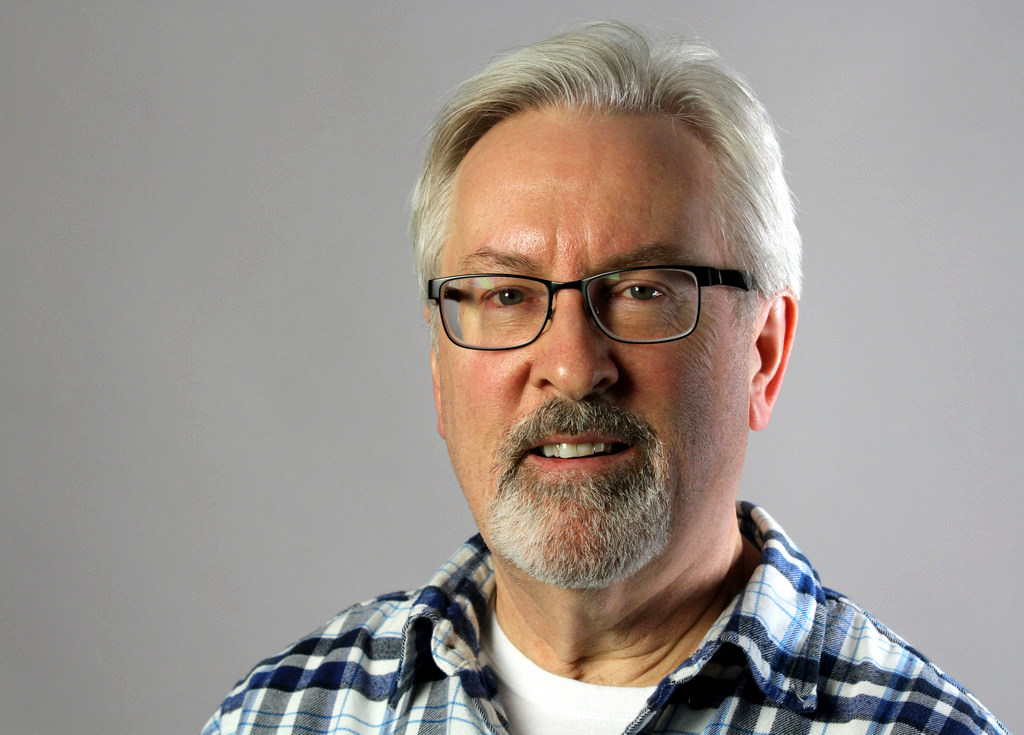
Filmmaker has won many awards and is shooting for more
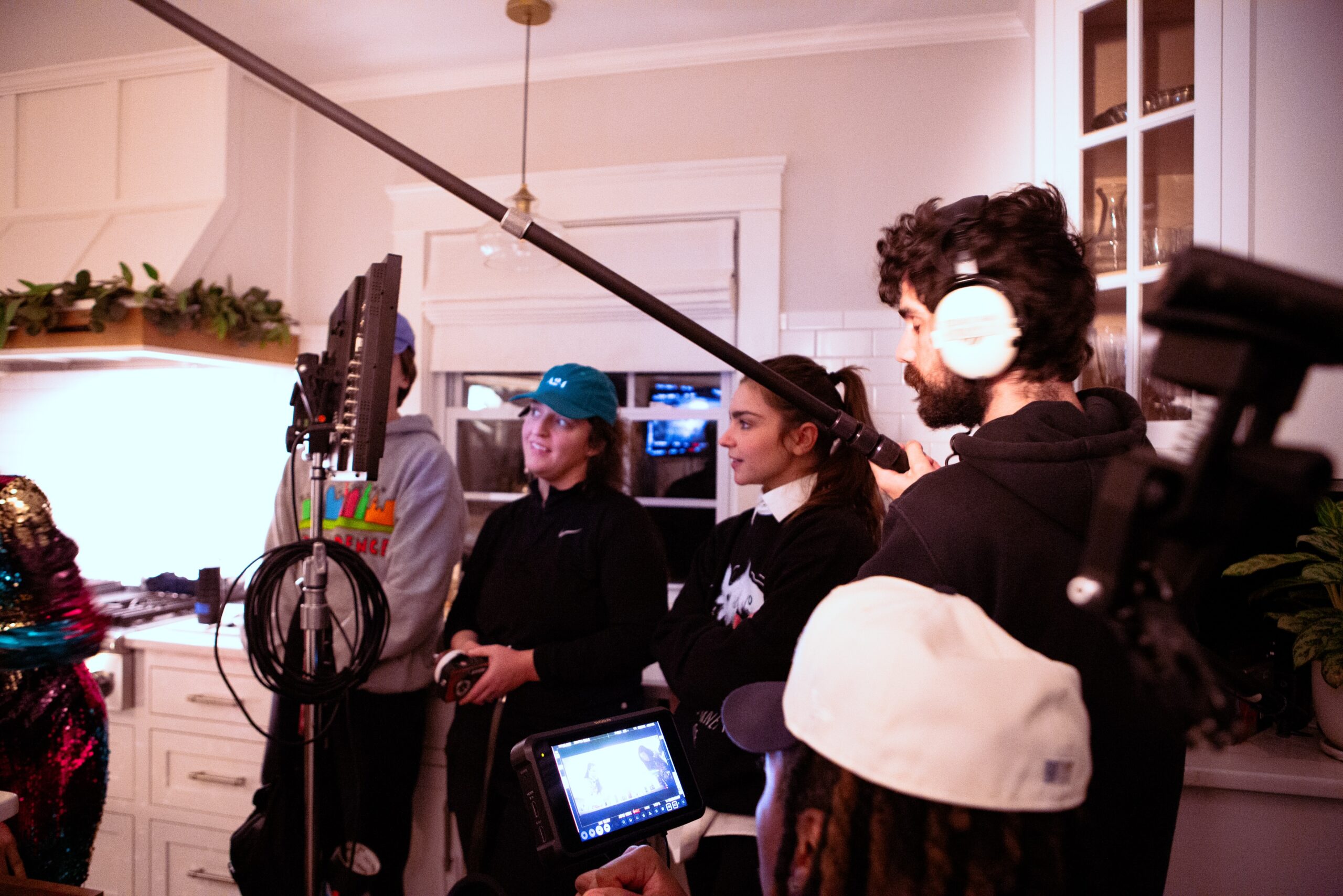
PROVIDENCE — A revealing introduction to the talent and ingenuity of young filmmaker Manya Glassman, whose work has won festivals and been endorsed by Academy Award-winning director Spike Lee, is the story of the goldfish.
It is seen circling and about to disappear down a drain near the end of the trailer for Glassman’s widely celebrated short film How I Learned to Die, which she wrote, produced and directed.
Glassman did not want to use a fake fish or kill a live one for the shoot.
So she got on the phone.
“I reached out to every pet shop near Providence and said, ‘Hi, I have a request. It’s going to sound a little weird, but I was wondering if you could give me a call when any of your goldfish die so I could so I could take the dead goldfish and use it for my film,’” she said in an interview with Ocean State Stories.
“And they were like, ‘that’s super weird and we’re not going to do that.’”
Glassman’s production designer was Won Hwang, a student at the Rhode Island School of Design at the time. Hwang had an idea.
“She went to the RISD taxidermy lab, and they had a preserved dead goldfish” that the lab overseers let them have, Glassman said.
Now they had a fish. One fish, dead, with one chance to film it.
“When the time came that we had to flush it for the scene,” Glassman recalled. “We couldn’t do multiple takes…. We held our breath that whole time it was flushing.”
They got their take.
“I like to think so,” Glassman said when asked if she thought storytelling and film are in her DNA. That question was posed after Glassman told Ocean State Stories that she is the daughter of Joan R. Branham, Associate Provost for Faculty Affairs and Professor of Art History at Providence College, and Gary Glassman, award-winning documentary filmmaker whose production company, Providence Pictures, has produced films for the BBC, Nova, the Discovery and History Channels, and other programs.
Manya remembers The Sound of Music as the first film she ever saw. The 1965 film was released on VHS in the late 1980s.
“My parents always talk about how I would spin in a circle when [Julie Andrews] was singing the hills are alive with the sound of music,” she said. “I was young enough that I couldn’t speak yet.”
Movie-watching was part of the family’s daily routine.
“I grew up watching movies every night with my parents,” Glassman said. “It was a form of connecting with them. My dad would talk about the ‘inciting incident’ and the directing and the acting, and my mom would talk about the way the visuals all came together. So it was just fun to get into the process of how these films were made and how my parents were interpreting the meaning from them.”
Glassman’s tastes evolved as she moved through childhood.
“I remember watching films like Pulp Fiction, Gladiator, The Matrix when I was about eight,” she said. “Moonstruck is one of my favorite films. I remember watching that with my parents, too. And it was so fun that everyone loved the drama of it — the drama of Nicolas Cage threatening to cut off his hand.”
With one of her father’s cameras, she began making films with friends “at a very young age,” shorts that sprang from “kids’ imaginations,” she said. “My dad would always carry a camera around with him. From the second I was born — literally, upon birth — he filmed me and would just carry this handheld camera all the time. And so I got very used to being around a camera. It was like, ‘that’s kind of how you live. You process life through the camera.’”
Glassman was a student at Moses Brown School when she experienced a medical crisis that would not only profoundly affect her health but also influence her filmmaking.
“I found out that I had a benign tumor inside of my third vertebra. And it was pushing on my spine and the doctors were very worried that I could be paralyzed at any minute or die,” she said. “I was immediately put into a neck brace.”
Surgery was planned, but before it was scheduled, Glassman said, she was subjected to little bit of ridicule. “It was just so comical! I mean, it was a ridiculous situation that I had this neck brace as a new student with all these new people — a lot of cliquey girls, a lot of jocks, like a classic high school in America.”
Her reaction?
“I just decided to live it up completely,” Glassman recalled. “It was like a superpower that I inhabited: You only have this amount of time, and so the world is yours. So I did everything that you would imagine a 16-year-old girl would do, which was getting drunk for the first time, doing other shenanigans — I won’t name all of them — and that’s what How I Learned to Die is about.”
Glassman’s operation, after the school year ended, was at Boston Children’s Hospital. “It was a very high-risk surgery,” according to Glassman, “but it was what the doctors said could be the only [long-term] solution. It was successful because here I am.” More than a dozen other, less-risky operations have followed.
Actors in the short film, How I Learned to Die include Lola Darling, who plays Iris, the fictional Glassman; Rebecca Gibel, who plays Rachel; and John Hillner, who plays Sam.
Watch the film and Glassman’s discussion of it
“Making the film was incredibly cathartic for a lot of reasons but I would not have had it any other way because it has taught me the most important lesson in the world: time is precious, and it’s important what you do with that time,” Glassman said.
“I live every day thinking that. It’s a lesson that a lot of people never get, but it’s absolutely true. And there can be a balance with working very hard to achieve your dreams, which is what I’m doing.”
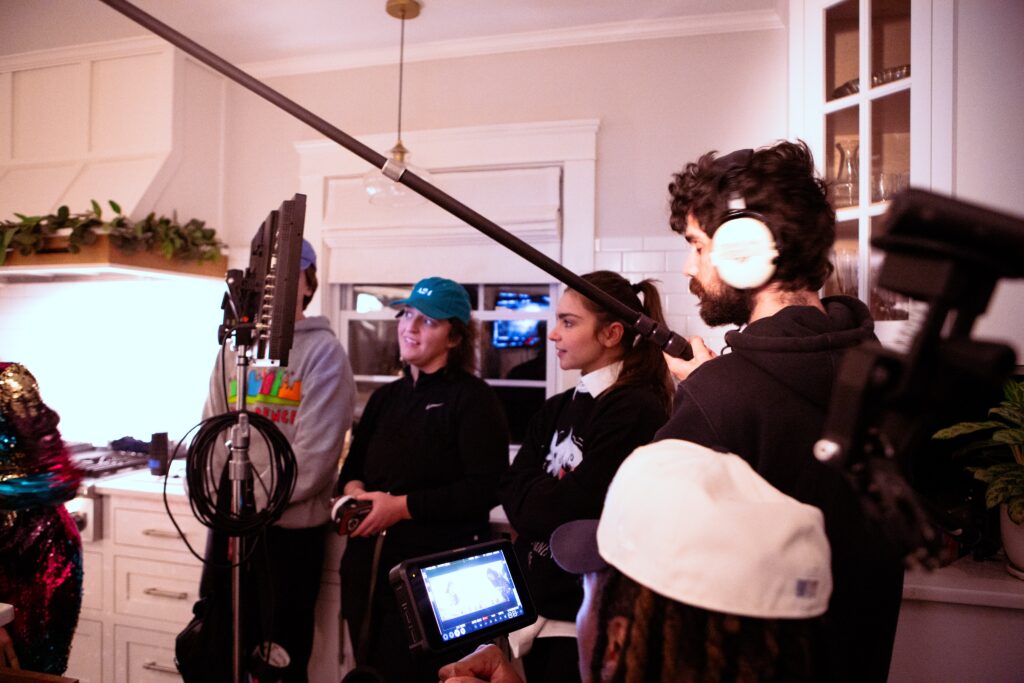
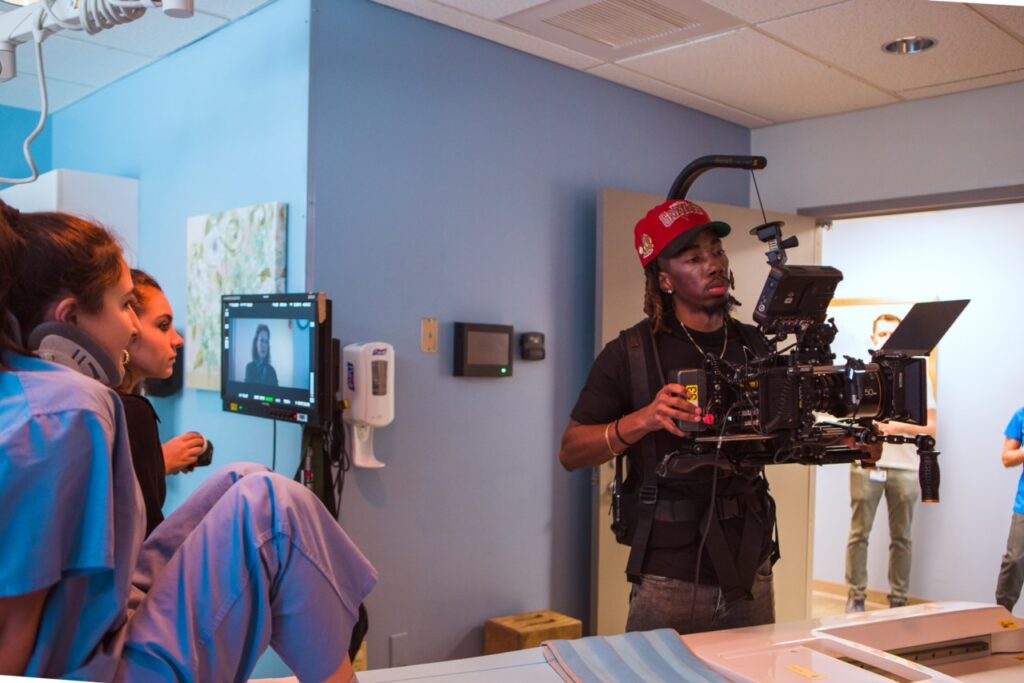
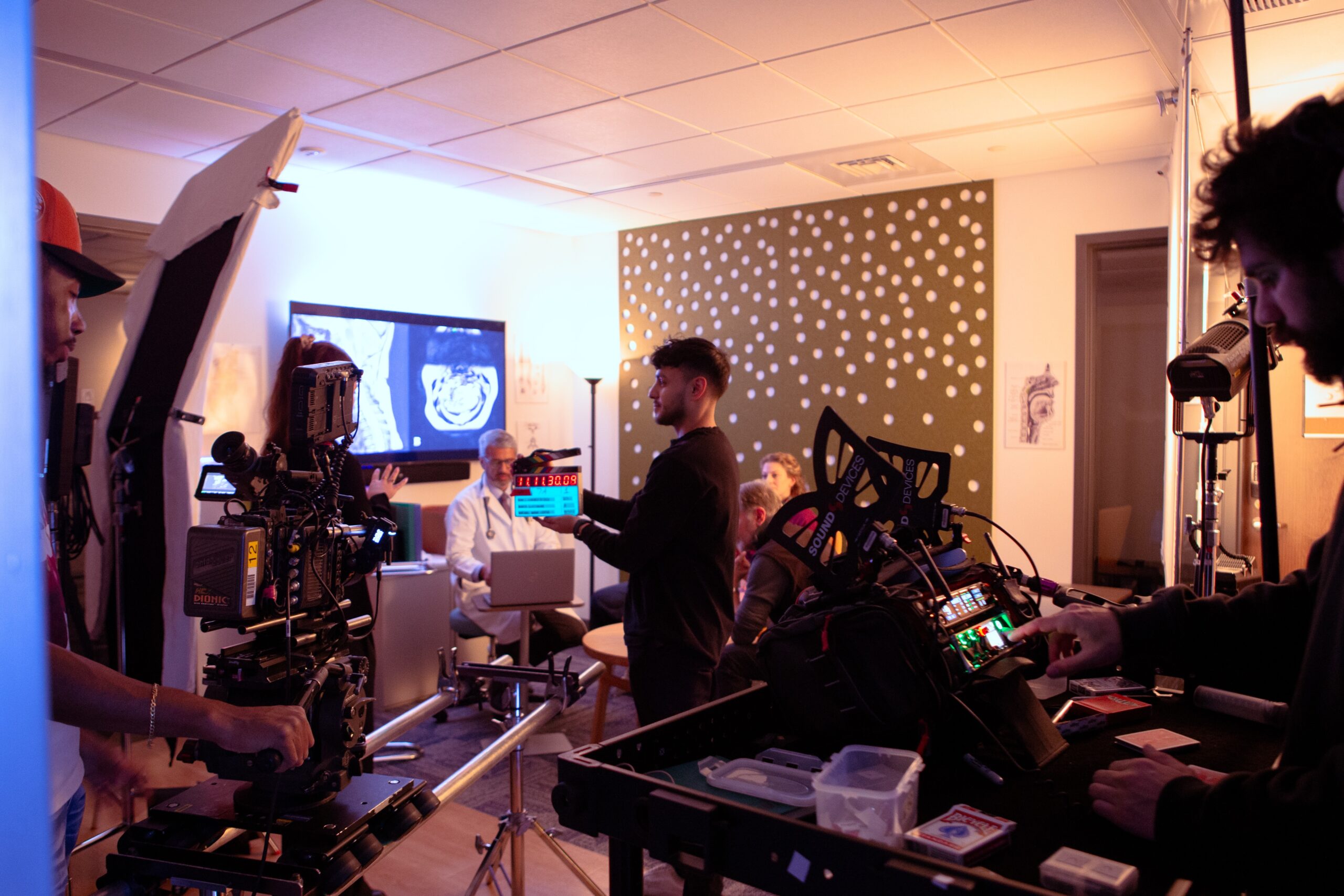
After high school, Glassman enrolled in Providence College. After receiving her diploma, she applied to New York University’s highly competitive graduate film program. Glassman didn’t expect to be admitted.
“I applied thinking: I haven’t been to Cannes or on any big hot shot sets, I just applied with all the movies I had been making on my own,” she told Ocean State Stories.
NYU admitted her.
“The day that I got in was the first best day of my life because it was just shocking. I just couldn’t believe it!” Glassman said. “And I knew in that moment my life had changed in the best way I could ever imagine.”
Her studies were interrupted by the pandemic, and when she returned to campus, she said “I got an email that said Spike Lee is returning to be a professor — he had to take a break for COVID and who wants to sign up for his class? I emailed his supervisor and said, I would definitely like to sign up for class, but I’d also like to ask if he needs an assistant. And she was like, ‘OK, if he wants one, I’ll put out a formal application and you’ll have to apply.’”
After she did, Glassman recalled, the supervisor said he wanted to meet her.
“I went to his Brooklyn office, 40 Acres and a Mule. He interviewed me and took me around his office, showed me all these film posters and asked me ‘who’s this, who’s that?’ And I really truly wasn’t able to answer a lot of them ‘cause I’m so bad at names. But we got along. And then he hired me and that was the second-best day of my life.”
Glassman’s twelve films to date have been selected for screenings in more than a dozen festivals in Canada, the Czech Republic and around the United States, including the hometown Rhode Island International Film Festival. They have won multiple awards.
How I Learned to Die won the Visionary Award last June at The Tribeca Film Festival, in NYC where it premiered. In honoring it, the jury wrote: “Our choice for the Student Visionary Award manages to make a capital-M Movie out of a short student film. We, the jury, believe this film is filled with ambition, hope, and personality—paired with complex, emotional subject matter that touches on something we will all experience: death.”
The film also was praised by the jury at the 2025 Woodstock Film Festival. The jury wrote: “This director’s instinctive understanding of filmmaking assured camera [work], smart decisive editing. and an intuitive sense of how to use the camera on how to bring us into an [emotional] connection with the [on-screen] characters. This film also features an honest and lovely performance from a newcomer in a role that takes us into awkward, awesome, and heartfelt moments with great ease.”
Glassman stayed in New York City after graduation and has lived and worked there since. She plans to shoot the feature-length version of How I Learned to Die in Rhode Island soon.
“There are so many similarities in my mind between the way I experience life and the way I experience film—they’re almost the same thing to me,” Glassman told Ocean State Stories. “Certain moments carry a kind of gravitas that deserves to be honored. But a good scene, like life, isn’t just one note.
“Even when things are dire—when someone is facing loss or an awful situation—the one thing you still have control over is who you are and how you choose to deal with it. When everything else is out of your hands, sometimes all you can do is crack a joke…or dance in the rain…or make conversation with a total stranger. Exercising that choice, that will, might be one of the most—almost—God-like things we’re capable of as humans.”
How I Learned to Die (the short) is still going through the festival circuit. Some of Glassman’s other films can be found here.