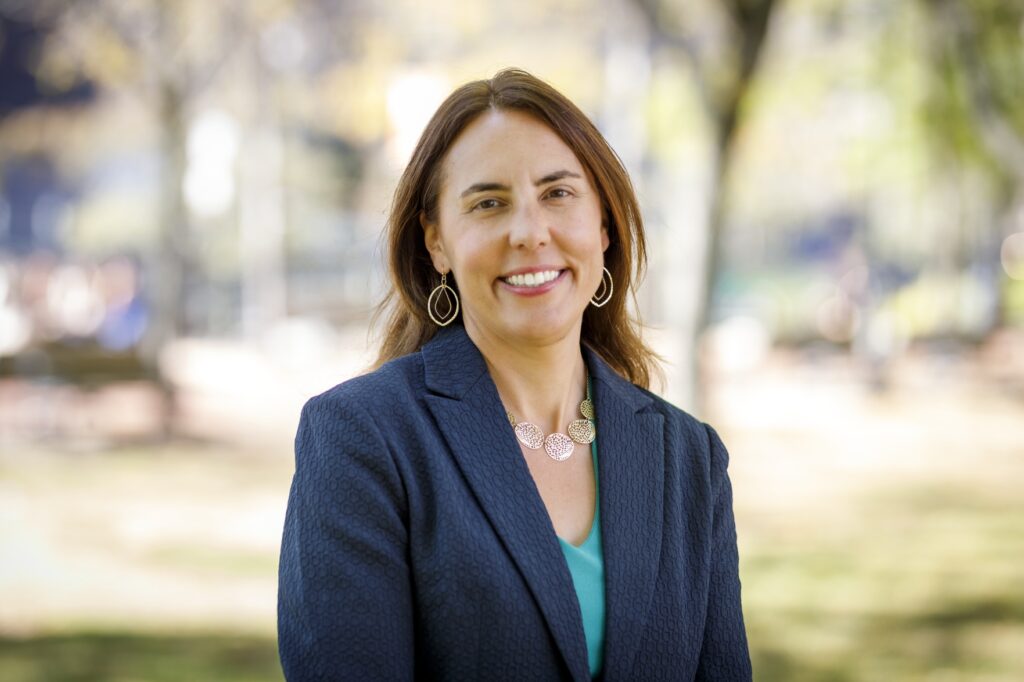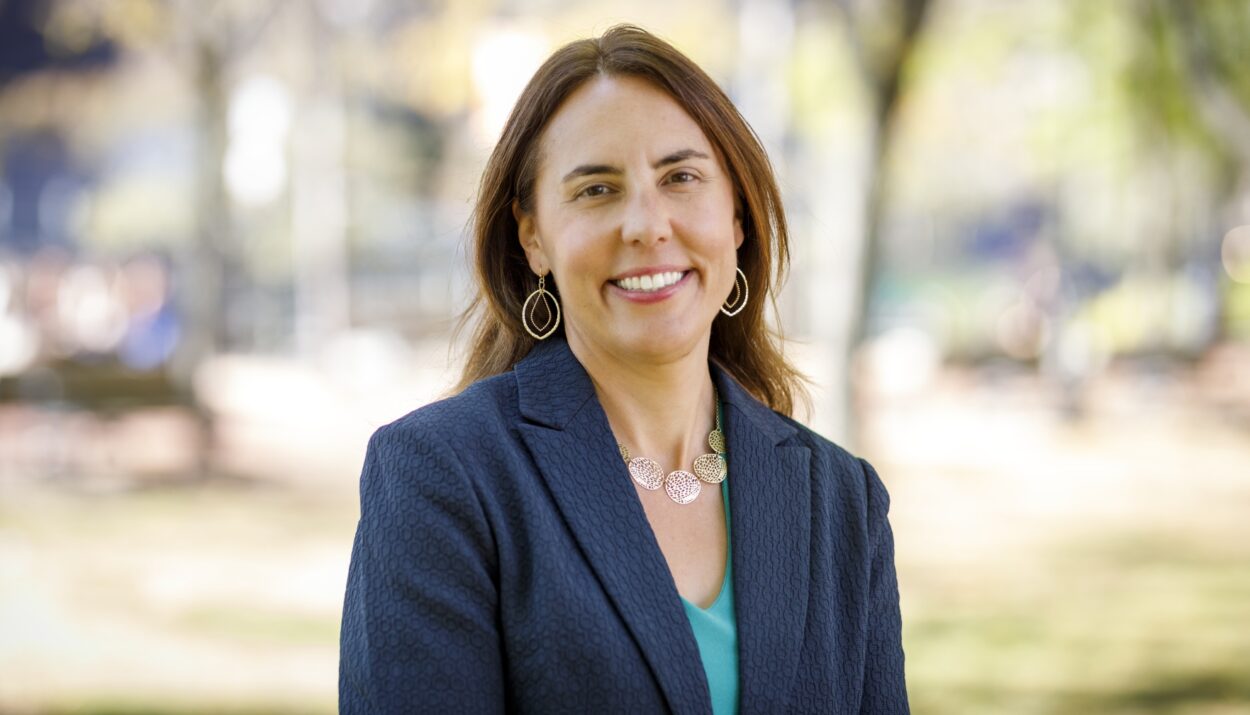
Thanks, Dr. Beaudoin welcome back to Ocean State Stories. You were last here on Sept. 13, 2023, in a story about drug overdose deaths. At the time, you were a professor of epidemiology at Brown University and a coordinator of Rhode Island’s mobile health unit. A lot has happened since then. Start with your appointment as interim dean of Brown University’s School of Public Health. When was that and who did you succeed?
My appointment as interim dean of the Brown University School of Public Health began on Jan. 1, 2026. I succeeded Dr. Ashish K. Jha, who left at the end of 2025 after leading the school through an important period of growth and transformation. With Brown having been my academic home for nearly two decades, this transition feels like a true full-circle moment for me, both personally and professionally.
On June 1, you transitioned from interim to Dean. Are you excited?
Incredibly so.
My entire professional career has been anchored to Brown University. I’ve practiced medicine in a Brown-affiliated hospital, chaired a department within the School of Public Health and studied and taught in the very classrooms I will now help lead as dean.
That long-standing connection gives me a deep appreciation for this community and for the people who make its work possible. It allows me to think carefully about how we create an environment where faculty, students and staff can thrive and do their best work.
Most of all, I have a genuine love for this place — its culture, its sense of community and the impact our scholars and students have on public health in Rhode Island and far beyond. It’s truly an honor to step into this role permanently and help guide the school into its next chapter.
Please give us an overview of your responsibilities.
My responsibility is to create an environment where our students, faculty and staff can thrive. That includes setting a clear strategic direction for the school, ensuring financial stability and fostering a culture that supports innovation, learning, collaboration and meaningful public health impact. The School of Public Health is a defining force in Brown University’s mission. It’s our job to help advance discovery, impact and public trust at a time when health challenges are reshaping society.
In the press release announcing the transition, it was stated that you will “oversee the school’s four academic departments, 13 research centers, seven master’s programs, four doctoral programs and the undergraduate concentrations in public health and statistics. Can you zero in on these?
The school’s portfolio covers a broad range of work, but at its core, it’s about helping people live healthier lives through research, education and strong community partnerships. Our faculty and researchers are tackling some of the most urgent public health issues facing Rhode Island and the world — from addiction and youth mental health to healthcare affordability, climate and environmental health, aging and pandemic preparedness. We harness data, technology and innovation to not only meet the moment, but anticipate the future.
Some numbers: Each year, our faculty and research staff dedicate more than 600,000 hours to research, produce over 1,000 peer-reviewed publications, and engage with more than 75 local organizations to promote public health. At the same time, we’re educating the next generation of public health leaders through our undergraduate, master’s and doctoral programs. This year, we graduated our largest cohort ever in the school’s history.
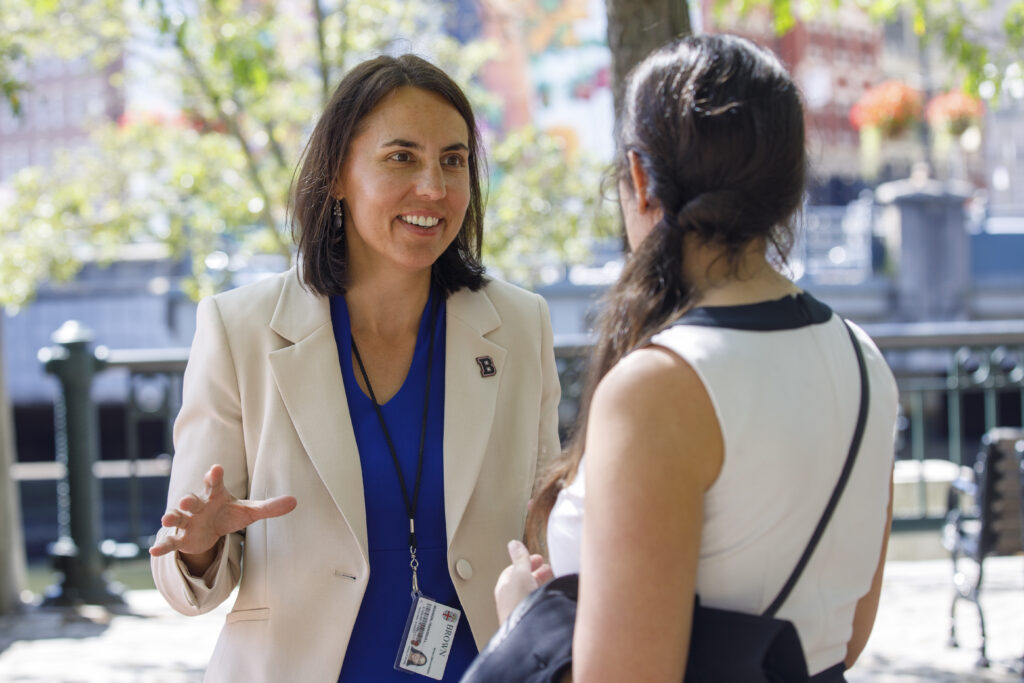
The presser also stated that “members of the dean’s search committee were impressed by Beaudoin’s genuine care for the well-being of patients and communities, her sharp strategic vision, her record as a master relationship-builder and her proven ability to build on the school’s core research bedrocks.” Very high praise! Let’s get some detail on your work with patients and communities.
Focusing on one patient, one person, is what drove me to public health in the first place. My experiences in our emergency departments led me to not only want to help the person in front of me, but to do research that could in turn help prevent or treat common problems for many, many more people. In particular, I was really interested in trying to improve the way we treat pain and then later, addiction. I actually ended up going back to school to complete my Ph.D. in epidemiology (here at Brown) while I was already out in practice as an emergency physician. While there was one set of skills I needed to care for patients in the ER, it was an entirely different set of skills that I needed to do the type of research that actually changes practice or policy. For me, caring for patients and then zooming out to think more about population health, the public’s health are closely linked.
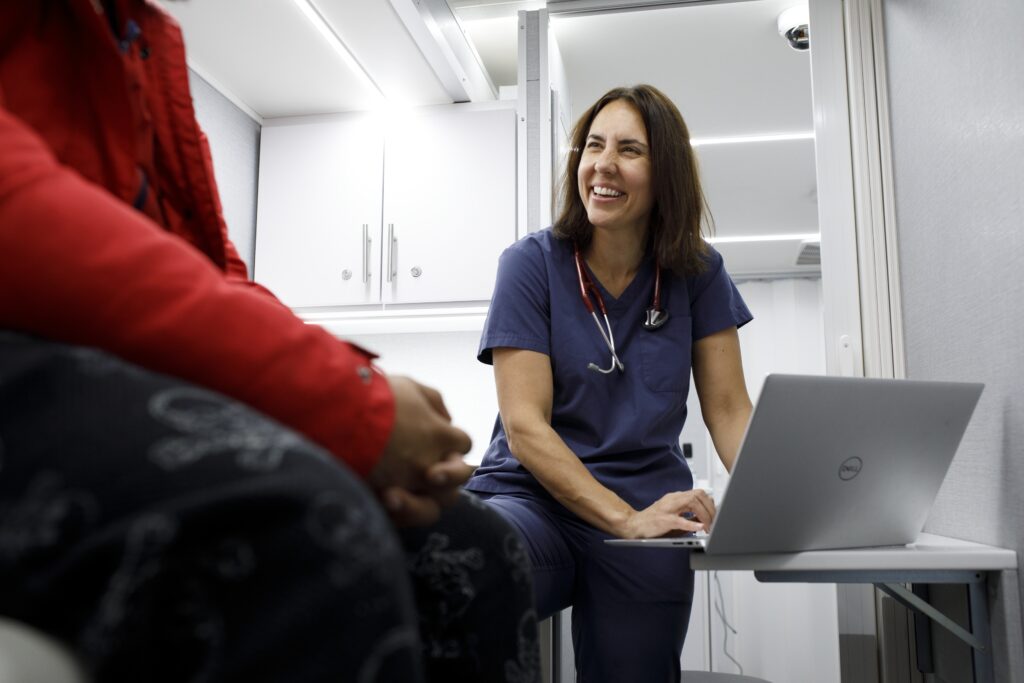
That’s also why I continue to spend time each week working in a mobile treatment clinic in Woonsocket caring for patients with opioid use disorders and helping connect them with services like housing, food and medical care.
I feel very fortunate that I get to do work that matters for people — for most people I know, being healthy is a priority (even sometimes when it is taken for granted and other times seems out of reach).
Your research is impressively deep, and it has been presented in more than 190 peer-reviewed articles. What does your research focus on?
Earlier in my academic career, my research focused heavily on pain management and finding the safest, most effective approaches to treating pain, particularly among older adults. At the same time I was trying to find better approaches to treating pain for hip fractures and other traumatic injuries, the opioid overdose epidemic began to surge. I pivoted a lot of my research because it became such a clear and pressing public health threat. Much of my recent work has been in the space of addiction and mental health. I am really passionate about improving treatment and recovery for people with opioid use disorders. There is still an unmet need for evidence-based strategies to improve care of people living with addiction. This type of work requires a team and it is so very important that we do this work both with and for the communities we are trying to serve.
For five years, you have offered stigma-free addiction treatment to people in Woonsocket, “operating out of a 27-foot-long mobile recovery RV run by CODAC Behavioral Healthcare,” according to the release. Details please.
The mobile treatment clinic is operated by CODAC Behavioral Healthcare, a nonprofit based in Cranston that provides treatment, recovery and prevention services across Rhode Island. The clinic itself is a 27-foot RV outfitted with counseling space, medication dispensing capabilities and basic medical services, allowing us to bring care directly into communities where it’s needed most.
Each week, I work alongside a team that includes nurses, peer recovery coaches and outreach staff to provide treatment for opioid use disorder and connect patients with additional support, whether that’s housing, food assistance, insurance enrollment or other medical care. The goal is to provide evidence-based, stigma-free addiction treatment in a setting that is accessible, flexible and community-centered.
We know traditional clinic models do not work for everyone, particularly for people facing barriers such as unstable housing or lack of transportation. What makes the mobile unit so impactful is its ability to go directly to neighborhoods experiencing high rates of overdose and meet people where they are. When it’s not being used for addiction treatment, the vehicle can also serve as a medical outreach unit for people experiencing homelessness or other unmet health needs.
For me, the work reflects some of the core principles of public health — reducing barriers to care, building trust within communities and making sure people can access treatment with dignity and support.
Among other organizations, you are a member of the board of directors of Blue Cross Blue Shield of Rhode Island. What does that encompass?
The board is providing governance, oversight, and strategy to help BCBSRI with its mission to promote the health and wellbeing of Rhode Islanders through high quality, accessible, affordable healthcare. The healthcare landscape is incredibly challenging right now for many Rhode Islanders – I feel privileged to be able to bring both a physician and public health perspective to the board at such an important time.
How do you find time for all this?!
I’ve never really thought about it as “finding time” because when something is important, you make the time. Maybe that comes at the expense of things like sleep… But in all seriousness, all the work I do is done as part of a team. I get to work with exceptional students, faculty, staff and community partners. Their commitment, creativity and compassion is incredibly inspiring. Being around people who truly are dedicated to improving the lives of others makes you want to work even harder to support them. It’s my job to help create an environment where they can succeed. That’s one of the parts of leadership I care about most.
Let’s hear about your background. Where did you grow up and what schools did you attend and degrees award?
I’m a physician by training, and I originally came to Providence in 2006 for the Brown-affiliated emergency medicine residency program at Rhode Island Hospital. Before coming to Rhode Island, I earned both my bachelor’s and master’s degrees in kinesiology from the University of Massachusetts Amherst, where I was also an All-American rower. I received my M.D. from the University of Massachusetts Medical School in 2006 before coming to Brown for residency training. Later, while continuing to practice emergency medicine, I earned my Ph.D. in epidemiology from the Brown University School of Public Health in 2017.
I grew up in Methuen, Massachusetts.
What are your goals for the School of Public Health?
I want the Brown School of Public Health to help shape the future of public health rather than simply respond to it. We have an opportunity to lead conversations around prevention, resilience and population well-being in ways that have lasting impact and I want us to build on that momentum. This also means being part of the solution to regaining the public’s trust — this means being out in communities, listening and working with the people we intend to serve.
Will you be taking any inspiration from former dean Dr. Ashish Jha, who has appeared on our site?
I’m very grateful for Dr. Jha’s leadership and service to Brown. During his time as dean, the School of Public Health experienced significant growth in enrollment and faculty, while also raising its national profile during an especially important moment for public health. Dr. Jha really pushed our faculty and students to think about more than just collecting data or publishing papers — to make sure that the work we do actually matters to the people that we are trying to impact.
What advice do you have for students and others who want to get into public health service?
We need people who want to be creative about solving the world’s challenges in health and this is a field where there will always be a need. A public health degree is like a Swiss Army knife. It equips you with a broad set of tools that can be applied in so many different ways and prepares you to work with others to solve problems and improve lives.