Rhode Island journalists, educators, and students entering the field say the news business is changing shape, not disappearing
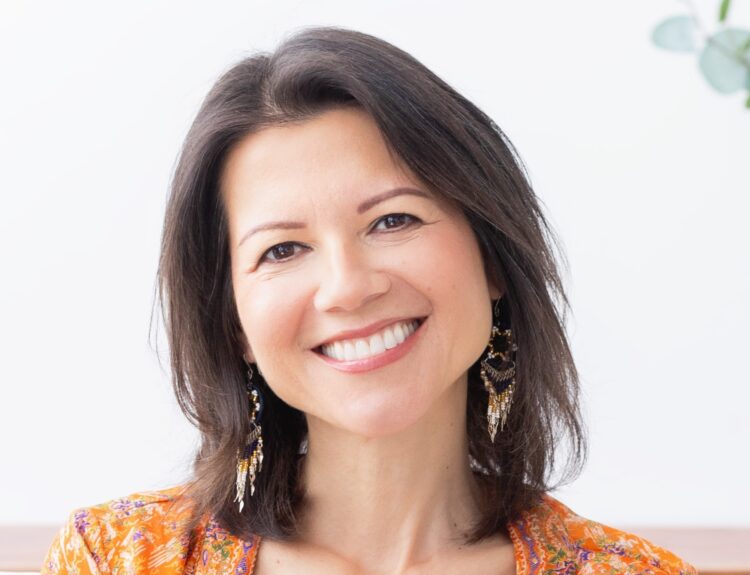
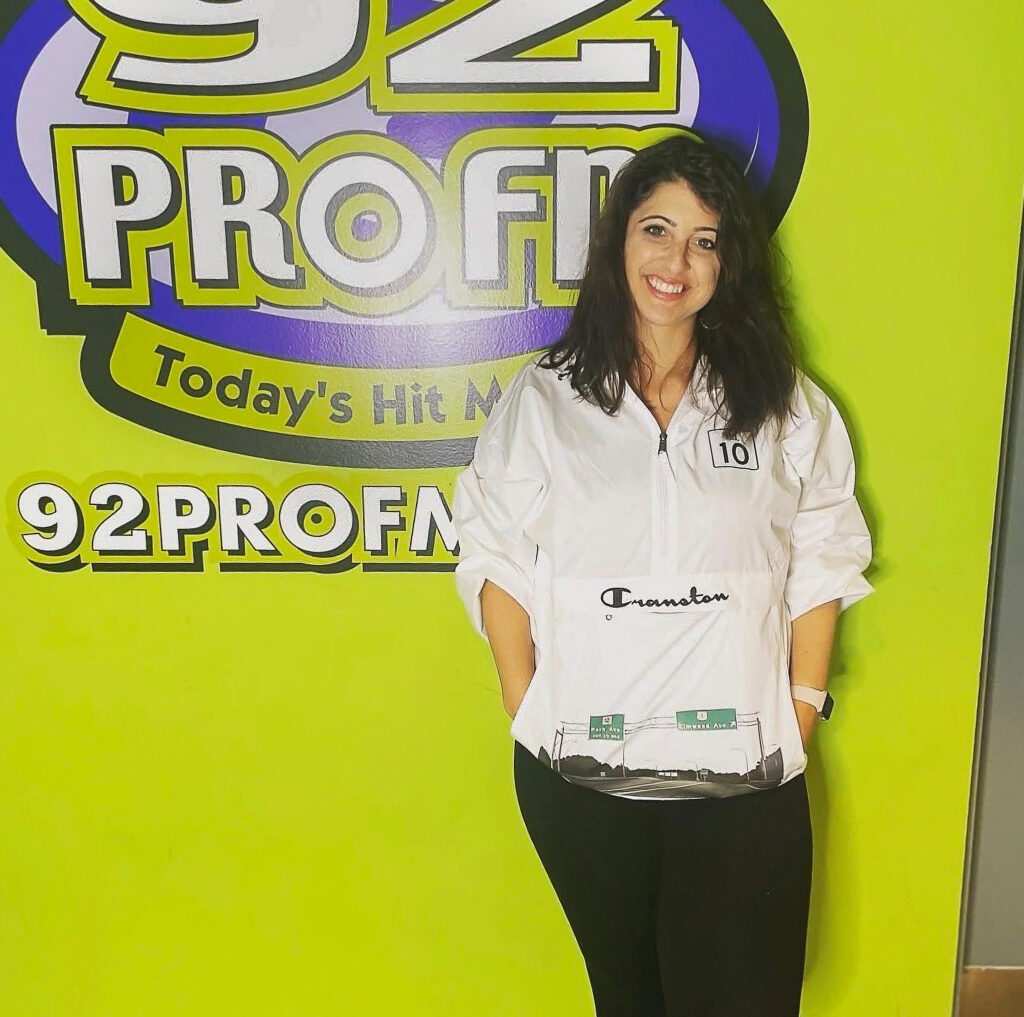
Bekah Berger’s workday begins before most Rhode Islanders have found their car keys. From 6 to 10 a.m., she co-hosts the morning show at 92 PRO-FM. While the microphone is live, so are her social media feeds. Beyond live on-air broadcasts and online streams, she collaborates with her team to share updates on Facebook, Instagram, and TikTok. When the show wraps, Berger turns to her podcast, which she hosts, produces, edits, and publishes herself.
Compared to an octopus for juggling it all, Berger laughed. “I agree. I am like an octopus,” she said.
That many-armed approach runs counter to a mood that has settled over some newsrooms. In media circles today, debates about the field’s trajectory often focus on concerns about TikTok, the influence of content creators, and the expansion of digital news platforms.
The worry is not unfounded. According to Northwestern University’s Medill School of Journalism’s 2025 State of Local News report, 136 newspapers closed in the year it covered, and nearly 40% of the country’s local newspapers have disappeared since 2005. Roughly 50 million Americans now live with limited or no access to a reliable source of local news. Meanwhile, 43% of adults under 30 say they regularly get news on TikTok, up from 9% in 2020, according to the Pew Research Center.
But the same Medill report found that local digital-only news sites are multiplying, and many are thriving. And conversations with a professor, two college journalism majors, and two of the state’s most recognizable media personalities support the view that the profession is very much alive and well. The journalism landscape is evolving rapidly, requiring practitioners across the field to adapt faster than ever.
Pivoting is pivotal
Berger, who grew up in Cranston and now lives in Warwick, studied journalism at the University of Rhode Island. She will mark 20 years as a full-time broadcaster in 2027. She said her professors did not sugarcoat what lay ahead.
“They gave us a lot of warnings just about how this is an industry that changes so frequently, and it’s an industry that you’re going to have to pivot a lot in,” Berger said.
They also told students headed for radio and television that they would likely lose a job someday. Rather than being scared off, Berger doubled down.
“I’ve always sort of had that ‘you’ve got to stay gritty, you’ve got to stay hungry’ [mindset] and I’ve taken that with me,” she said.
She started in 2007 behind the scenes, saying yes to every assignment offered. When blogging became popular, she blogged. When Facebook rose to prominence, she urged colleagues to begin posting there. A longtime Bravo fan, she launched her podcast, “Real Talk Rhody,” just as news broke that “The Real Housewives of Rhode Island” was coming to the state.
“I haven’t known a life in this industry without having to do something extra,” she said.
Streaming does not rattle her, either.
“I’ve never known a radio life without the threat of streaming,” Berger said. “It’s always been there. And so I’ve never looked at it as so much a threat because it’s just always existed and we’re still here.”
She said local radio provides an experience a playlist simply cannot replicate – a sense of shared connection between radio personalities and their listeners.
“There’s nothing like that relationship between radio or podcast personality and listener,” she said.
The always-on pace takes a toll, and Berger, a mother, does not pretend otherwise.
“As much as I love my career and where it’s taking me, of course I get fatigued,” she said. Still, she added, “The dream job I wanted when I was a kid is the dream job I have now, and not a lot of people can say that.”
Something good, by design
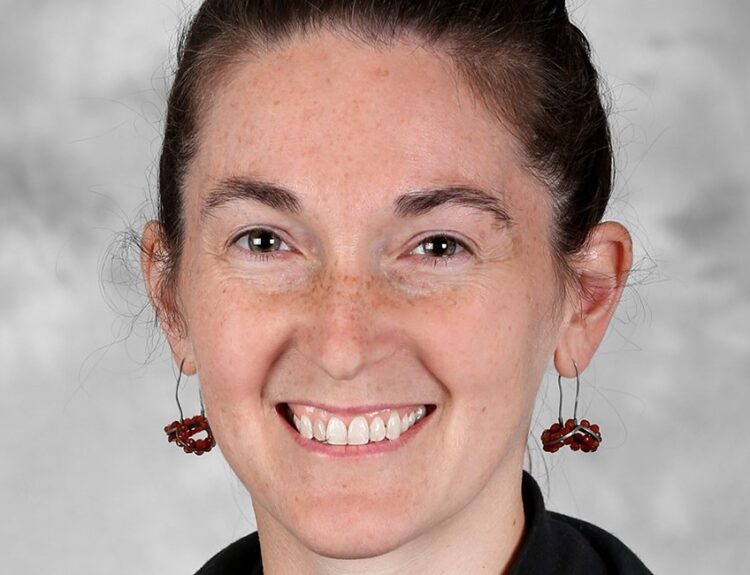
Sam Read knows a thing or two about carrying the whole kit. The weekend evening anchor and multimedia journalist, or MMJ, at NBC 10 WJAR is entering her 13th year in the industry. As an MMJ, she is her own one-woman crew, shooting, reporting, and editing her stories with the camera gear the station issues to her. Two years ago, she added her own camera, a GoPro her husband gave her for her birthday, so she can film from two angles at once. “It just totally elevates the different angles and shots that I can get,” she said.
Her journey home to Rhode Island was anything but direct. After Springfield College, she took a roughly $8-an-hour job at SportsNet New York, then a behind-the-scenes job at Boston’s Channel 7, where she built a reel by shadowing reporters and anchors. She sent it to stations nationwide. Four responded. She moved on to Panama City Beach, Florida, and Portland, Maine, before a tropical storm brought her to Rhode Island for a short fill-in assignment. A few months later, Channel 10 reached out about an opening. She started there in September 2018.
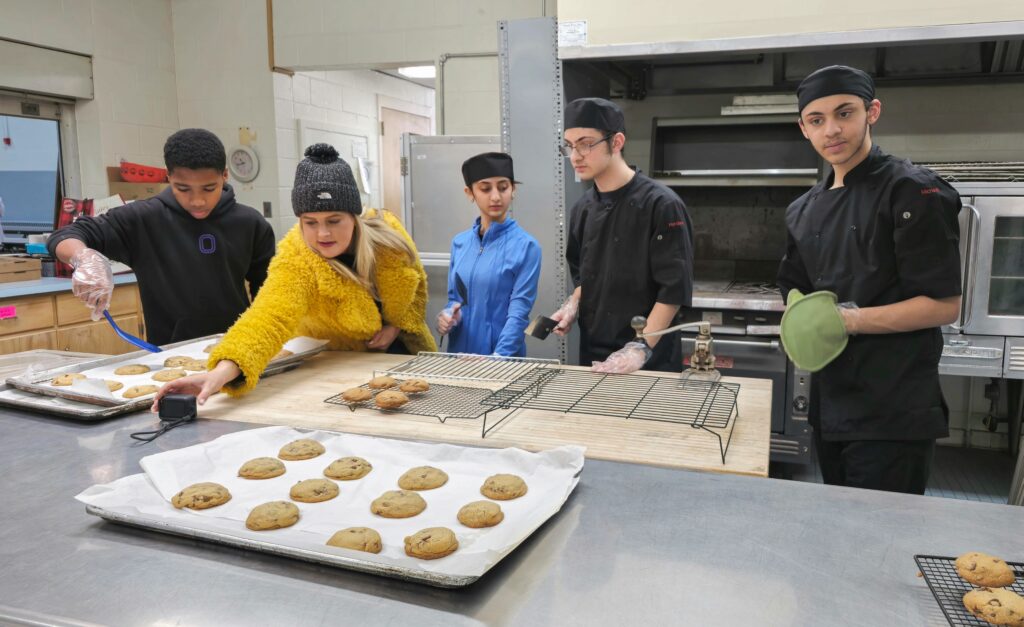
When news broke that schools were closing at the beginning of the COVID-19 pandemic, her news director assigned her a week of nothing but good-news stories. Read said the stories outperformed the station’s pandemic coverage in clicks and engagement. The first week became two, and the “Something Good” segment, now nearing its seventh year, has since been franchised, sponsored, and nationally recognized.
“Every day is different, which is awesome,” Read said. “If I’m teaching somebody, I’m learning along the way.”
Like Berger, she deeply enjoys the profession. “There’s not a day that I have woken up and dreaded going to work,” she said.
She is candid that social media is her biggest adjustment. “I know personally it takes me like 45 minutes to make a one-minute TikTok,” she laughed. The station’s younger hires, by contrast, know the platforms by heart. “It’s nice to get some of those fresh faces in,” she said.
Her advice for new graduates is direct. “Put yourself out there. People are not going to come to you. You have to go to them,” Read said.
The classroom becomes a newsroom
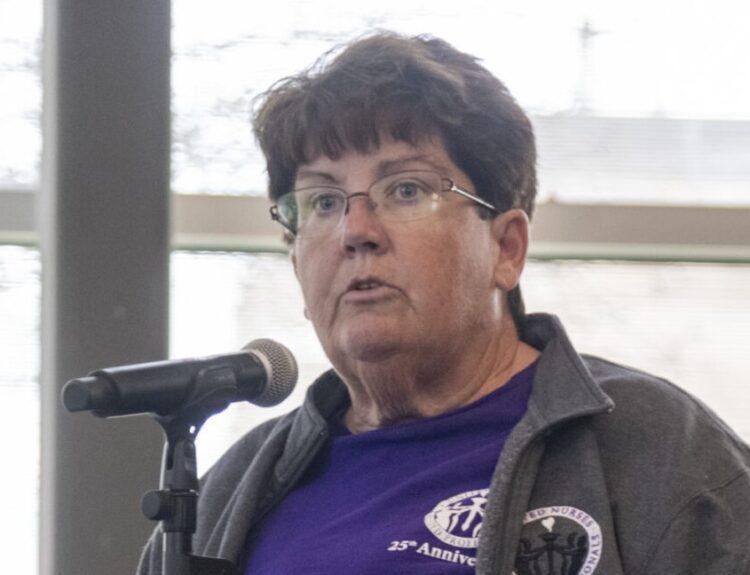
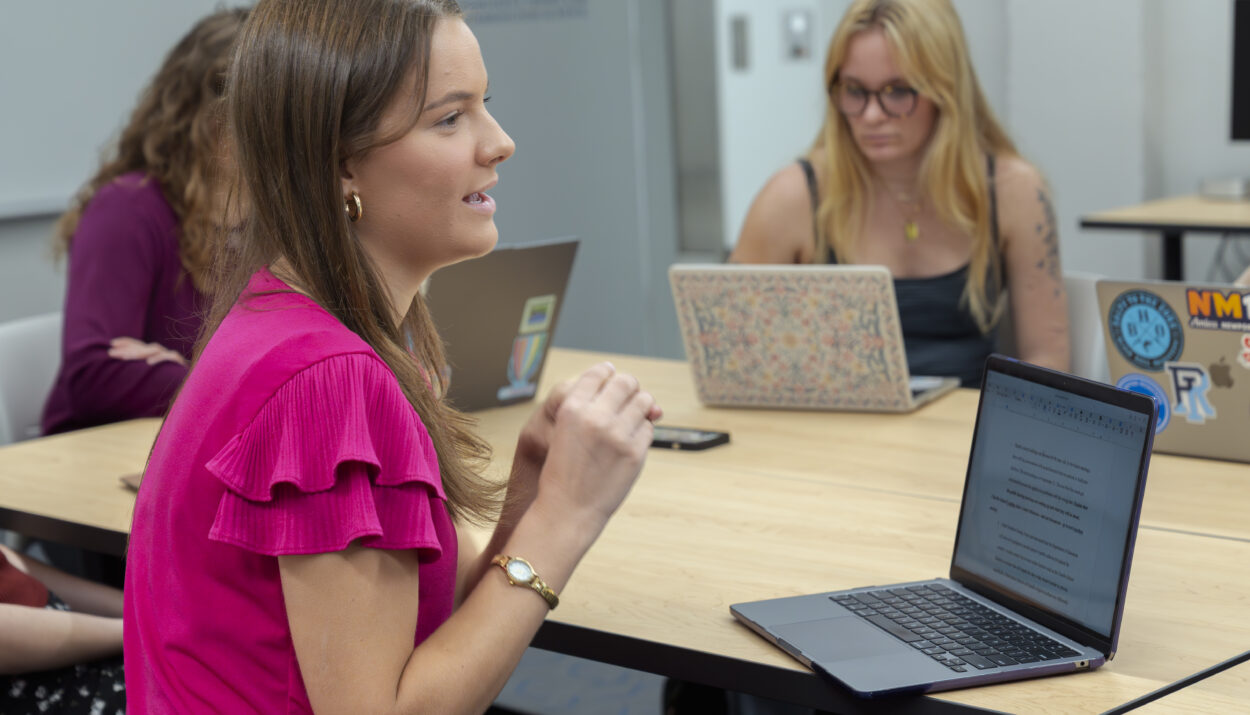
Daniel Hunt, a professor and chair of the Department of Journalism and Public Relations at URI’s Harrington School, is working to make sure students arrive ready for newsrooms like Read’s and Berger’s. He said that every journalism student builds a strong writing foundation, along with skills in video production, audio recording, and short-form video.
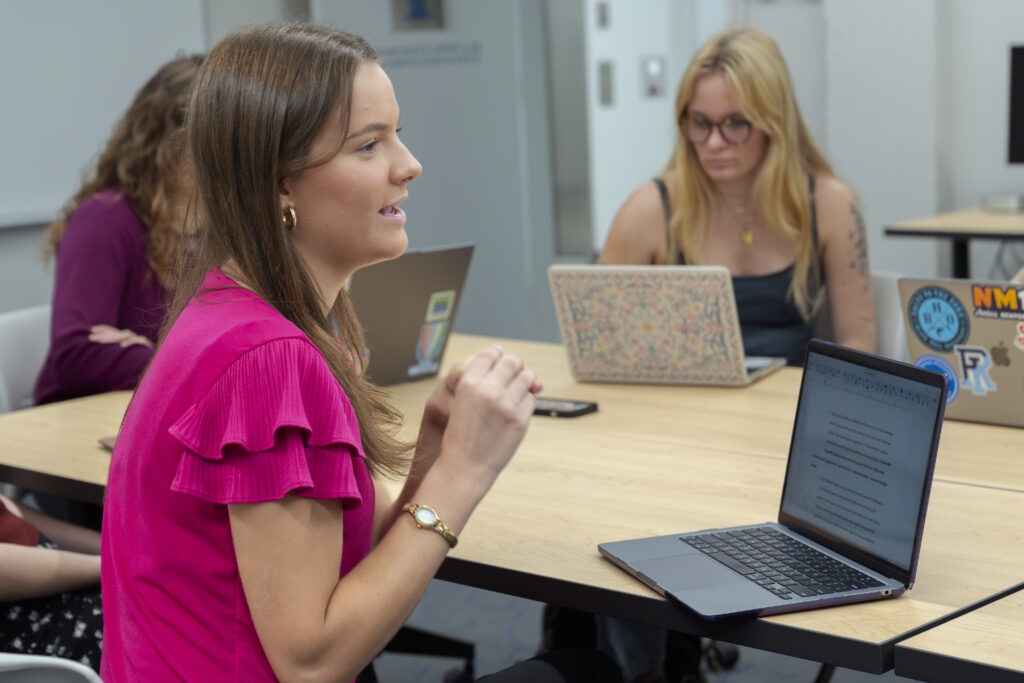
“They’re going to be a little bit better than just picking up your phone and hitting record,” Hunt said. “They’re going to actually learn how to edit the packages, how to do voiceovers, and how to embed still images.”
In fall 2025, the department launched the Community News Lab, an academic news partnership in which advanced students report and write under a professor who serves as their editor. Their stories are picked up by local publications that are either understaffed or covering areas that have become news deserts.
“The idea is to put students into news deserts to report where there was once coverage, but there’s no coverage anymore,” Hunt said.
Hunt, in his 20th year of full-time college teaching, said students who take advantage of the lab, internships, and the student newspaper usually leave well prepared for entry-level jobs or freelancing. The bigger challenge lies upstream. Fewer young people grow up with a newspaper on the doorstep or the 6 o’clock news on in the living room, so fewer see the value of the work.
“Journalism is so important, and the watchdog function of the mass media is so important,” Hunt said. “It’s so critical, keeping tabs on government, following where money goes, all of those things.”
To help close that gap, the department is pursuing a grant project with the Metcalf Institute to develop a community reporting and news literacy curriculum for high school students, college students, and community reporters.
The kids are more than all right
Whatever the worries about the next generation, the next generation has its own thoughts.
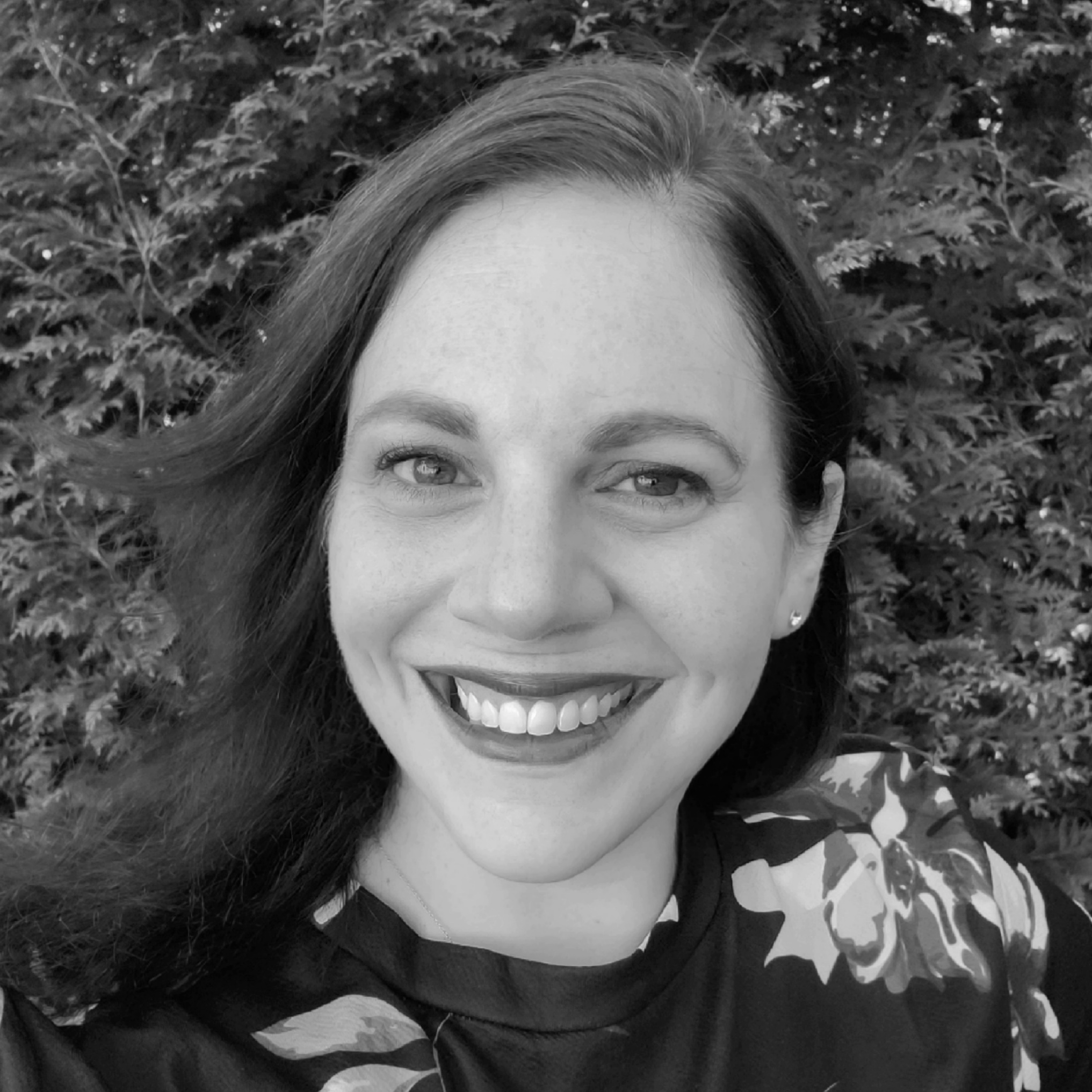
Caroline McCullough, 22, of South Kingstown, is double majoring in anthropology and journalism at URI, with minors in film media and sustainable agriculture and food systems. Through the Community News Lab, her bylines have appeared in The Independent, The Westerly Sun, The Narragansett Times, and The Kent County Daily Times. She has written about beekeepers facing federal cuts to bee research and farmers weathering summer drought.
McCullough has heard generalizations about Gen Z but doesn’t recognize them in her classmates.
“They’re up to date, they’re reading the news, they care about what’s going on in the world. They want to talk about it. They want to write about it,” she said.
She does not dismiss the data on literacy and attention spans. She simply thinks the finger may be pointed in the wrong direction. She was taught to type in elementary school, she said, but never how to read a newspaper.
“We didn’t create that; it happened to us,” McCullough said.
She is skeptical of TikTok but does not dismiss the platform entirely. For McCullough, a scroll can be a starting point.
“I don’t think it’s necessarily a bad thing to see something on TikTok and that’s what informs you that maybe a world event has happened,” she said. “But it is then that consumer’s job to verify that information.”
Aria Garcia-Torres, 27, a senior from Lowell, Massachusetts, took a longer road to the newsroom. She left school during the pandemic, intimidated by how quickly the media landscape was changing as trust plummeted and “fake news” entered the collective consciousness.
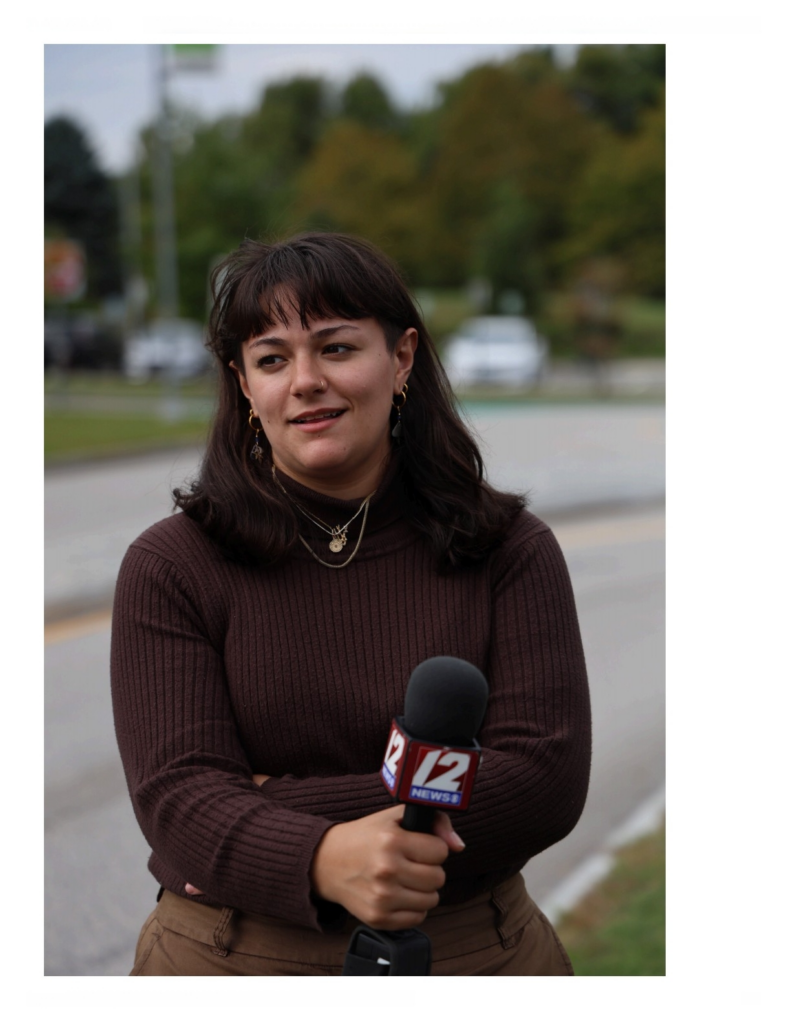
“I just felt like, ‘I don’t know if I’m cut out to do this,’” she said.
She transferred to URI in 2024. Today she covers Charlestown and the environment for the Community News Lab, interns at the South County Star and WPRI 12, and edits at the student newspaper. Her goal is long-form environmental or health care reporting.
“It has been such a wild and terrifying time to study this, but also maybe the most fascinating, and in some ways, thrilling time to study this,” she said.
Garcia-Torres is realistic about her earning potential. Few people are making a good living in journalism, she said, and she knows people who would make great reporters working 9-to-5 jobs instead.
“You have to really, really care about it, and you have to have faith that it is worth it,” she said.
Artificial intelligence, real reservations
AI divides the newsroom less neatly than generational stereotypes might suggest. Berger said younger colleagues are more willing to let AI make their lives easier, while she keeps it at arm’s length. “I don’t want to not use my brain,” she said. Garcia-Torres, one of those younger voices, called AI transcription “a godsend” but has little interest in exploring further. Hunt said URI faculty have studied where the boundaries fall for journalists.
Read views human involvement as journalism’s ultimate safeguard and said her newsroom doesn’t use AI tools.
“Where are they getting their information from? Because we’re making the phone calls, we’re the ones verifying everything,” Read said. “An AI program or a digital program can’t do that.”
Arms linked, not crossed
Rather than a tug-of-war between generations, everyone interviewed for this story kept circling back to collaboration.
“I wish that we were focused more on that, on collaboration between generations and making use of our generational skills together, rather than posing it as a competition,” McCullough said.
Berger, in a separate conversation, struck the same chord.
“I encourage and I support those that want to come up in this industry, because this is where we need safety in numbers,” she said.
Her advice to newcomers to radio or podcasting is to live a little first. Work in a restaurant. Visit Block Island if you never have. Collect experiences, because those become your stories.
“There’s nothing worse than thinking you have all these things to say and then having nothing to say,” she said.
Garcia-Torres expects independent and social media news to keep growing, but she says traditional training still matters.
“I really now understand and appreciate the value of having the traditional training, even if you do go that way,” she said.
And Berger, who has spent nearly two decades weathering the industry’s storms, had the last word for graduates headed out the door.
“Always be willing to be flexible – the path that you set for yourself might have some zigzags in it, and it’s okay,” she said.
Journalism’s obituary has been drafted more than once. So far, no one in the field seems ready to publish it.