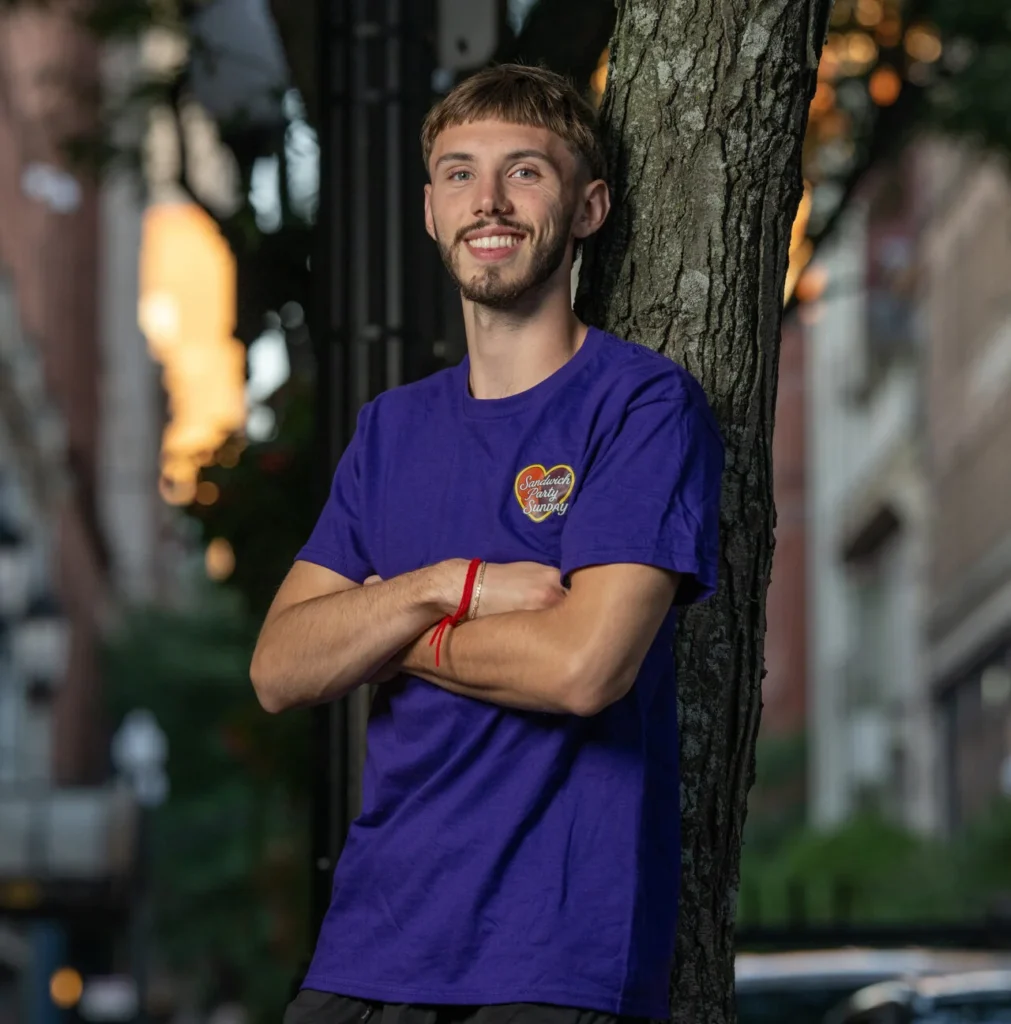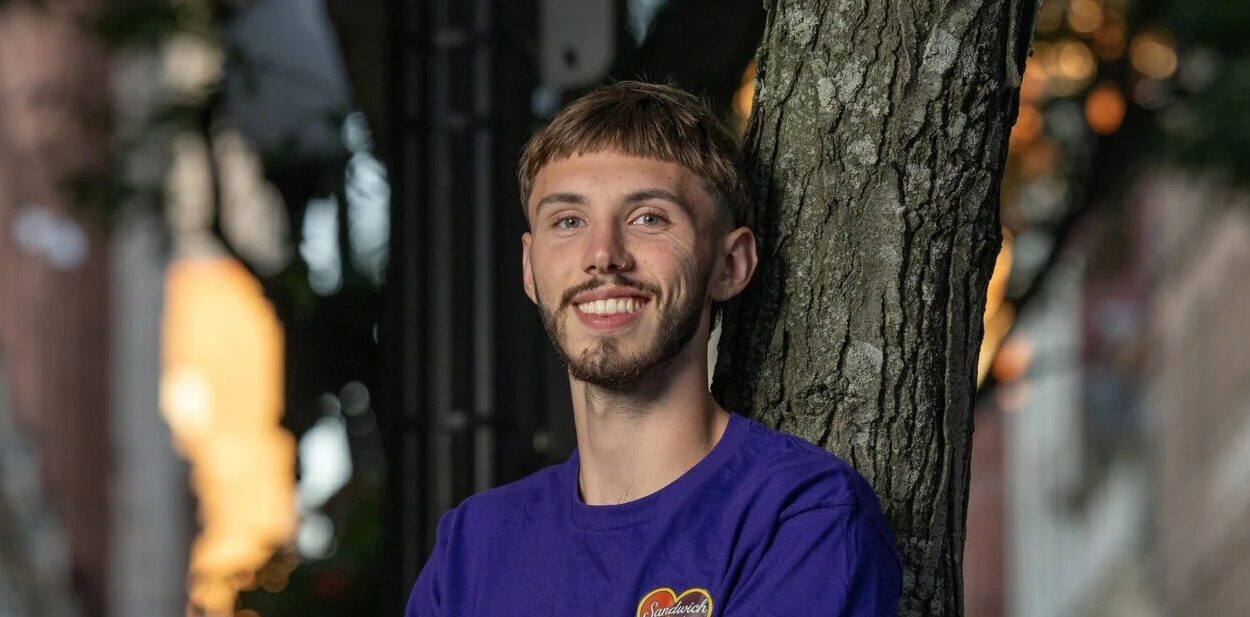
We appreciate you joining us on Ocean State Stories, Lucas. For a start, can you please give us an overview of Sandwich Party Sunday?
Sandwich Party Sunday is a filed non-profit organization (501c3) I executively direct to practice the change I plan on creating world-wide, one-bagged lunch at a time. Handing out bagged lunches is the icebreaker I use to spark a conversation with disadvantaged individuals.
Conversation is the most important component of Sandwich Party Sunday: meaningful conversations that instill a sense of control over one’s life, and spark that internal motivation it takes to succeed in this world.
Your website states that “handing out bagged lunches is the icebreaker I use to spark a conversation with disadvantaged individuals.” What things do you talk about?
I will be honest: our website is a little outdated as there have been many revamps to our mission over the summer of ’26, where I participated in URI’s RISE-UP program to define the problem, solution, and mission of SPS. We still use the bagged lunches as an ice breaker, but I quickly realized not many 10-minute conversations will change lives the way I intended to. So the idea of using the bags as an opportunity for the people we serve to contribute came upon my mind.
You go on to declare: “Conversation is the most important component of Sandwich Party Sunday: meaningful conversations that instill a sense of control over one’s life, and spark that internal motivation it takes to succeed in this world.” Please elaborate.
And that’s what we’ve been doing since about June of ’26. We have had over 30 of whom we call “our friends” volunteer since our mission became turning recipients into contributors. We have had one of our friends seek further volunteer opportunities after volunteering with us, it opened his eyes to other opportunities which led to him attending the Amos House, which is now supporting him with housing. Another one of our friends has joined the SPS team and attends weekly meetings, helps with social media posts, and shows up every Sunday he can to keep himself on track for the next chapter of his life. Because at SPS we don’t decide what someone’s next chapter should be; we give them the opportunity to begin writing it themselves.
What’s the “real science behind the strategy of increasing the positivity in our community,” as you state?
The science behind SPS is very extensive but one simple concept I can share is Mirror Neurons. These are neurons that fire both when someone is doing an action or when they see someone doing an action, both events produce the same effect within an individual. So even if one of our friends doesn’t volunteer with us, they see their peers doing it. And them seeing people in their community volunteer with us does the same for their brain as if they volunteered with us. Making the opportunity for them to volunteer the next week more apparent in their mind, and other similar opportunities as well.
You are a non-profit organization that you “direct to practice the change I plan on creating world-wide, one bagged lunch at a time.” How will you take this global — and when?
Taking this global is one of the goals of SPS and while it has not happened yet we are making sure that we are being very intentional about how we set up our program. Each community has its own culture, so to be able to produce the same effects in a different culture you need a very fine tuned program, one which we are still working on.
Where and when do you meet?
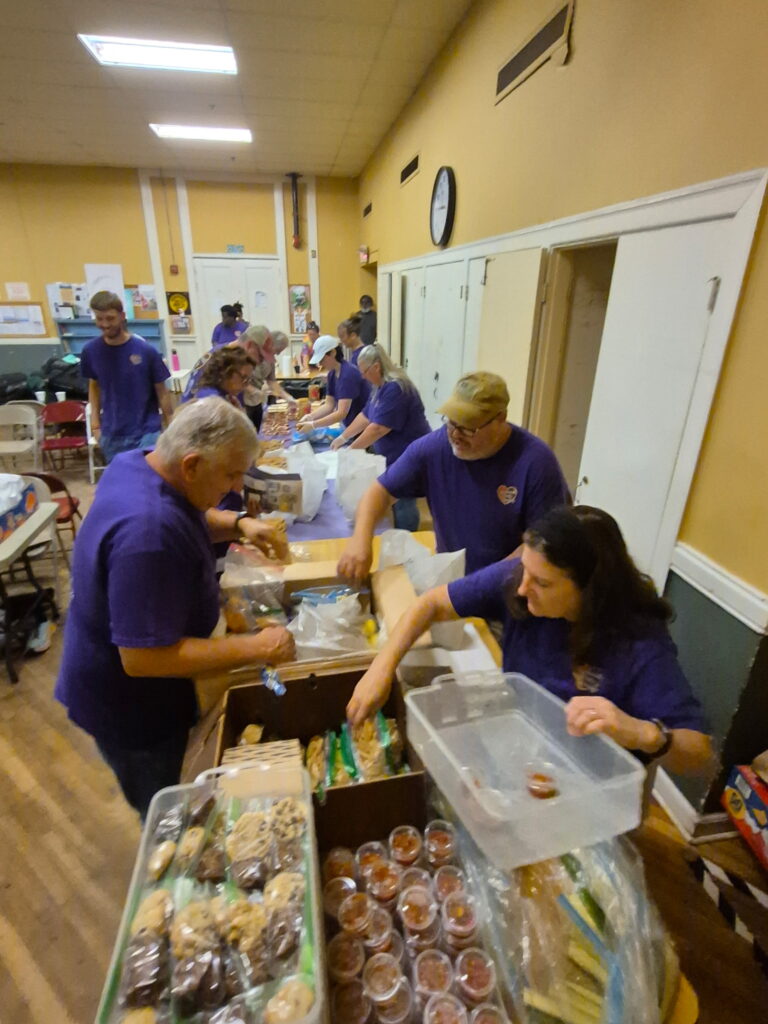
We meet every Sunday at Mathewson Street Church (134 Mathewson Street) in Providence, right in front of PPAC. Every Sunday starts at 11 a.m. and finishes up no later than 12:45 p.m.
Who can get a sandwich?
Anyone can volunteer or receive lunch from us. Just show up, tell us what you’d like to do, and we can build together.
What was the inspiration for Sandwich Party Sunday?
Sandwich Party Sunday (SPS) was restarted after my father helped run the mission before COVID. I was an incoming senior [at the University of Rhode Island] starting to find my own path and to help keep me on the right path, I decided to start SPS back up.
It started as a simple food distribution program, but after reading a couple of books of behavioral neuroscience over the course of the summer, I knew the bags could be used as much more than just food.
Lastly, please tell us a bit about yourself: your background, what you are studying at the University of Rhode Island, and your professional plans for the future.
I am currently a junior majoring in medicinal neuroscience at URI. I transferred to URI this past spring semester after graduating with an associates in biology from CCRI. I grew up in Warwick and have lived in Rhode Island my whole entire life. My goals with majoring in neuroscience are more of a self-discovery fulfillment than anything else. My goal is to better understand the brain so I can better understand myself and how I can help others. For my future, I want to explore the possibilities of the human mind while also helping people live in their best pursuit of happiness.